In this article:
- What Sapporo Soup Curry Actually Is
- How to Order Soup Curry in Sapporo
- How to Eat It
- Where and When to Eat Soup Curry in Sapporo
- Sapporo Soup Curry: Frequently Asked Questions
Introduction
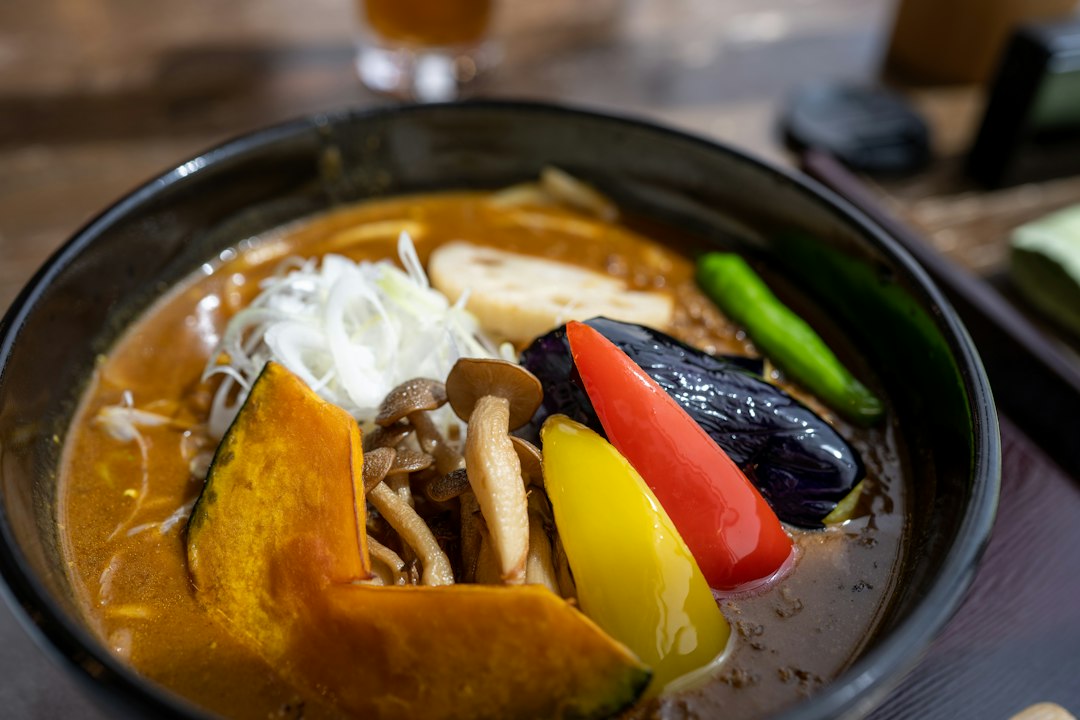
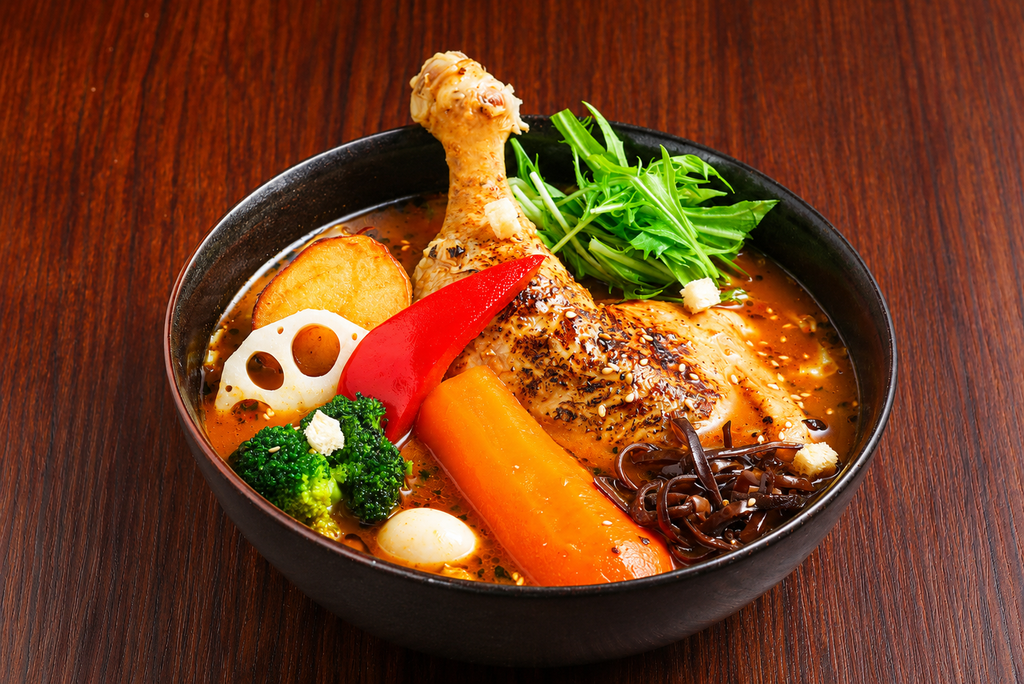
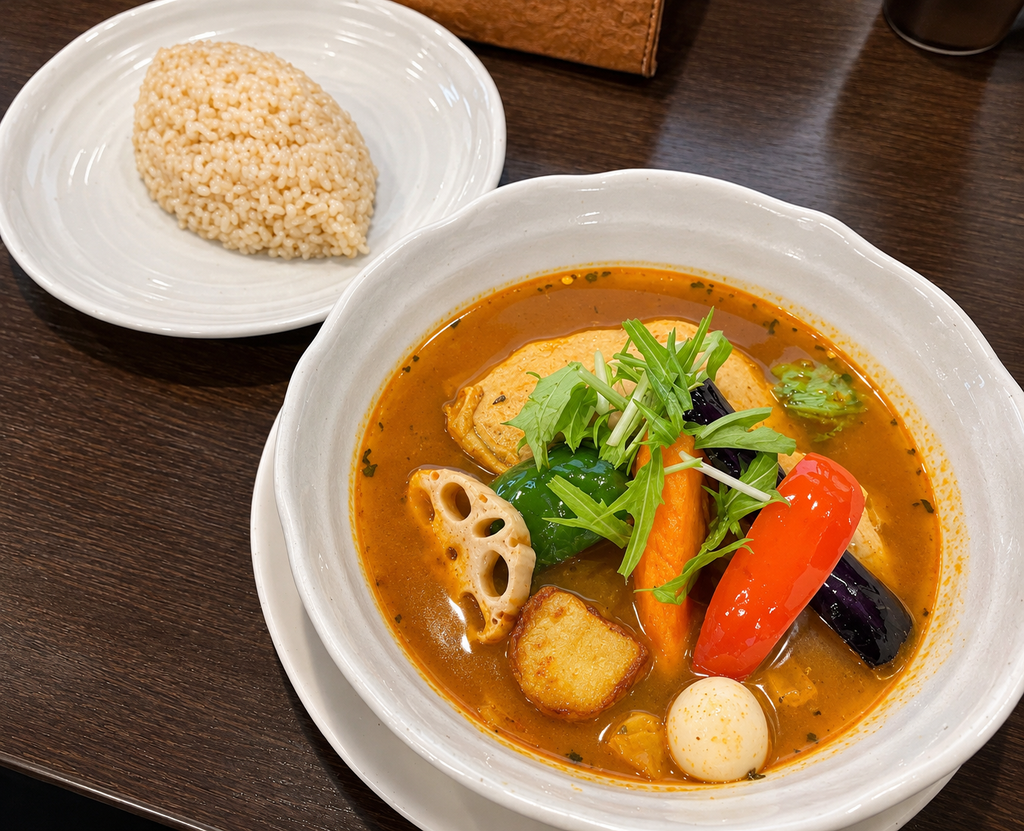
Sapporo soup curry arrives looking nothing like the curry most visitors know from Japan. There is no thick brown roux. Instead there is a wide bowl of thin, rust-coloured broth, a chicken leg standing up in the middle of it, and a fan of vegetables that have been cut large enough to hold with chopsticks: half an eggplant, a wedge of pumpkin, a whole okra, a slab of carrot.
The rice comes on its own plate. That detail alone tells you this is a different dish, and the way you eat it follows from it.
Sapporo’s official tourism site counts more than two hundred specialty soup curry restaurants in the city, which is a remarkable number for a dish that only took its name in the 1990s. For travelers who come to Hokkaido for the food, it sits alongside miso ramen and crab as one of the meals that define the city. We think it is the more interesting of the three, because it is still evolving and every shop has an opinion about it.
What Sapporo Soup Curry Actually Is
At its simplest, soup curry is a spiced broth poured over grilled or fried ingredients. The detail is where the city’s shops compete.
Not Japanese Curry Rice
Ordinary Japanese curry, the kind sold in boxed roux blocks and served in every station canteen, is thick, mild, and slightly sweet. It coats rice. Soup curry does the opposite. The broth is loose enough to drink from a spoon, the spice is forward rather than rounded, and the sweetness comes from the vegetables rather than from the sauce.
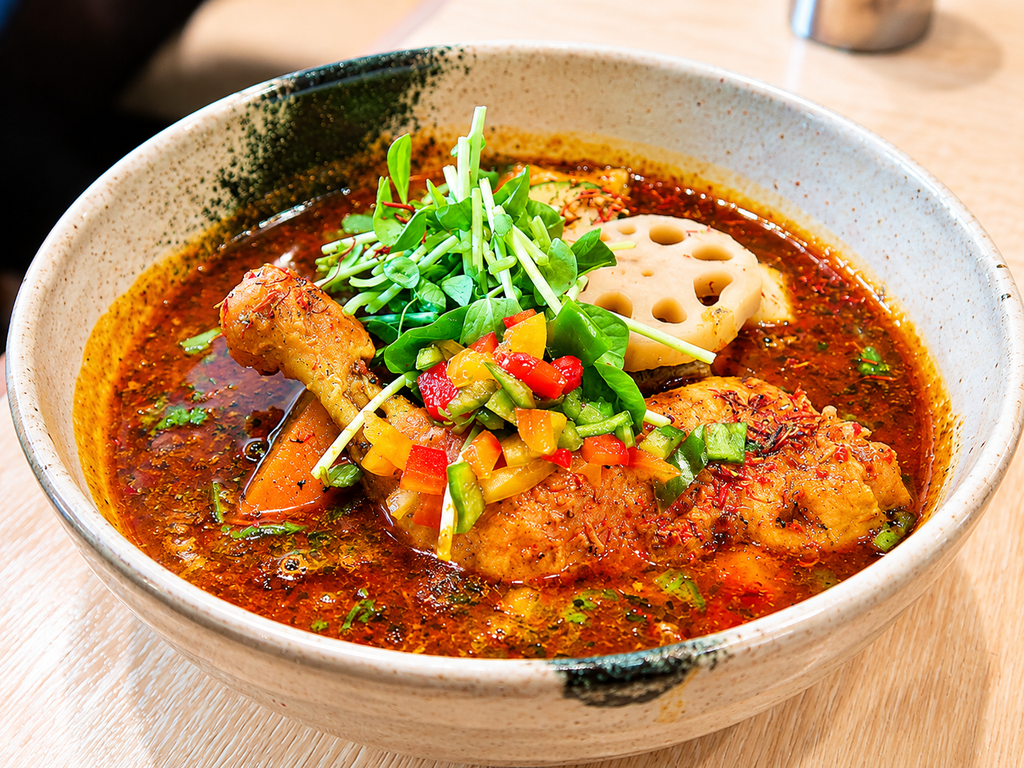
The broth itself varies a great deal. Sapporo’s tourism board notes that bases can be made from seafood, meat, or vegetables, and many shops build theirs on a long-simmered chicken or pork stock. GARAKU, one of the most visited names, describes its own soup as built on Japanese dashi, which gives it a savoury depth closer to a ramen broth than to anything Indian.
From Medicinal Curry to a City Dish
Most accounts trace the dish to the 1970s and a Sapporo café called Ajanta, which served a spiced, herb-heavy broth inspired by medicinal cooking. Customers began asking for it with more ingredients in the bowl, and the format slowly shifted toward a meal rather than a tonic.
The name came later. A Sapporo shop called Magic Spice is widely credited with calling the dish “soup curry” in the early 1990s, and over the following two decades specialty shops spread across the city. By the 2000s it was a recognised Sapporo dish, and branches of the better-known shops had opened in Tokyo.
That history matters for one practical reason. Soup curry has no fixed recipe, so shops differ more from each other than ramen shops do. Two bowls ordered a block apart can taste like separate cuisines.
Why It Belongs to Hokkaido
Hokkaido grows much of Japan’s potatoes, pumpkins, and onions, and the island’s cooking has always leaned on vegetables and hearty proteins. Soup curry fits that pattern well. The vegetables are not garnish; they are half the meal, often roasted or fried until their edges caramelise before the broth goes on.
There is also the climate. A Sapporo January sits well below freezing for weeks, and a large bowl of hot, spiced broth makes more sense here than it would in Osaka. Locals eat it year-round, though, and a summer lunch of it is just as common.
Expert Tip
Sapporo is laid out on a numbered grid, so a shop address such as “South 3, West 2” is effectively a map coordinate. Once you know which way the numbers count, finding a basement soup curry shop becomes much easier than finding a restaurant in Tokyo.
How to Order Soup Curry in Sapporo
Ordering is a short sequence of choices, and most shops hand you a menu card that walks you through it in order. Many have English menus. The sequence is roughly the same everywhere.
Choosing the Main
The first decision is the main ingredient. The chicken leg is the classic and the version we suggest for a first bowl: a whole bone-in leg, slow-cooked or grilled until the meat comes off with a spoon. Pork, lamb, seafood, and an all-vegetable bowl are the usual alternatives.
Vegetable bowls are not an afterthought here. Because the vegetables already carry so much of the dish, a vegetable soup curry is often the most generous plate on the menu, sometimes with fifteen or twenty different pieces in it.
Seafood bowls are the other choice that makes particular sense in Hokkaido. Shrimp and scallops are common, and the sweetness of a good Hokkaido scallop holds up well against a spiced broth. That said, seafood versions tend to sit at the upper end of the menu, and the chicken leg remains the reference point every shop is judged by.
Soup Base and Spice Level
Many shops then ask which soup you want, typically a house standard plus one or two alternatives such as a coconut or tomato broth. Order the house standard first. It is the soup the shop built its reputation on.
Spice level comes next, usually on a numbered scale. The numbers mean nothing outside the shop that set them, so a level that is gentle in one restaurant can be punishing in another. Start in the lower third of the scale. You can usually add chili at the table, but you cannot take it out of the broth.
In practice, we find that travelers who order high on the first visit spend the meal fighting the heat instead of tasting the stock, which is the part worth paying attention to.
Rice Size and Toppings
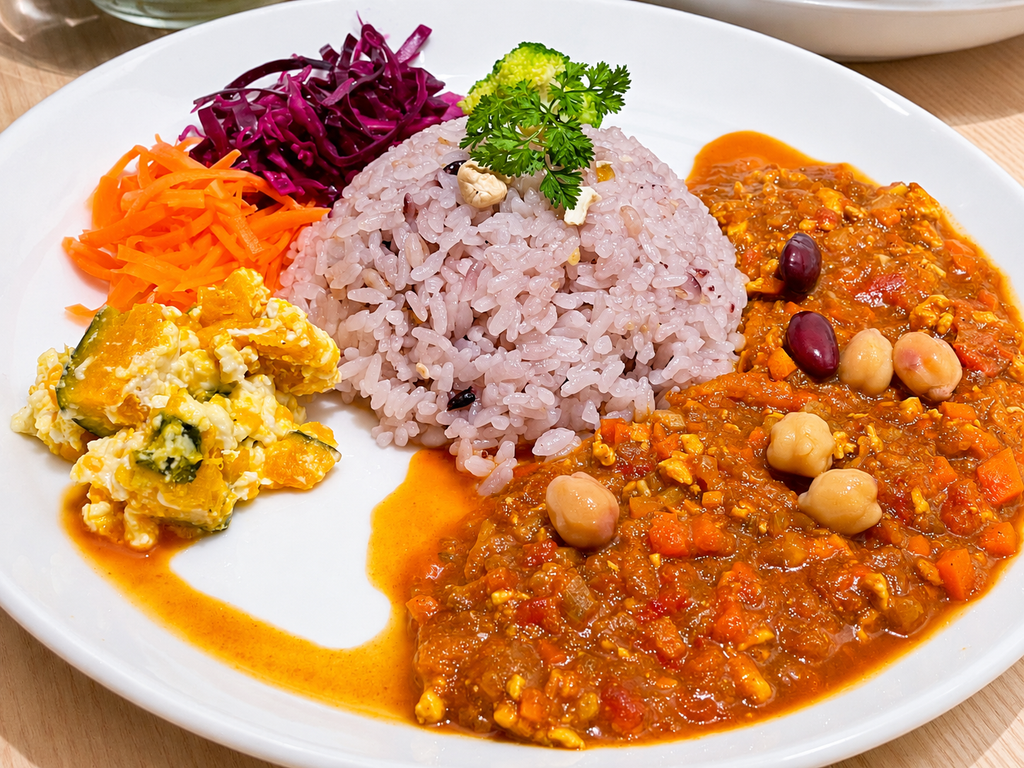
Rice is ordered separately, in small, regular, or large portions, and some shops charge more for the larger sizes. Toppings are where the bill grows. Extra vegetables, a soft-boiled egg, cheese, or a second protein are typical additions, each priced individually.
A plain chicken leg bowl is a complete meal. Resist the urge to add four toppings on the first visit. The broth gets crowded, and the base dish already holds more food than most people expect.
How to Eat It
There is no strict etiquette here, but there is a way most people eat soup curry, and it works better than the alternatives.
Rice on the Side
Take a spoonful of rice and dip it into the broth, then eat it. Repeat. That is the basic method, and it keeps the rice from turning to porridge, which is what happens if you tip the whole plate into the bowl at the start.
Some people prefer to spoon broth over a corner of the rice plate instead. Either way, the principle is the same: rice and soup meet one mouthful at a time.
The Chicken and the Vegetables
The chicken leg looks awkward but is not. It is cooked to the point where a spoon pressed against the bone separates the meat cleanly. Most shops provide both a spoon and a fork, and some add a knife for the leg.
Eat the vegetables as you go rather than saving them. Fried eggplant and pumpkin soak up broth quickly, and they are at their peak a few minutes after the bowl arrives, while the edges are still crisp.
Finishing the Bowl
Toward the end, many diners put the remaining rice straight into the bowl and finish the broth that way. This is the moment the thin soup earns its place. By then it has taken on flavour from everything that was cooked in it.
Leaving broth is fine. Soup curry portions are large, and nobody at a Sapporo counter expects a foreign visitor to drink the entire bowl.
Where and When to Eat Soup Curry in Sapporo
With over two hundred shops, the question is less where to find soup curry than how to choose between them. Our view is that the specific shop matters less than going to one with a clear style of its own.
Picking a Shop
A few names come up repeatedly among both locals and visitors. GARAKU is known for its dashi-based soup and long weekend queues. Suage+ takes its name from a frying technique and serves its vegetables fried without batter. Magic Spice, the shop credited with the name, keeps a deliberately eccentric style and a reputation for heat.
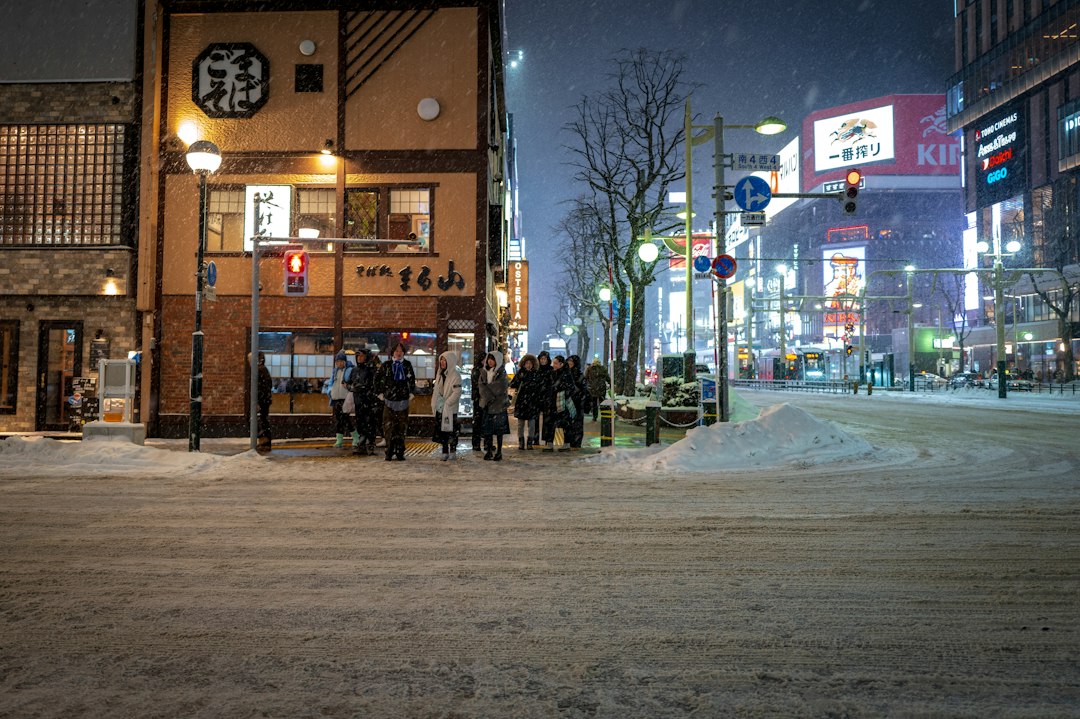
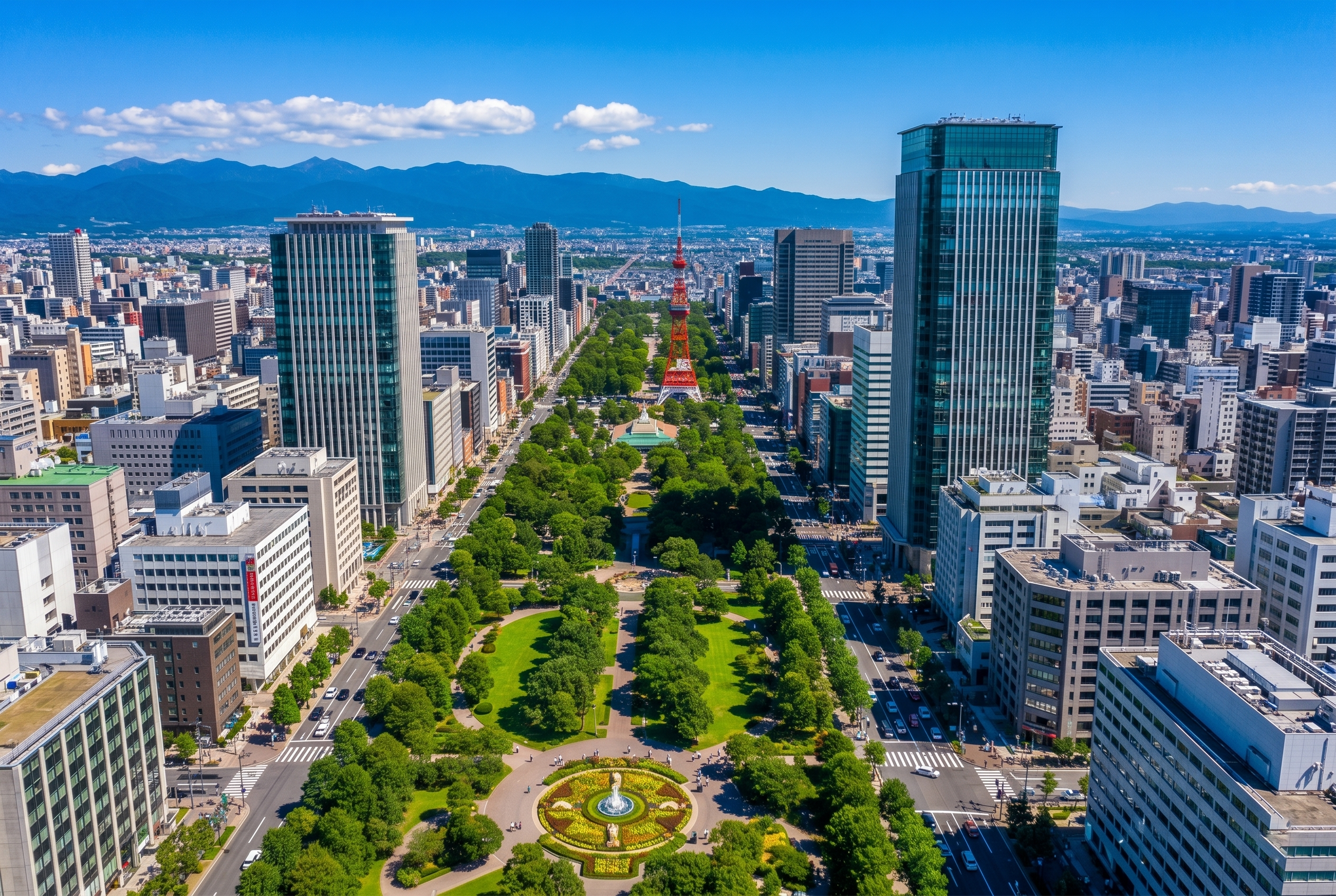
Beyond those, most neighbourhood shops around Odori, Susukino, and Sapporo Station are dependable, and many of the most loved are small basement or second-floor rooms that would be easy to walk past.
A useful test is the broth on its own. Before touching the rice, take a spoonful of soup with nothing in it. A good shop’s stock tastes of something specific, whether that is roasted chicken, dashi, or a dark, toasted spice blend, and the heat sits on top of that flavour rather than replacing it. If all you taste is chili, the shop has leaned on spice to cover a thin base, and the next bowl you try will likely be better.
If you are pairing the meal with other Hokkaido food, our guide to Sapporo ramen covers the city’s other signature bowl, and it makes sense to plan one for lunch and the other for a late dinner.
Timing and Queues
The well-known shops queue at lunch, especially on weekends. Arriving shortly before opening, or at about two in the afternoon once the lunch crowd clears, changes the wait considerably.
February is the hardest month. The Snow Festival fills the city, and every popular restaurant in the centre is busier than usual. If you are visiting then, our Sapporo Snow Festival guide explains the venue layout, which helps when planning a meal between sites. Winter also brings icy pavements, so boots with grip matter on the walk between Odori and Susukino.
Vegetarian and Dietary Requests
Vegetable soup curry is easy to find. Fully vegetarian soup curry is harder, because most house broths are made from chicken or pork stock, or from dashi that contains fish. Some shops offer a vegetable-based soup on request, but this varies.
Ask before ordering rather than assuming. Our guide to vegetarian food in Japan includes phrases that make that conversation simpler.
Expert Tip
If you are spending a day in Sapporo with a guide, fit soup curry in at lunch rather than dinner. Lunch queues at the popular shops are shorter on weekdays, and the evening is better used for Mount Moiwa after dark, followed by miso ramen or a seafood dinner near Susukino.
Sapporo Soup Curry: Frequently Asked Questions
Is soup curry very spicy?
Only if you ask it to be. Almost every shop lets you choose a spice level, and the lower settings are milder than a typical Thai or Indian curry. The higher settings can be severe. Start low on your first visit and adjust next time.
How is soup curry different from Japanese curry rice?
Japanese curry rice uses a thick, mild roux poured over rice. Sapporo soup curry uses a thin, spiced broth served in a bowl, with large pieces of vegetables and meat, and the rice comes separately. The two share a name and very little else.
Can I eat good soup curry outside Sapporo?
Yes. Several well-known Sapporo shops have opened branches in Tokyo, and soup curry is now found in many large Japanese cities. Still, the density and range of shops in Sapporo has no equivalent elsewhere, and the local vegetables give the Hokkaido bowls an advantage.
Related Tours
Conclusion
Soup curry rewards a little restraint. Order the house soup, choose the chicken leg, keep the spice low, and skip the extra toppings on the first visit. That bowl shows you what the shop does well, and it gives you a basis for comparison when you try a second one.
And you should try a second one. Because no two shops make it the same way, the dish only makes sense after a couple of bowls. Plan one at lunch on your first day in Sapporo, go early, and leave room for another before you leave Hokkaido.
Plan Your Japan Trip with Local Experts
Our team has guided 40,000+ travelers across Japan. Tell us about your trip and we’ll get back to you within 24 hours.