In this article:
- The Two That Matter
- Ordinary Table Manners
- The Chopstick Rest
- Shared Dishes
- Disposable Chopsticks
- Chopstick Etiquette in Japan: Frequently Asked Questions
Introduction
Most of what is written about Japanese chopstick etiquette treats every rule as equally serious, which is not how anyone at the table experiences it.
There is a hierarchy. Two acts genuinely unsettle Japanese people, because both are things done at a funeral and doing them at dinner carries the association directly. A further dozen or so are ordinary bad manners, on roughly the same level as talking with your mouth full — noticed, not commented on, and forgotten.
Learn the two. The rest is worth knowing and will not ruin anybody’s evening.
The Two That Matter
Both are funeral rites and both are visceral rather than merely impolite.
Standing Chopsticks Upright in Rice
Never push chopsticks vertically into a bowl of rice so they stand up.
This is exactly how rice is offered to the dead: a bowl set before a Buddhist altar or beside a body, with chopsticks planted upright in it. The resemblance is precise and the association is immediate.
Japanese children are taught this early and Japanese adults react to seeing it with genuine discomfort rather than disapproval. It is the single most important item on this list.
Rest chopsticks on the rest, or across the edge of a small plate, or on the paper sleeve. Never in the food.
Passing Food Chopstick to Chopstick
Never take food directly from another person’s chopsticks with your own.
After a Japanese cremation, family members transfer the bones of the deceased from the ashes to the urn by passing them from one pair of chopsticks to another. It is one of the most solemn moments in Japanese funeral practice.
Reproducing that gesture over a dish of grilled fish is the reason this is the second cardinal rule.
If someone wants to give you something, they place it on your plate and you pick it up from there. If you want to offer something, put it on their plate.
Expert Tip
If you accidentally do either of these, do not make a production of apologising. Put the chopsticks down, say sumimasen quietly, and carry on. Japanese hosts are extremely accommodating toward foreign guests and the mistake is understood as unfamiliarity rather than disrespect — but a long apology draws the whole table’s attention to the funeral association, which is precisely the discomfort you are trying to avoid.
Ordinary Table Manners
Each has a name. None of them will cause offence, and avoiding them marks you as someone who has paid attention.

The Common Ones
Sashibashi — spearing food with a single chopstick like a fork. Tempting with slippery things and the wrong solution.
Mayoibashi — hovering over the dishes while deciding what to take. Decide, then move.
Saguribashi — rummaging through a shared dish to find the piece you want. Take what is on top.
Neburibashi — licking the tips, or leaving them in your mouth while you talk.
The Less Obvious Ones
Yosebashi — pulling a dish toward you using your chopsticks rather than picking it up with your hand.
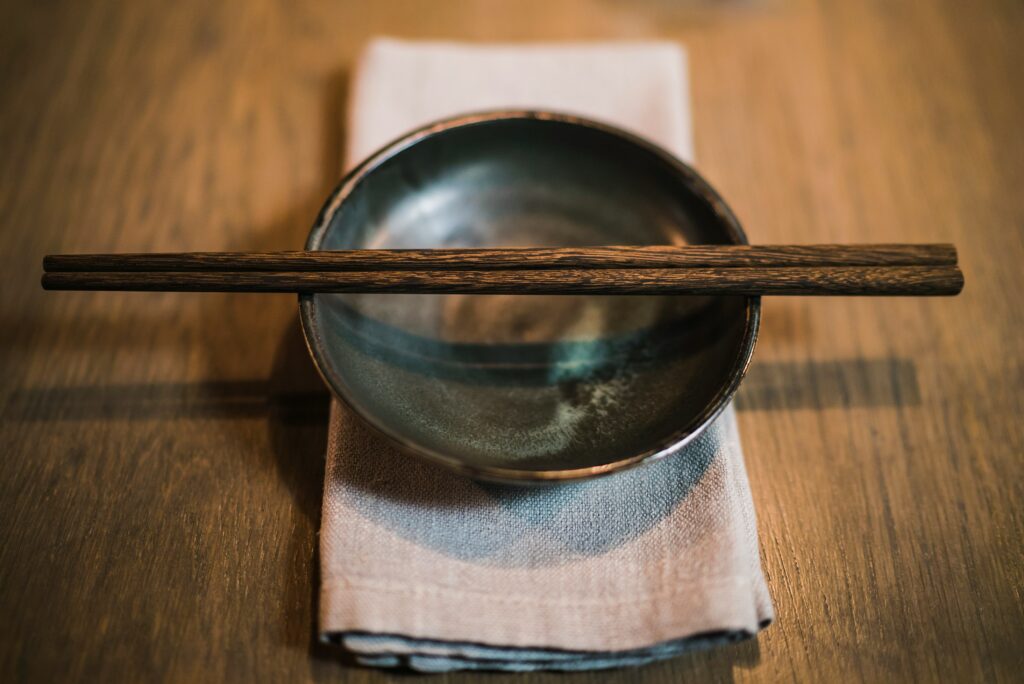
Watashibashi — laying chopsticks across the top of your bowl. This traditionally signals that you have finished and want no more, which is not what you mean if you are pausing mid-meal.
Namidabashi — carrying dripping food across the table. Use a small plate underneath, or the lid of a dish.
Sashibashi in its other sense — pointing at a person or a thing with your chopsticks. Common everywhere and worth breaking.
The Ones About Rice
Do not stick chopsticks in rice, as above. Also, do not pass the rice bowl with chopsticks resting in it.
Rice bowls are picked up in the left hand and held near the chest while eating, which is standard and not optional — leaving the bowl on the table and bending to it is what looks wrong here.
Soup bowls are picked up and drunk from directly, with chopsticks used to eat the solids.
What Nobody Minds
Slurping noodles is fine and is arguably expected. It cools the noodles and aerates the broth, and quiet noodle eating is the thing that looks odd.
Holding a bowl close to your face is correct. Eating sushi with your hands is correct. Not finishing everything is mildly regrettable and not a scandal.
Being visibly inexpert with chopsticks is entirely unremarkable and nobody is judging your grip.
The Chopstick Rest
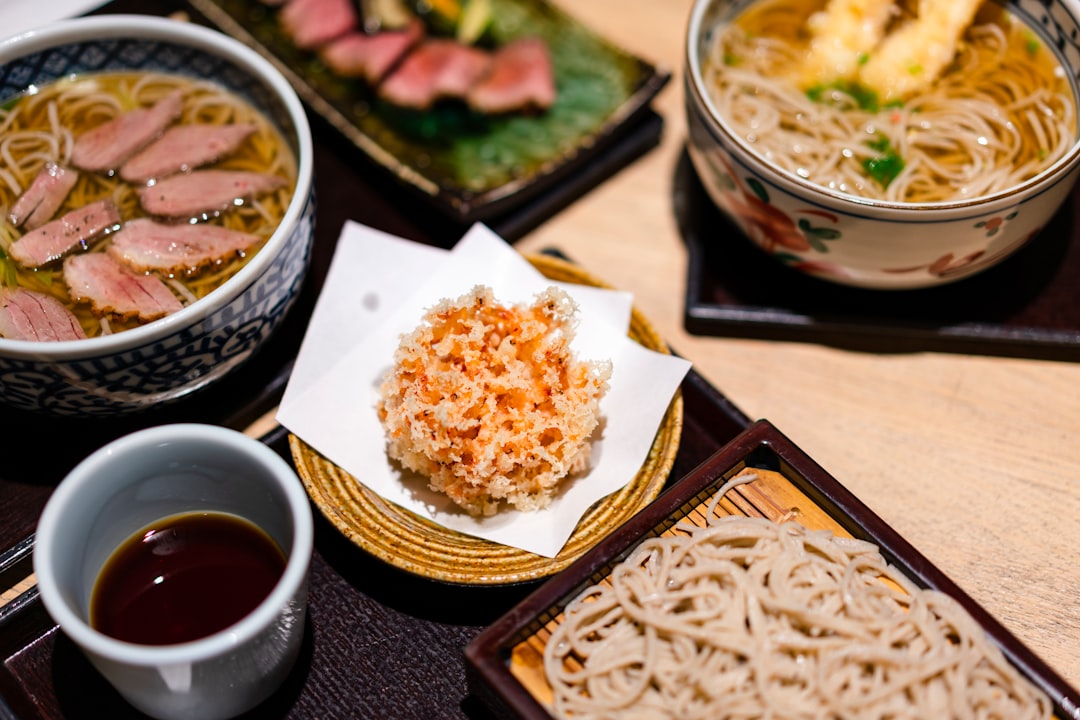
The hashioki solves most of the problems above by giving the chopsticks somewhere to go.
How to Use It
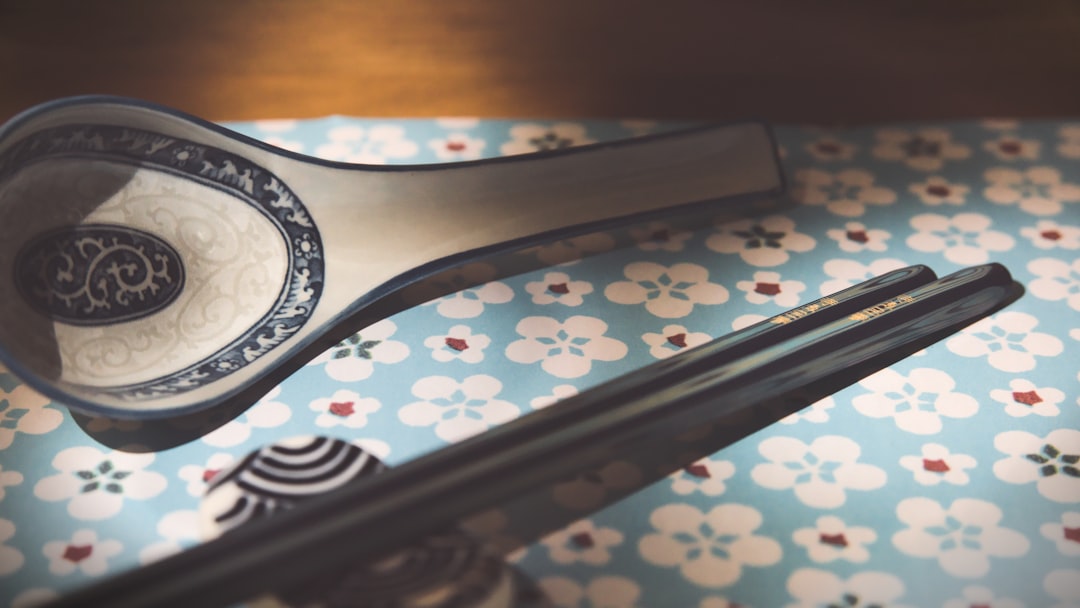
A small ceramic, wooden, or glass object beside your setting. The tips of the chopsticks rest on it, pointing left, with the chopsticks parallel and roughly in line with the edge of the table.
Every time you stop eating — to speak, to drink, to think — the chopsticks go on the rest. Not in the bowl, not across it, not on the table.
In a formal setting, this is the single habit that most marks a person as having been taught properly.
Making One
If there is no rest, fold the paper sleeve the disposable chopsticks came in. A simple knot or a flattened concertina fold produces a serviceable rest and this is common practice.
Doing it is a small, visible courtesy and Japanese diners do it routinely at casual restaurants.
Failing that, the edge of a small plate or the rim of a dish works.
Crossing
Do not lay chopsticks crossed over one another. It is another funeral-adjacent association and it also simply looks untidy.
Parallel, tips aligned, pointing left.
Shared Dishes
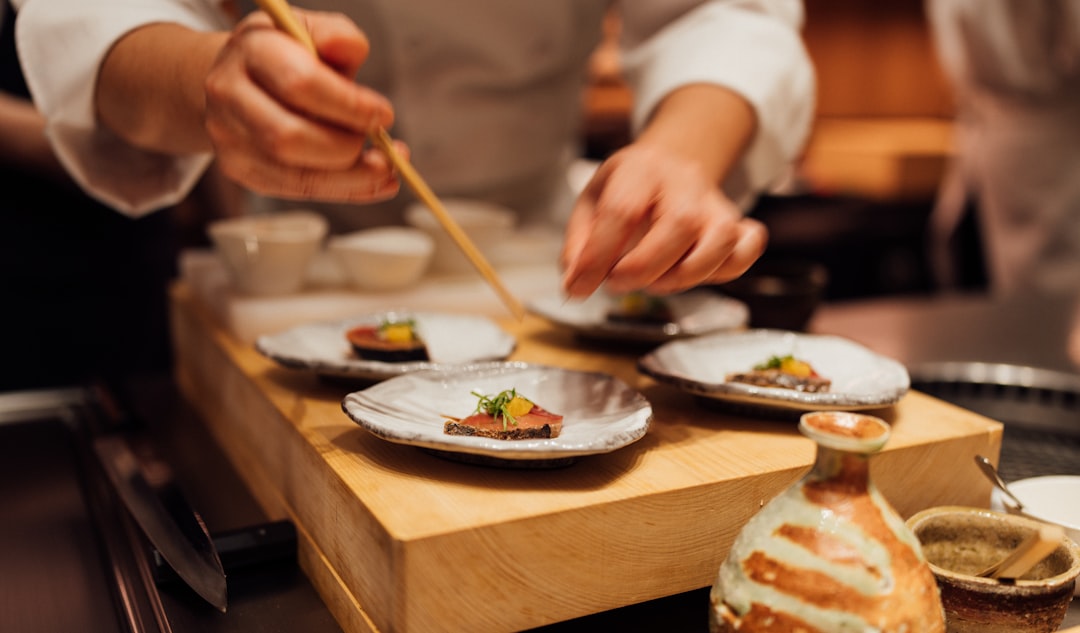
Family-style eating is the norm in Japan and there is a convention for it.
Serving Chopsticks
Shared dishes usually come with their own pair — toribashi — often a different colour or material, laid beside or across the dish.
Use them to transfer food to your own small plate, then eat from your plate with your own chopsticks. Do not eat directly from a shared dish.
If serving chopsticks are provided and you do not use them, that is the noticeable error at a Japanese table.
The Reversed Chopsticks Question
A common practice is to turn your own chopsticks around and use the thick ends to take from a shared dish, on the reasoning that the ends that have been in your mouth do not touch shared food.
Etiquette authorities in Japan generally discourage this, and the reason is sound: the thick ends are the part your fingers have been holding, and transferring hand contact to shared food is not obviously better.
Ask for serving chopsticks instead — toribashi o onegaishimasu. Any restaurant will bring them.
If everyone at your table is reversing their chopsticks, do the same. It is more common in casual settings than the rulebooks admit.
The Last Piece
The final item on a shared plate frequently sits there while everyone politely declines it — enryo no katamari, the lump of reserve.
Ask before taking it. A gesture at the plate and a questioning look works entirely.
Pouring
Adjacent to chopsticks and worth knowing: at a table with drinks, you pour for others and they pour for you. Filling your own glass while your neighbour’s is empty is the thing to avoid.
Hold the bottle with both hands when pouring for someone senior, and lift your glass slightly when receiving.
Expert Tip
Do not rub disposable chopsticks together to remove splinters. It is a habit many foreign visitors have picked up from somewhere and it reads in Japan as a statement that the restaurant has provided cheap, rough chopsticks — an insult to the house, delivered in front of the staff. If a chopstick genuinely has a splinter, ask quietly for another pair.
Disposable Chopsticks
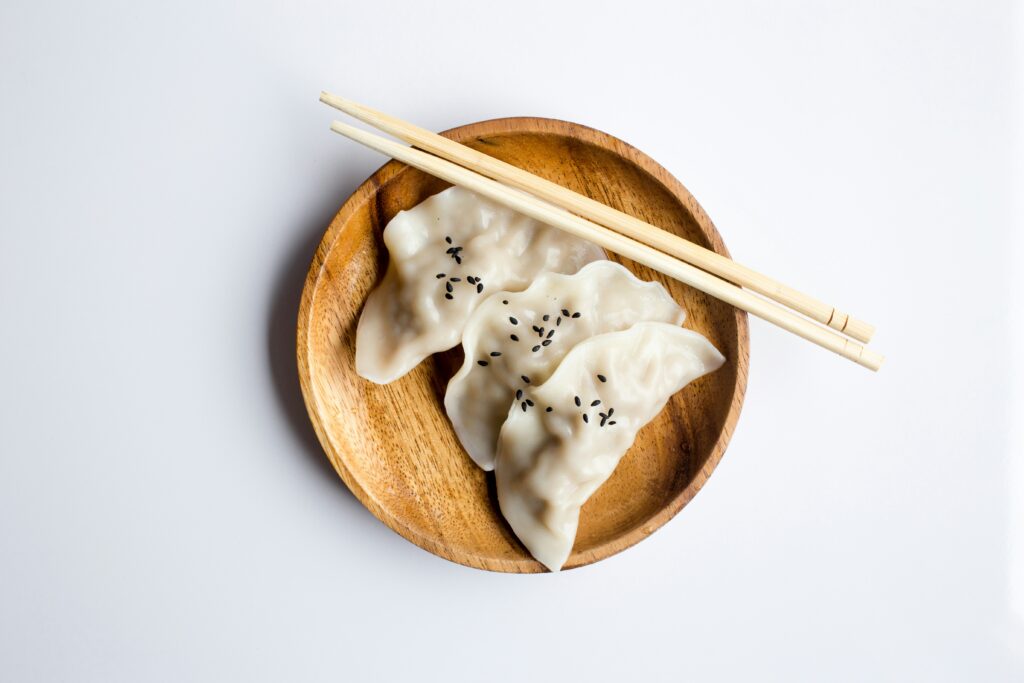
Waribashi come joined at the top and there is a right way to deal with them.
Splitting Them
Hold them horizontally, in front of you and low — over your lap or the table rather than up at chest height — and pull them apart sideways.
Splitting them vertically in the air with elbows out risks hitting the person next to you at a crowded counter, which is the practical reason for the convention.
Do it quietly and put the paper sleeve aside for use as a rest.
When You Are Finished
Slide the chopsticks back into the paper sleeve, or fold the sleeve over the tips, and lay them down parallel.
This signals that you have finished and keeps the used ends off the table. It takes two seconds and it is a recognisable mark of good manners.
Quality Varies
Better restaurants use higher-grade waribashi — cedar or cypress, smoother, often unsplit and unrubbed for a reason.
At a formal meal you may be given proper lacquered chopsticks with a rest. Handle them the same way and do not put them in your bag.
Chopstick Etiquette in Japan: Frequently Asked Questions
Is it rude to ask for a fork?
No. Casual restaurants, family restaurants, and anywhere used to foreign customers will produce a fork without comment, and nobody minds.Two caveats: a small traditional restaurant may genuinely not have a fork, and staff at a formal kaiseki restaurant or sushi counter may find the request awkward, not because it offends them but because they design the food to be eaten with chopsticks. If you struggle with chopsticks, practise a little before you come — it takes an evening — and use a fork when a restaurant offers one. Japanese people are far more concerned that you enjoy the food than with how you get it to your mouth.
Can I pick up my bowl?
Yes, and you should. Rice bowls and soup bowls are lifted with the left hand and held near the chest while eating — leaving a rice bowl on the table and leaning down to it is what looks improper in Japan, which is the reverse of European convention. Miso soup is drunk directly from the bowl, using chopsticks for the tofu and seaweed. Larger plates, donburi bowls with heavy contents, and flat dishes stay on the table. The rough rule: if you can lift it comfortably in one hand, lift it.
What do I do if I drop my chopsticks?
Leave them on the floor, catch a member of staff’s eye, and quietly ask for a new pair — sumimasen, hashi o onegaishimasu. Do not pick them up and continue using them, and do not wipe them on a napkin. In a busy restaurant this happens constantly and staff replace them without a second thought. If they are disposable, the same applies. Retrieving them yourself is fine if they are in the way, but they still get replaced rather than reused.
Related Tours
Conclusion
Remember the two funeral rules — never upright in the rice, never chopstick to chopstick — and use the rest whenever you are not eating. That covers everything anyone at your table will actually register.
Beyond that, relax. The Japanese hosts and restaurant staff you meet are pleased that you are eating their food and are not conducting an examination, and a visitor who slurps their noodles enthusiastically and holds their chopsticks badly is a considerably better guest than one who is too anxious to enjoy the meal.
Plan Your Japan Trip with Local Experts
Our team has guided 40,000+ travelers across Japan. Tell us about your trip and we’ll get back to you within 24 hours.