
In this article:
- Why Himeji Castle Is Different
- Reading the Castle as a Defensive Machine
- Tickets, Hours, and the 2026 Changes
- Beyond the Castle: Koko-en and Mount Shosha
- Planning a Day Trip to Himeji
- Himeji Castle: Frequently Asked Questions
Introduction
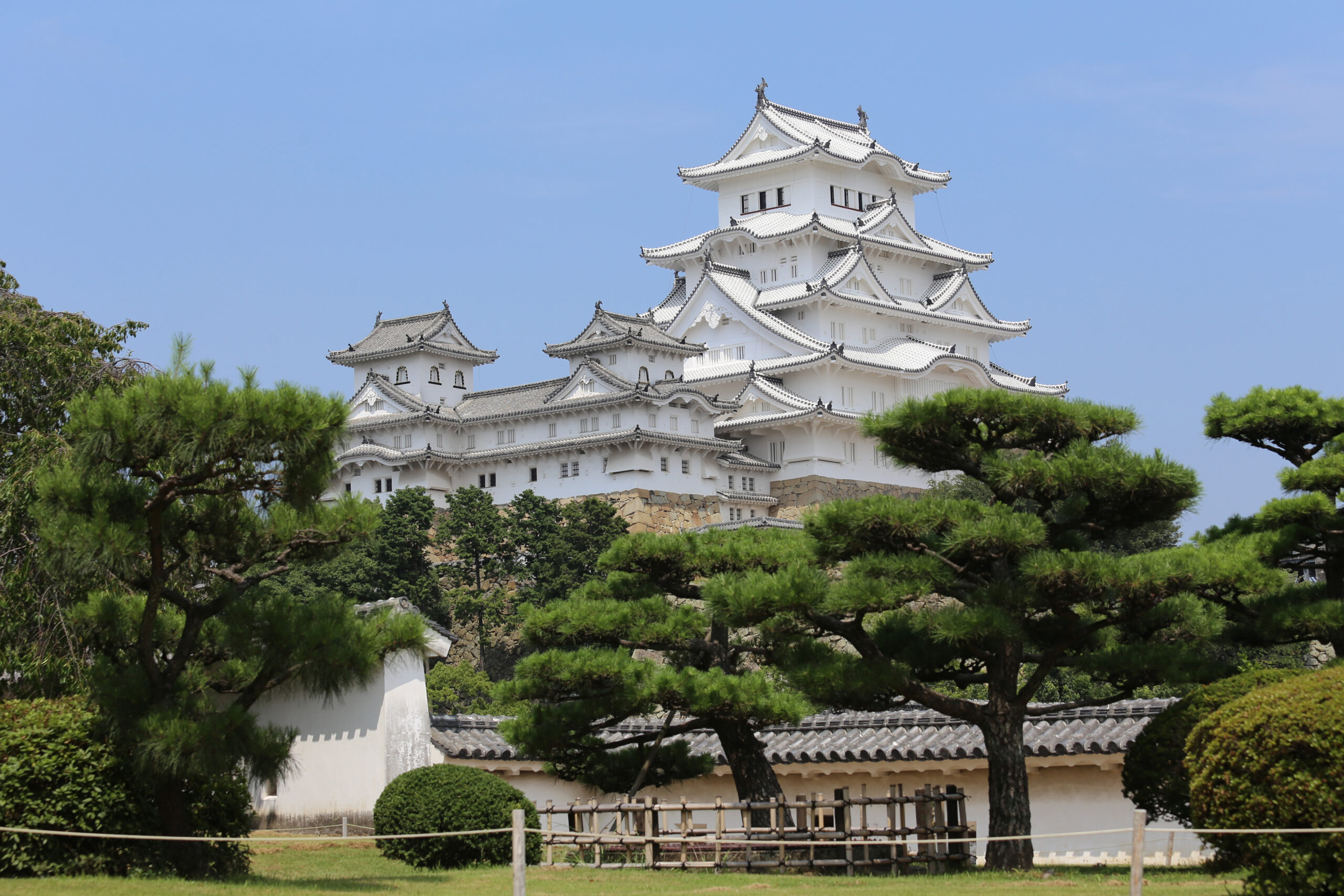
Step out of the north exit of Himeji Station and the castle is already in front of you, white and enormous at the far end of a long, straight avenue. Most people see Himeji Castle for the first time exactly like this. It is the right way to see it, because the city was laid out so that you would.
What you are looking at is not a replica. Most famous Japanese castles you can visit today are twentieth-century concrete rebuilds with a museum inside. Himeji is the real thing: a keep completed in 1609, walked through on original floorboards, with the steep ladder-like stairs and cold, bare interiors of a building designed for war rather than display.
That distinction changes how you should visit. A reconstruction rewards you for reading the exhibits. An original castle rewards you for reading the building itself, and that takes a little preparation. Below is what we tell travelers before they walk through the first gate.
Why Himeji Castle Is Different
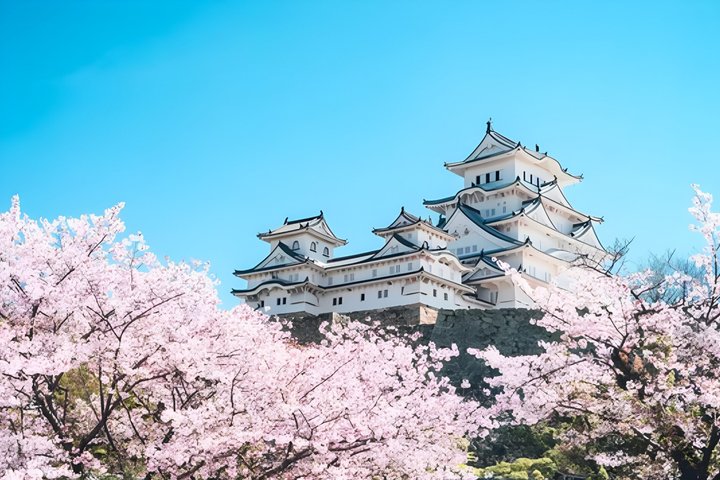
Himeji is the castle every other Japanese castle gets measured against. It is a National Treasure, and in 1993 it became one of the first sites in Japan inscribed on the UNESCO World Heritage List.
An Original Keep, Not a Reconstruction
Many Japanese castles were torn down after the Meiji Restoration, when feudal domains were abolished and castles became symbols of an order the new government wanted gone. Others that remained burned in the air raids of 1945.
Himeji came through both. American bombing destroyed much of the city in July 1945, yet the castle escaped mostly unscathed. Fifty years later, the Great Hanshin earthquake of 1995 devastated Kobe to the east, and the keep stood through that as well.
Survival has taken work. The keep was fully dismantled and reassembled during the Showa restoration between 1956 and 1964, and a second major repair project covered the keep from 2009 until it reopened in March 2015. That is why the plaster looks so white. In our view, this cycle of careful repair is the whole point of Himeji rather than a footnote to it. For how Himeji compares with the other eleven survivors, from Matsumoto to Kochi, see our guide to Japan’s 12 original castles.
From Hideyoshi to Ikeda Terumasa
A fortress has stood on this hill since at least the sixteenth century. Toyotomi Hideyoshi used Himeji as a base around 1580 and built a three-storey keep with stone walls, before moving his power centre to Osaka.
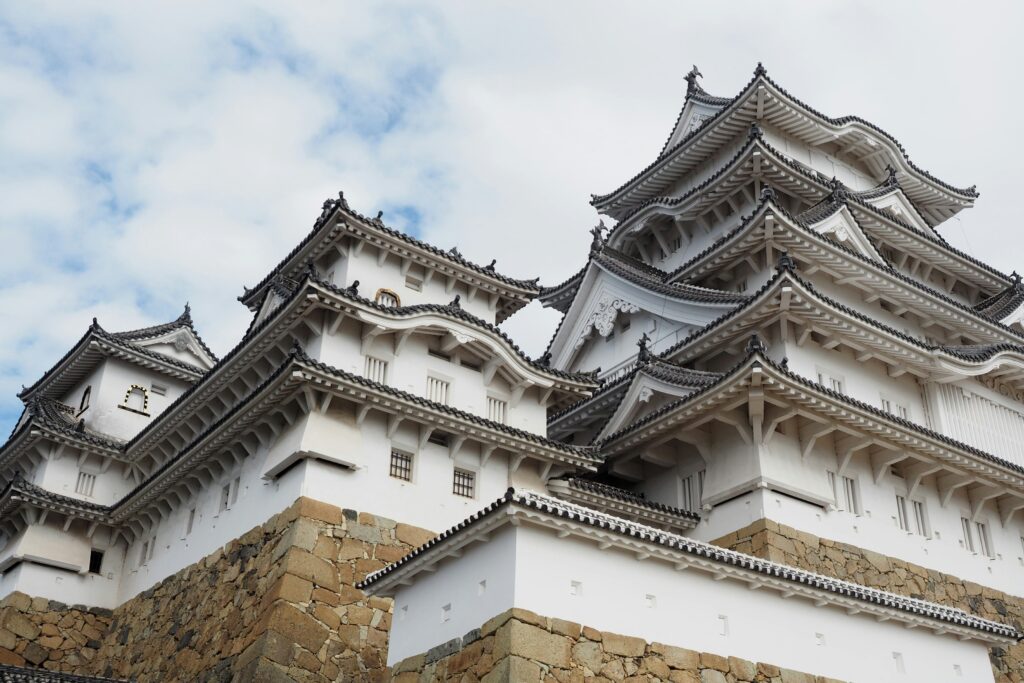
The castle you see today belongs to Ikeda Terumasa, the son-in-law of Tokugawa Ieyasu, who was granted Himeji after the Battle of Sekigahara in 1600. Between 1601 and 1609 he rebuilt it on a far grander scale. The white plaster that coats the walls, a fire-resistant finish as much as an aesthetic one, gave the castle its nickname: Shirasagi-jo, the White Heron Castle.
The complex is far bigger than the keep alone. More than eighty buildings survive, including turrets, gates, corridors, and storehouses. Allow for that when you plan your time.
Reading the Castle as a Defensive Machine
Nobody ever attacked Himeji in earnest. Still, every metre of the approach was designed on the assumption that someone would.
The Approach That Turns Back on Itself
From the main entrance, the keep looks close. It is not. The paid route winds up the hill through a sequence of gates that narrow, turn sharply, and repeatedly lead you away from the keep before bringing you back towards it. On the ground this feels confusing. That was the intention.
Look up as you walk. The white walls are pierced with small openings in circles, triangles, and squares. These are loopholes for guns and bows, and there are hundreds of them across the complex. Where walls overhang the stone base, you will see stone-drop openings, angled so that defenders could attack anyone trying to climb.
In our experience, this is the moment the castle changes for people. Once a guide points out that an attacker at a given corner would be exposed from three directions at once, the pretty white walls become tactical. Many travelers tell us they walked back down seeing an entirely different building.
Inside the Keep
The main keep looks like five storeys from outside but holds six floors plus a basement. You remove your shoes at the entrance and carry them in a bag, so wear socks you are happy to be seen in and shoes that come off quickly.
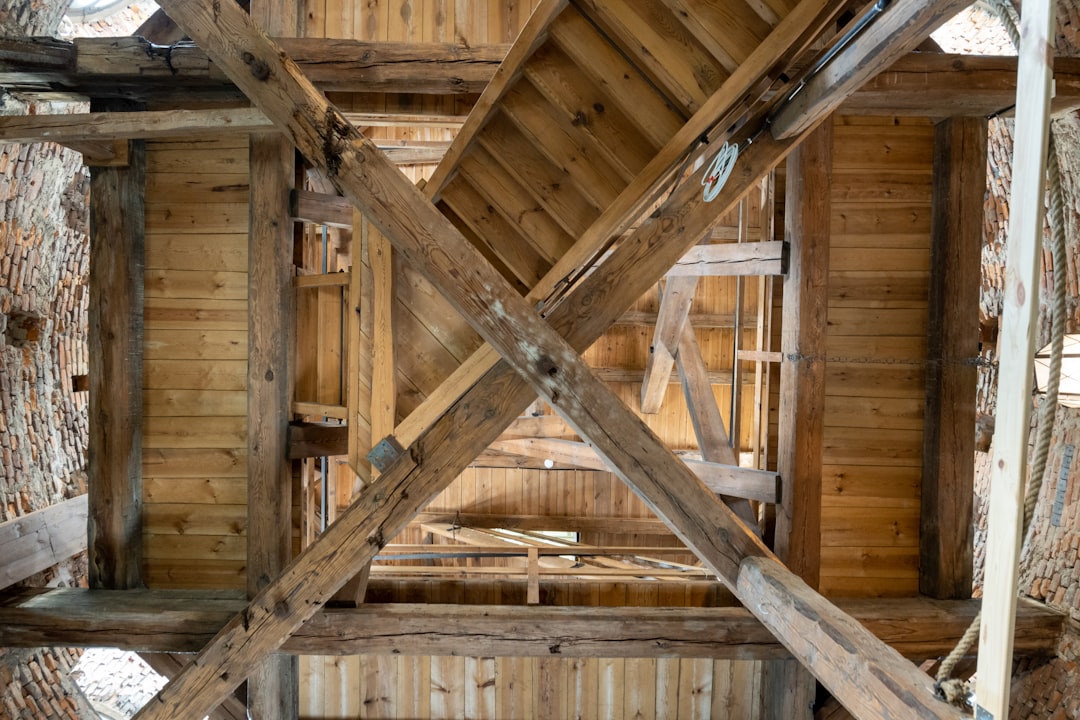
The interior is bare timber. Heavy pillars, weapon racks along the walls, and wide windows that frame the city below. There is no lift and no air conditioning. The staircases get steeper and narrower as you rise, and on a busy day the climb becomes a slow, single-file queue. In high summer the upper floors are hot.
At the top floor there is a small shrine, and the view runs across the rooftops of Himeji to the hills beyond. Take a moment here. It is the only point on the route where the whole defensive plan becomes visible from above.
The West Bailey and the Stories Along the Way
Many visitors head straight for the keep and skip the Nishi-no-maru, or West Bailey. We think that is a mistake. The long Hyakken corridor that runs along its wall once housed the women of the castle, and it is associated with Princess Sen, granddaughter of Tokugawa Ieyasu, who lived at Himeji after her marriage into the Honda family.
Along the route you will also pass Okiku’s Well, tied to one of Japan’s best-known ghost stories, and the Ubagaishi, a millstone set into a stone wall. Legend holds that an elderly woman donated it when stone ran short during Hideyoshi’s construction.
Expert Tip
Walk the West Bailey first, then climb the keep. The corridor is long and quiet in the morning, and doing it first means you reach the keep stairs once the early rush has thinned rather than joining it. Keep a small foldable bag handy for your shoes; it makes the stairs much easier with both hands free.
Tickets, Hours, and the 2026 Changes
Himeji changed its admission fees in 2026, and much of the information online still quotes the old prices.
Admission Since March 2026
From March 1, 2026, adult admission for visitors who do not live in Himeji is 2,500 yen. Residents of the city pay 1,000 yen. Everyone under 18 now enters free, which makes the castle better value for families than it used to be.
If you plan to see Koko-en as well, buy the combined ticket at 2,600 yen. It covers both sites and costs only 100 yen more than the castle alone. E-tickets are available through the official ticket site, and they let you skip the ticket counter, though not the queue for the keep itself on busy days.
Hours, Crowds, and Timing
The castle opens at 9:00 and closes at 17:00, with last entry at 16:00. It closes on December 29 and 30.
Crowds are the real variable. Cherry blossom season in early April, Golden Week at the start of May, and the summer holidays bring long waits for the keep, and entry can be restricted at peak times. We recommend arriving at opening. After about 10:30 on a spring weekend, the climb inside the keep turns into a queue that moves at the speed of its slowest step.
For the calmest visit, choose a weekday in late autumn or winter. The white walls look sharpest under a hard winter sky, and the stairs are far less crowded.
Expert Tip
The combined castle and Koko-en ticket is sold at the ticket booths of both sites. If the castle booth has a line on a busy morning, walk the few minutes to Koko-en, buy the set there, and come back through the castle gate with a ticket already in hand.
Repair Work Near the Keep
Preservation work began near the main keep in early July 2026 and is scheduled to run until around late July 2027. It affects structures and walls around the Ni-no-Yagura and the Mizu-no-Ichimon and Mizu-no-Nimon gates.
The castle stays open and the keep can still be climbed. However, expect scaffolding beside some buildings, narrower passages on parts of the route, and some changes to evening illumination. For photographs, the views from outside the walls are less affected than those from inside the inner baileys.
Beyond the Castle: Koko-en and Mount Shosha
Two hours of steep stairs and military architecture is a lot. Himeji has two excellent counterweights, one next door and one on a mountain above the city.
Koko-en
Koko-en sits just west of the castle moat, on the site of the old western residences. Opened in 1992, it is a set of nine separate walled gardens laid out in Edo-period style, each with its own character: a pond garden, a pine garden, a bamboo garden, a tea garden.
The garden is quiet in a way the castle rarely is. Carp move slowly under stone bridges, gravel paths lead between tall earthen walls, and around several corners the keep appears above the trees. That borrowed view is the reason to come. We send travelers here directly after the castle, before lunch, when their legs need an hour on level ground.
Engyo-ji on Mount Shosha
Engyo-ji is a temple complex founded over a thousand years ago on Mount Shosha, northwest of the city centre. You reach it by bus from Himeji Station and then a ropeway, followed by a walk uphill through cedar forest.
The great wooden halls stand among the trees at the top, dim and cool even in summer. Parts of The Last Samurai were filmed here, which is how many visitors first hear of it. The setting deserves better than that reference. Where the castle is about control and exposure, Engyo-ji is about shade and silence, and the two make an unusually balanced day.
Planning a Day Trip to Himeji
Himeji works as a day trip from Osaka or Kyoto, and that is how most of our travelers see it.
Getting There From Osaka and Kyoto
The Sanyo Shinkansen runs from Shin-Osaka to Himeji in about 30 minutes. From Kyoto, the Shinkansen takes under an hour. Ordinary JR rapid trains cost less and take longer, which is a reasonable trade if you are not in a hurry.
From Himeji Station, the castle is about a 20-minute walk straight up the main avenue, or a short bus ride to the Otemon-mae stop. We recommend walking. The approach is flat, and the keep grows larger with every block.
Himeji also sits on the Shinkansen line west towards Okayama and Hiroshima. If your itinerary is heading that way, a stop in Himeji with luggage in a station locker costs you only a few hours. Our Hiroshima travel guide covers what comes next.
How We Structure the Day
On our Himeji private tours, the day usually runs in the same order. Meet near the station around opening time, climb the castle while it is still quiet, and walk through Koko-en. After lunch built around regional specialities, the guide takes those with energy left up Mount Shosha to Engyo-ji. Budget four to six hours in total, and closer to six if you add the mountain.
Two practical points catch people out. Entrance fees, transport, and meals are paid as you go, so carry cash. The keep is also a genuine climb on original stairs, and it is not suitable for anyone unsteady on their feet. The grounds and Koko-en are far easier going.
For travelers interested in the people who built and held these places, our piece on the samurai and historic castle towns is useful reading before the trip.
Himeji Castle: Frequently Asked Questions
How long do you need at Himeji Castle?
Plan on about two hours for the castle grounds, the West Bailey, and the climb to the top of the keep. On busy days, when entry to the keep is queued, allow more. With Koko-en and time for photographs, three to four hours is comfortable. Adding Engyo-ji on Mount Shosha turns it into a full day.
Is Himeji Castle worth visiting if I have already seen Osaka Castle?
Yes, and the comparison is the best argument for it. Osaka Castle’s current keep is a twentieth-century reconstruction with a modern museum inside. Himeji’s keep is original timber from the early seventeenth century. The experience of climbing through a working defensive building is something Osaka cannot offer.
Can I visit Himeji Castle with young children or limited mobility?
Children are welcome, and since March 2026 everyone under 18 enters free. The keep itself is harder. There is no lift, the stairs are steep and narrow, and shoes come off inside, so small children need to be carried or closely held. Visitors with limited mobility can still enjoy the outer grounds and Koko-en, which are much easier going.
Related Tours


Conclusion
Arrive at 9:00, walk the West Bailey before the keep, and buy the combined ticket so Koko-en is waiting for you afterwards. Those three choices shape the visit more than anything else, and they cost nothing extra.
Check the repair schedule before you go if you are travelling before late July 2027, and pack socks worth being seen in. Then take the slow walk up the avenue from the station. The castle was built to be seen from there, and four hundred years later it still is.
Plan Your Japan Trip with Local Experts
Our team has guided 40,000+ travelers across Japan. Tell us about your trip and we’ll get back to you within 24 hours.




