
In this article:
- Understanding Lake Biwa Before You Go
- The Western Shore: Mount Hiei, Katata, and the Torii in the Lake
- The Eastern and Northern Shore: Hikone, Omihachiman, and Chikubushima
- Planning a Lake Biwa Day Trip from Kyoto
- Lake Biwa: Frequently Asked Questions
Introduction
Most visitors to Kyoto pass within a few kilometres of Lake Biwa without ever seeing it. The mountains to the east of the city hide it completely, and yet the train from Kyoto Station reaches the lakeside at Otsu in about ten minutes.
On the other side of that ridge is a different pace of Japan. Lake Biwa is ringed by one of the few castle keeps that survived intact from the feudal era, a monastery that once fielded its own army, canal towns built by travelling merchants, and an island that pilgrims have been crossing to for centuries. The same history that fills Kyoto runs straight through Shiga. The crowds mostly do not.
The mistake we see most often is treating the lake as a single sight to be circled in a day. It is not. Lake Biwa is closer to a region than an attraction, and the travelers who enjoy it most are the ones who choose one shore and give it the whole day.
Understanding Lake Biwa Before You Go
The scale is the first thing to recalibrate. Distances look short on a map of Kansai, and they are not.
An Ancient Lake, Larger Than It Looks
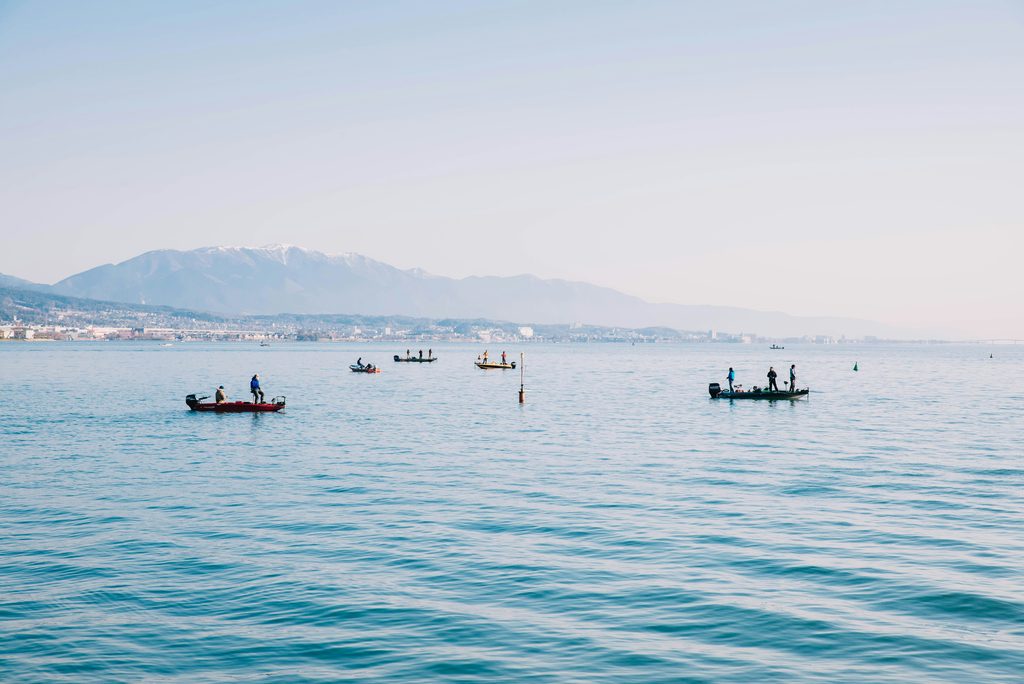
Lake Biwa covers roughly 670 square kilometres and runs about 64 kilometres from north to south. Its shoreline is around 235 kilometres long. From the southern tip at Otsu you cannot see the northern end, and on a hazy day the far shore disappears entirely.
It is also old. Geologists estimate the lake is more than four million years old, which places it among the oldest lakes in the world. That age explains the fish found nowhere else, including the Biwa trout and the nigorobuna crucian carp, and those fish in turn explain much of the local food.
The name comes from the biwa, a lute whose rounded body and narrow neck the lake’s outline resembles. Look at it from the air and the comparison holds up better than you would expect.
The Water That Runs Through Kyoto
Kyoto and Lake Biwa are more closely connected than most itineraries suggest. In the late nineteenth century, the city cut a canal through the mountains to bring lake water west, and it powered the revival of Kyoto after the capital moved to Tokyo.
You have probably already seen it without knowing. The red-brick aqueduct in the grounds of Nanzen-ji carries lake water, and the narrow channel beside the Philosopher’s Path is part of the same system. The lake still supplies drinking water to more than ten million people across Kansai, including Kyoto and Osaka.
Two Shores, Two Characters
The western shore is mountains and faith. Mount Hiei rises almost directly from the water, and the villages along the Kosei Line sit in a thin strip between the slope and the lake.
The eastern shore is flatter, broader, and commercial. This is where the castle towns and merchant towns grew, along the old roads that linked Kyoto with eastern Japan. Keep this split in mind. It is the single most useful fact for planning a visit.
The Western Shore: Mount Hiei, Katata, and the Torii in the Lake
The western shore rewards travelers interested in religion, landscape, and quiet. It is also the side closest to Kyoto.
Enryaku-ji and the Sakamoto Cable Car
Enryaku-ji was founded on Mount Hiei in the eighth century and became the headquarters of the Tendai school of Buddhism. Over the following centuries it grew into a political and military power, with armed monks who descended on Kyoto when their interests were threatened. In 1571, Oda Nobunaga burned the mountain and killed the community.
What you visit today was rebuilt afterwards and is spread across a forested ridge in several separate precincts. The complex is part of the Historic Monuments of Ancient Kyoto World Heritage listing. Cedar trees, moss, and long distances between halls set the mood here, and the walking is considerable.
From the Shiga side, the Sakamoto Cable Car climbs to the temple in about eleven minutes. At 2,025 metres, it is the longest cable car line in Japan, and the view back over the lake improves the whole way up. We prefer this approach over the Kyoto side for exactly that reason. The town of Sakamoto at its base, with its old stone walls and temple residences, is worth an unhurried hour before you ascend.
Ukimido at Katata
North of Otsu, in the old port district of Katata, a small temple hall stands on stilts over the water. This is Ukimido, the floating hall of Mangetsu-ji, a Zen temple connected to a much older foundation.
Ukimido appears in the Eight Views of Omi, the classical set of lake scenes painted by Hiroshige among others, under the title of wild geese descending at Katata. The present structure dates from 1937. That makes no difference to the effect. Early morning, before the tour buses and with mist on the water, is when the scene looks most like the prints.
Shirahige Shrine and the Torii in the Water
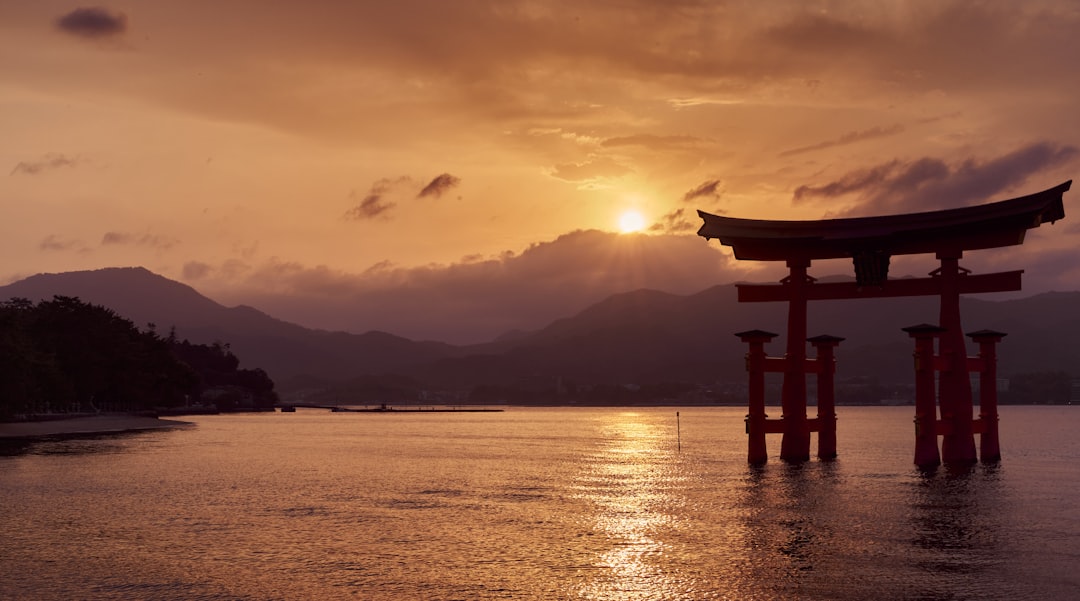
Further north in Takashima, a vermilion torii gate stands in the lake a short distance offshore from Shirahige Shrine. The shrine is one of the oldest in Shiga, and the gate is the image most people now associate with Lake Biwa.
There is one practical problem. A busy national highway runs between the shrine and the water, and crossing it to reach the shore is prohibited. Traffic is fast and the shoulder is narrow. Use the official viewing deck in front of the shrine office instead. The angle is good, and nobody needs to step into the road for a photograph.
Expert Tip
Mount Hiei is noticeably colder than Kyoto, and in winter parts of the mountain access close. Bring a warm layer even in spring and autumn, when the temperature at the top of the Sakamoto Cable Car can feel like a different season from the lakeside station below.
The Eastern and Northern Shore: Hikone, Omihachiman, and Chikubushima
If the west shore is about faith, the east is about power and money. Castle lords and merchants built these towns, and it shows.
Hikone Castle, One of Five National Treasure Keeps
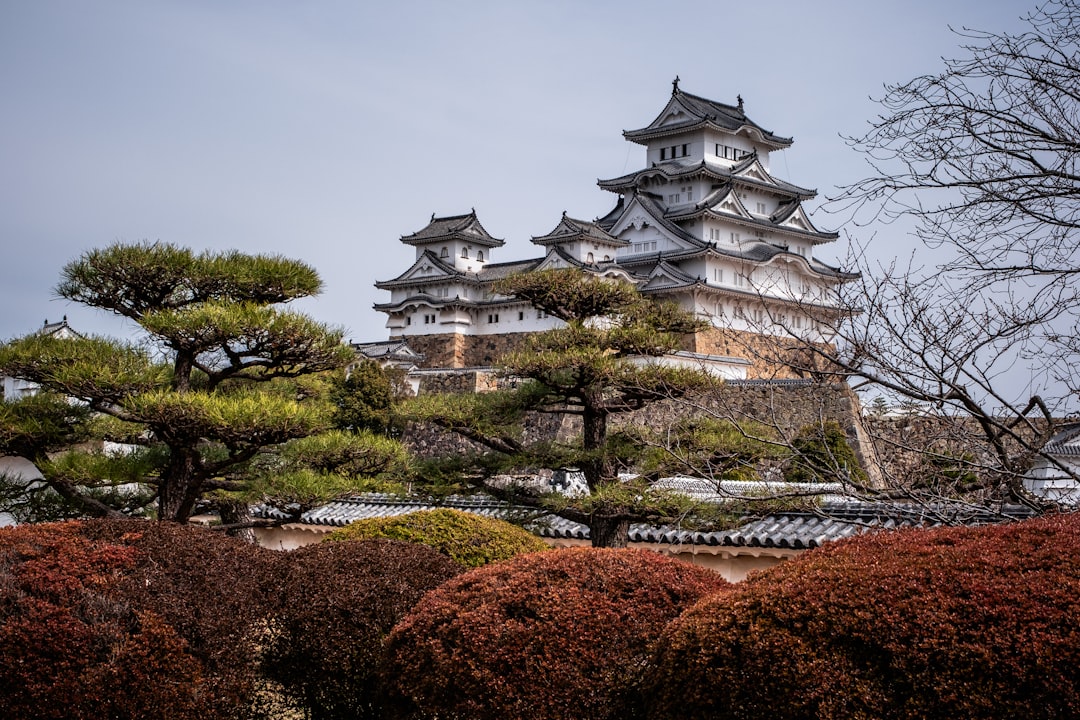
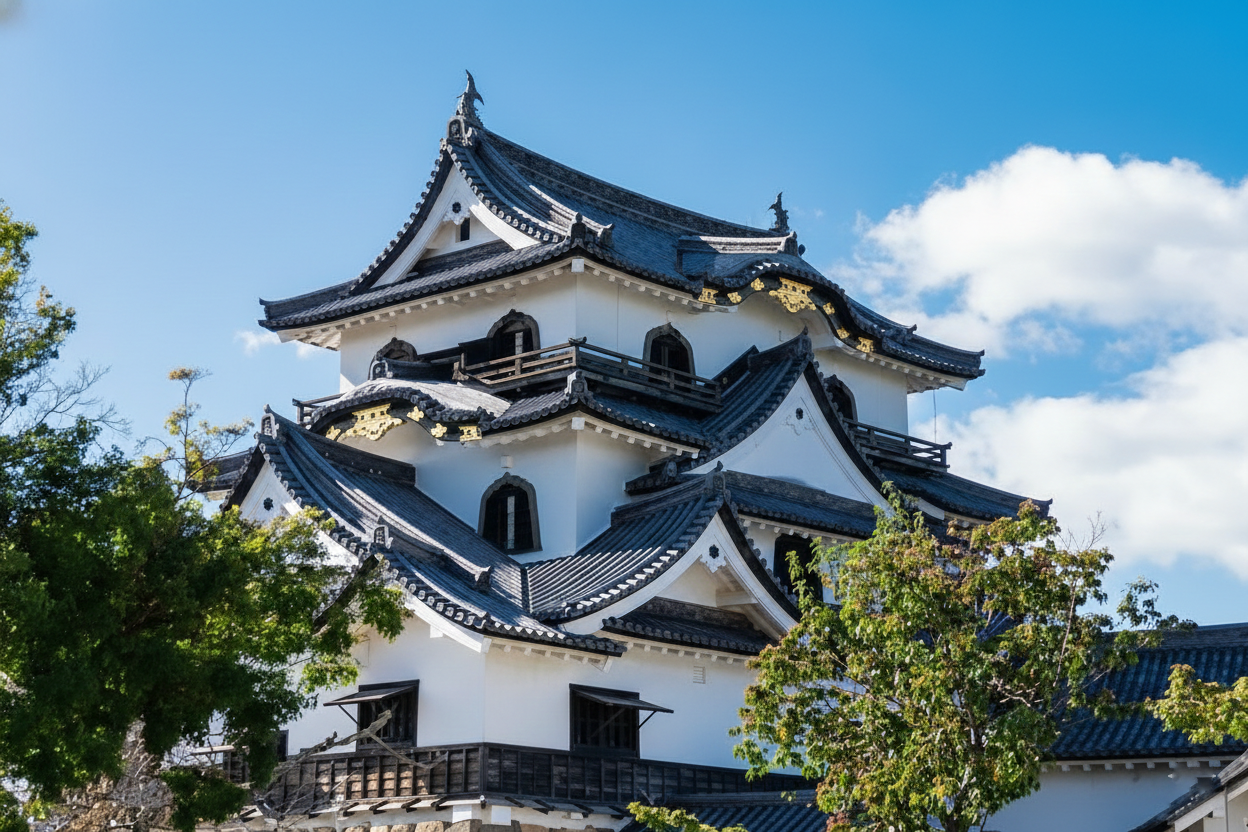
Hikone Castle is one of only five castles in Japan whose keep is both original and designated a National Treasure. The others are Himeji, Matsumoto, Inuyama, and Matsue. Most of the castles visitors see elsewhere, including Osaka’s, are twentieth-century reconstructions in concrete.
The keep is compact, steep, and built for defence rather than display. It came close to demolition in the 1870s, when the new government was pulling down castles as relics of the old order, and survived. The interior stairs are nearly vertical in places, so wear shoes you can climb in and expect to use your hands on the rails.
Below the castle, Genkyu-en is a strolling garden laid out by the ruling Ii family, with the keep rising above the pond. For context on how Hikone compares with the other survivors, our guide to Japan’s twelve original castles covers all of them.
Omihachiman and the Merchant Canal
Omihachiman is where the Omi merchants came from. These traders travelled the length of Japan during the Edo period, and their principle that a good trade should benefit the seller, the buyer, and society is still quoted in Japan today.
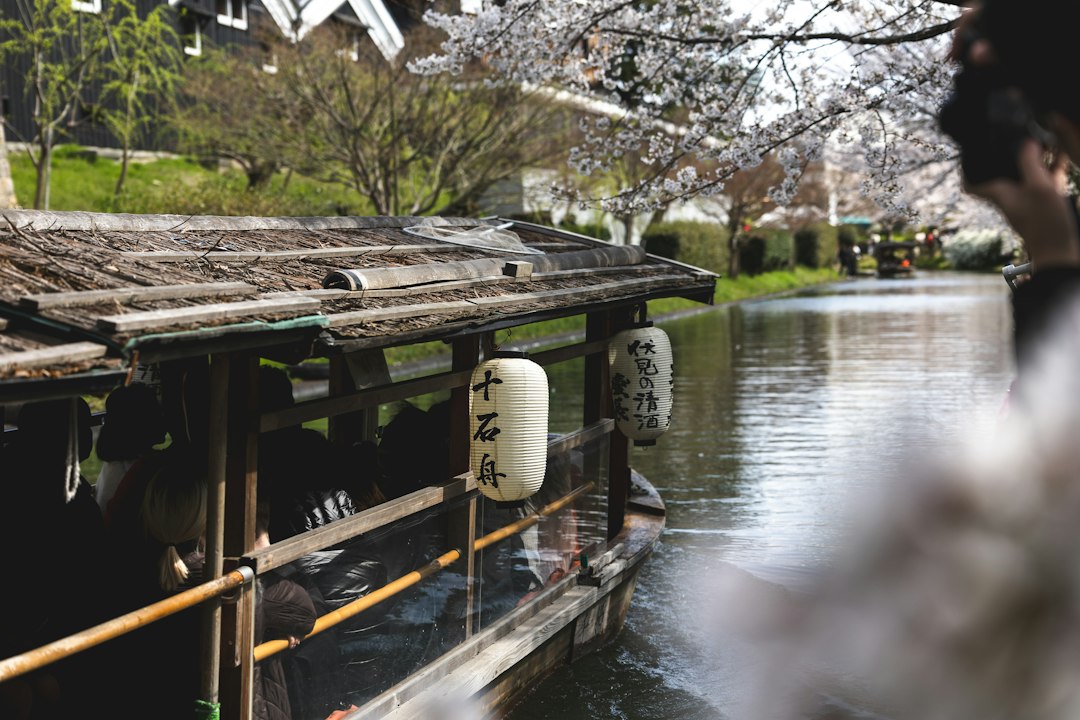
The Hachiman-bori canal was dug in the late sixteenth century as a castle moat and quickly became a commercial waterway linking the town to the lake. White-walled storehouses and stone steps line the water, and hand-rowed boats take visitors along it. The boat is the right way to see it. The canal was built to be seen from water level, and it looks flatter from the path above.
Chikubushima from Nagahama
Chikubushima is a small, steep island in the north of the lake, about two kilometres around. Sightseeing boats leave from Nagahama and Imazu, and the crossing from Nagahama takes around thirty minutes.
The island holds Hogon-ji, a temple on the Saigoku Kannon pilgrimage, and Tsukubusuma Shrine, whose main hall is a National Treasure. At the shrine, visitors write a wish on a small clay disc and throw it toward a torii gate standing on the rocks below. If it passes through, the wish is said to come true. Most miss, which is part of the fun.
Boat schedules vary by season and day of the week. Check them before you commit to the north of the lake, because the island depends entirely on the boats.
Planning a Lake Biwa Day Trip from Kyoto
Everything above is reachable from Kyoto in a day. Not all of it is reachable in the same day.
Getting There by Train
Two JR lines leave Kyoto for the lake, and they split almost immediately. The Biwako Line runs along the eastern shore through Otsu, Omihachiman, and Hikone. The Kosei Line runs up the western shore toward Katata and Takashima.
Approximate journey times from Kyoto Station are ten minutes to Otsu, around thirty-five minutes to Omihachiman, and around fifty minutes to Hikone by rapid service. Nagahama is roughly an hour. These are easy trips. The difficulty begins once you arrive, because local buses between sights on the same shore are infrequent and cross-lake connections barely exist.
An IC card covers the JR fares. Keep some cash as well, since smaller temples and local buses in Shiga are less likely to take cards than their Kyoto equivalents.
Choose One Shore
This is our strongest recommendation. Hikone and Mount Hiei sit at opposite ends of the lake, and doing both in a single day is possible but rushed. You spend the afternoon in transit rather than inside either place.
On our private Shiga day tour from Kyoto, guests meet their guide at Kyoto City Hall, and the conversation usually starts with exactly this choice. Castle and merchant town, or monastery and lakeshore. Most people pick one and add the water, and they come back far less tired.
A sensible eastern day is Hikone Castle in the morning and Omihachiman’s canal in the afternoon, both on the same line. A western day is Sakamoto and Enryaku-ji, then Ukimido on the way back. Shirahige Shrine and Chikubushima each justify their own day, or an overnight stay.
Seasons and What to Eat
Spring and autumn are the best seasons around the lake. Cherry blossoms frame Hikone Castle in early April, and autumn on Mount Hiei arrives with cooler, clearer air than the city below. Summer is hot and humid on the eastern plain, although the lake beaches draw swimmers. Winter brings snow to the north and to the mountain, and some access closes.
The food is its own reason to come. Omi beef, raised in Shiga, is among the best-known wagyu brands in Japan and is served as sukiyaki in Omihachiman and Hikone. Funazushi, fermented crucian carp from the lake, is the local delicacy with the strongest opinions attached. It is sour, pungent, and closer to aged cheese than to sushi. We think it is worth one bite.
Expert Tip
Entry fees, transport, and lunch around the lake are paid on the day and add up faster than in Kyoto, because you are buying separate train, cable car, boat, and admission tickets. Carry enough cash for all of them, and start early. Many lakeside sights close in the late afternoon, and the last useful hour disappears quickly once you factor in the train back.
Lake Biwa: Frequently Asked Questions
How long does it take to get to Lake Biwa from Kyoto?
About ten minutes. JR trains from Kyoto Station reach Otsu, on the southern shore, very quickly. Hikone takes around fifty minutes and Nagahama about an hour, so the time depends on which part of the lake you are visiting rather than on the lake itself.
Can you swim in Lake Biwa?
Yes, at designated beaches during the summer season. Omimaiko on the western shore, with its sand and pine trees, is the best known. Outside those beaches and that season, swimming is not something we would plan around.
Is Lake Biwa worth visiting if I only have a few days in Kyoto?
On a first trip of three or four days, we would usually keep you in Kyoto. On a second visit, or with five days or more, Shiga is the natural next step: the same period of history, a fraction of the visitors, and an original castle that Kyoto itself does not have.
Related Tours

Conclusion
Lake Biwa is the easiest way to leave the Kyoto crowds without leaving Kyoto’s history. The train takes minutes, the sights carry the same weight as anything in the city, and the numbers of visitors drop sharply the moment you cross the ridge.
The only real decision is which shore. Choose the east for Hikone’s original keep and the merchant canals of Omihachiman, or the west for Mount Hiei, Katata, and the gate in the water. Give that shore a full day, bring cash and a warm layer, and leave the rest of the lake for a second visit.
Plan Your Japan Trip with Local Experts
Our team has guided 40,000+ travelers across Japan. Tell us about your trip and we’ll get back to you within 24 hours.




