
In this article:
- How Ueno Park Is Laid Out
- The Museums: Choosing Where to Spend Your Hours
- Temples, Shrines and Shinobazu Pond
- Cherry Blossoms and the Rest of the Year
- Ueno Park: Frequently Asked Questions
Introduction
Walk out of the Park Exit at Ueno Station and the first thing you notice is how little the entrance prepares you. A road crossing, a concert hall, some pigeons. Five minutes later you are standing between the Tokyo National Museum and a seventeenth-century shrine covered in gold leaf.
Ueno Park is the most useful half day in Tokyo that most visitors underplan. People arrive for the cherry blossoms or the zoo and spend an hour there. However, they leave without realizing that Japan’s oldest and largest museum sits at the far end of the same promenade. Others come for the museum and never see Shinobazu Pond, which is arguably the best part.
We use Ueno constantly with the travelers we guide around Tokyo. Usually, it serves as a morning that sets up the rest of a trip. What follows is how we think about it. We cover what the park actually contains, what to prioritize, and when to go so the crowds do not decide the day for you.
How Ueno Park Is Laid Out
Ueno Park makes sense once you understand that it was a temple before it was a park.
From Temple Grounds to Public Park
During the Edo period, this whole hill belonged to Kaneiji, a Tendai temple. It was built to protect the shogun’s castle from the northeast, the direction Japanese tradition treated as unlucky. It was one of the largest and wealthiest temple complexes in the city. Most of it burned in 1868, in the fighting between shogunate loyalists and the new Meiji government.
The land became one of Japan’s first public parks in 1873. Its formal name, Ueno Onshi Koen, means roughly “Ueno Imperial Gift Park.” It dates from 1924, when the Emperor Taisho handed it to the city, which explains the park’s layout. The museums sit where temple halls once stood, and the surviving religious buildings are scattered fragments of the old precinct rather than a planned sequence.
Getting In: The Park Exit and the Shinobazu Side
JR Ueno Station is on the Yamanote Line, and its Park Exit (Koen-guchi) opens almost directly onto the park. This is the exit to use if the museums are your priority. The Tokyo Metropolitan Festival Hall and the National Museum of Western Art are right in front of you.
If you are starting at Shinobazu Pond or the Saigo Takamori statue, the Shinobazu Exit and the south end of the park work better. The Tokyo Metro Ginza and Hibiya lines also stop at Ueno. From the Ameyoko market street, the climb up to the statue takes a couple of minutes.
The park runs roughly north to south. The Tokyo National Museum closes off the north end, the zoo takes up the west side, and Shinobazu Pond fills the southwest corner below the hill. Plan your route in one direction rather than zigzagging. The distances are short, but doubling back across the central promenade on a busy day is slow.
Hours, Fees and the Monday Problem
The park itself is free and open from 5:00 to 23:00. The buildings inside it are where planning matters.
Most of the museums and Ueno Zoo close on Mondays, moving to Tuesday when Monday is a public holiday. This catches out more of our travelers than anything else in Tokyo. If Monday is your only free day, spend it in Asakusa or on the Meiji Shrine forest instead, and keep Ueno for later in the week.
Admission is modest by international standards. The Tokyo National Museum’s collection galleries cost ¥1,000 for adults, and Ueno Zoo is ¥600. Special exhibitions are priced separately and often sell timed tickets in advance, so check before you go if a particular show is the reason for your visit.
Expert Tip
Enter from the Park Exit at 9:15 and walk straight up the central promenade to the Tokyo National Museum, which opens at 9:30. You will have the Honkan galleries almost to yourself for the first hour. The rest of the park, including the temples, can be seen on the way back south, when the museum crowds are just starting to arrive.
The Museums: Choosing Where to Spend Your Hours
There are more museums in Ueno Park than anyone can do well in a day. Pick one, perhaps two, and give them proper time.
Tokyo National Museum
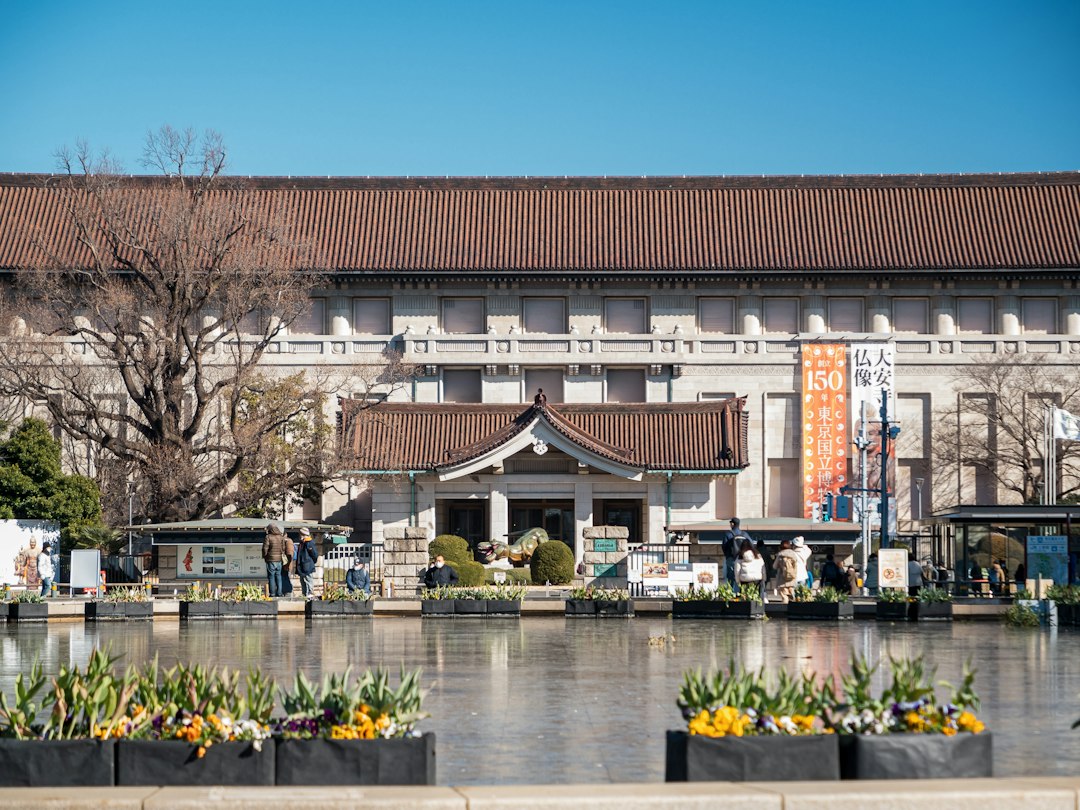
If you only enter one building, make it this one. The Tokyo National Museum is the oldest and largest museum in Japan, and its main hall, the Honkan, is laid out as a walk through Japanese art history: clay figures, Buddhist sculpture, painted screens, samurai armour, swords, lacquer, and textiles.
The collection is too large to show at once, so displays rotate. This is a reason to go even if you have visited before. Beyond the Honkan, the Gallery of Horyuji Treasures is a quiet, dimly lit modern building holding objects from one of Japan’s oldest temples. We send travelers there when the main hall gets busy. Almost nobody else goes.
Allow two hours as a minimum. Regular hours are 9:30 to 17:00, with later opening on Fridays and Saturdays.
The National Museum of Western Art
The main building was designed by Le Corbusier and is part of the World Heritage listing of his architectural work. Even if European painting is not why you came to Japan, the building rewards twenty minutes.
The collection grew from the holdings of Matsukata Kojiro, a shipbuilding industrialist who bought Western art in the early twentieth century. Rodin sculptures stand in the forecourt, including a cast of The Thinker, and you can see them without a ticket. For travelers short on time, that forecourt is enough.
Science, Art and the Shitamachi Museum
The National Museum of Nature and Science is excellent with children and good on Japanese natural history. The Tokyo Metropolitan Art Museum hosts rotating exhibitions and is worth checking for what is on during your dates.
Our quiet favourite is the Shitamachi Museum by Shinobazu Pond. It is small, cheap, and recreates the merchant houses and back alleys of old downtown Tokyo, the low city of craftsmen and shopkeepers. After the scale of the national museums, it gives a sense of how ordinary people in this part of Tokyo actually lived. Budget forty minutes.
Ueno Zoo After the Pandas
Ueno Zoo opened in 1882 and is Japan’s oldest. For decades it was defined by its giant pandas. That ended in January 2026, when the twins Xiao Xiao and Lei Lei were returned to China, leaving Japan without pandas for the first time since 1972.
The zoo is still a pleasant, shaded place to spend two hours with children, and the shorter queues are an improvement. That said, if you are an adult traveler with one day in Ueno, we would put the zoo last on the list.
Temples, Shrines and Shinobazu Pond
The religious buildings are what remain of old Ueno, and they are free to walk into. Most visitors pass straight by them.
Kiyomizu Kannon-do and Kaneiji
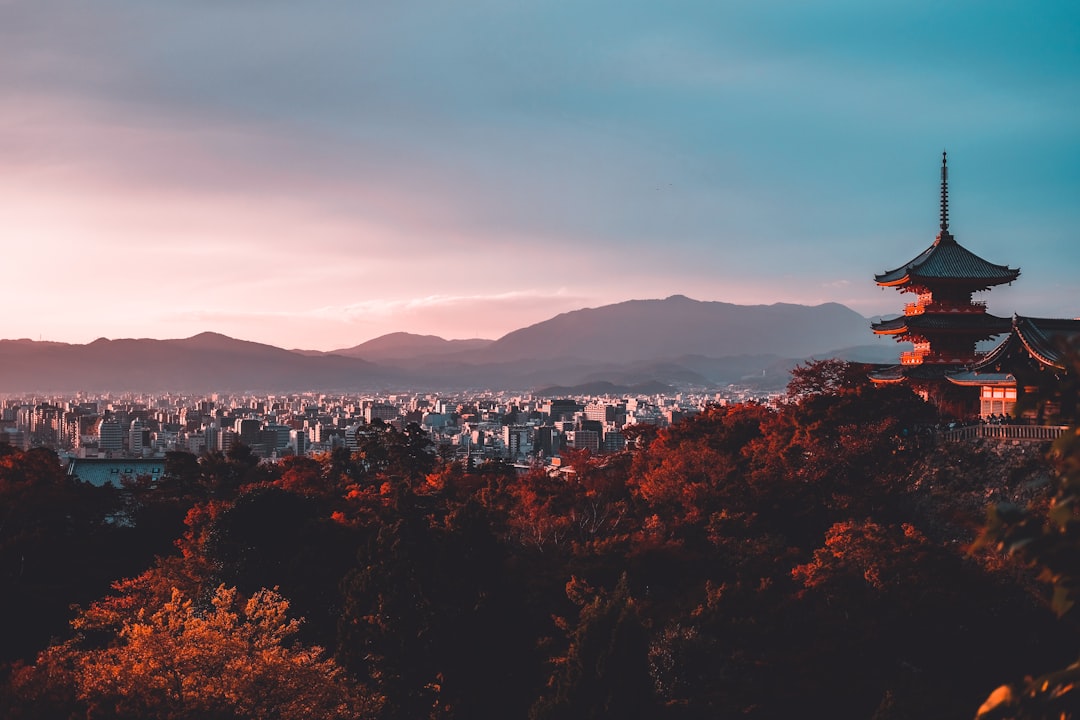
Kiyomizu Kannon-do stands on the slope above Shinobazu Pond, built on a wooden platform in deliberate imitation of Kiyomizu-dera in Kyoto. It is one of the oldest surviving buildings in the park. From its veranda you look across to a pine trained into a loop, known as the Moon Pine, a scene that appears in a woodblock print by Utagawa Hiroshige.
The present Kaneiji sits north of the Tokyo National Museum, beyond most visitors’ route. It is a fraction of what it was, but the main hall and the nearby graves of several Tokugawa shoguns make the old temple’s scale easier to imagine. Go if you are interested in the Edo period. Otherwise, skip it.
Ueno Toshogu Shrine
Nikko Toshogu enshrines Tokugawa Ieyasu, who founded the Tokugawa shogunate. Stone and bronze lanterns that feudal lords donated line the approach, and gold leaf lavishly decorates the main building. It survived the 1868 fighting, the 1923 earthquake, and the wartime air raids, which very little in Tokyo can claim.
Walking the grounds is free. There is a separate fee to go through the inner gate, and a peony garden opens at a charge in season. The gilding is the reason to come. The inner area adds a closer look, but most travelers are satisfied from outside.
Shinobazu Pond and Bentendo
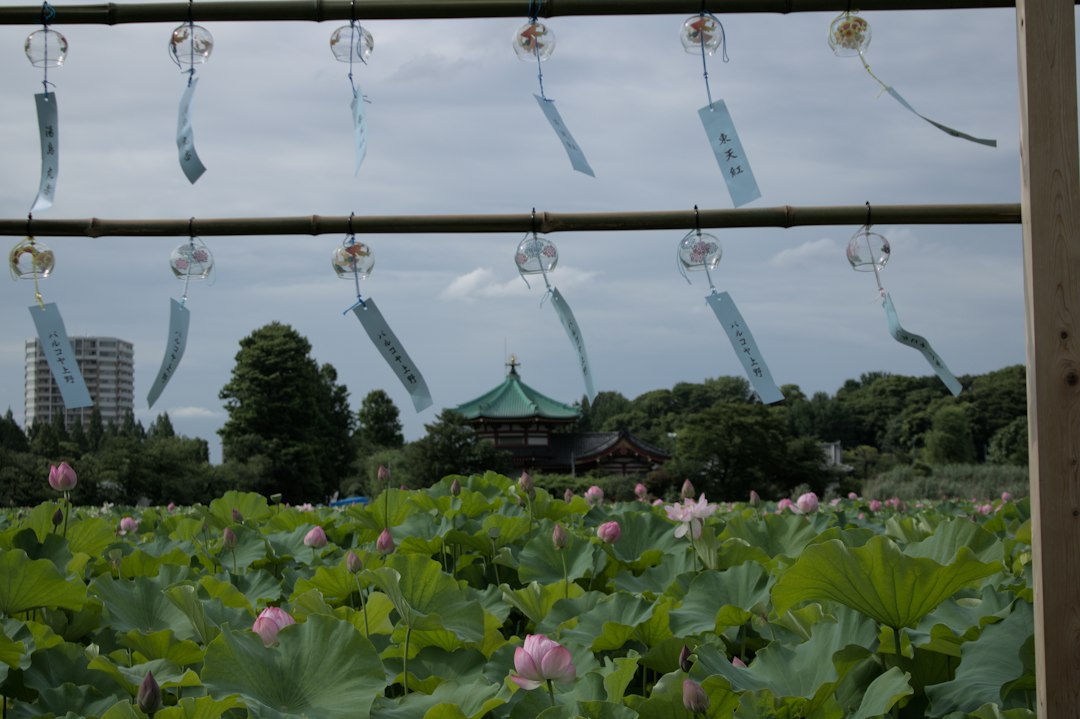
Shinobazu Pond is the part of Ueno Park we like most. The architects designed it to evoke Lake Biwa near Kyoto; a small island in the middle holds Bentendo, an octagonal hall that honors the goddess Benzaiten. A causeway leads to it.
The pond is divided into sections. One is covered in lotus, another is a boating pond with rowboats and swan-shaped pedal boats, and a third belongs to the zoo and its waterbirds. Food stalls sometimes line the causeway to Bentendo on busy days. In the late afternoon the light falls across the water from the west, and it is a good place to end a day of museums.
Cherry Blossoms and the Rest of the Year
Ueno Park is one of Tokyo’s best-known cherry blossom sites, and in peak week it is also one of the most crowded places in the country.
Hanami on the Main Promenade
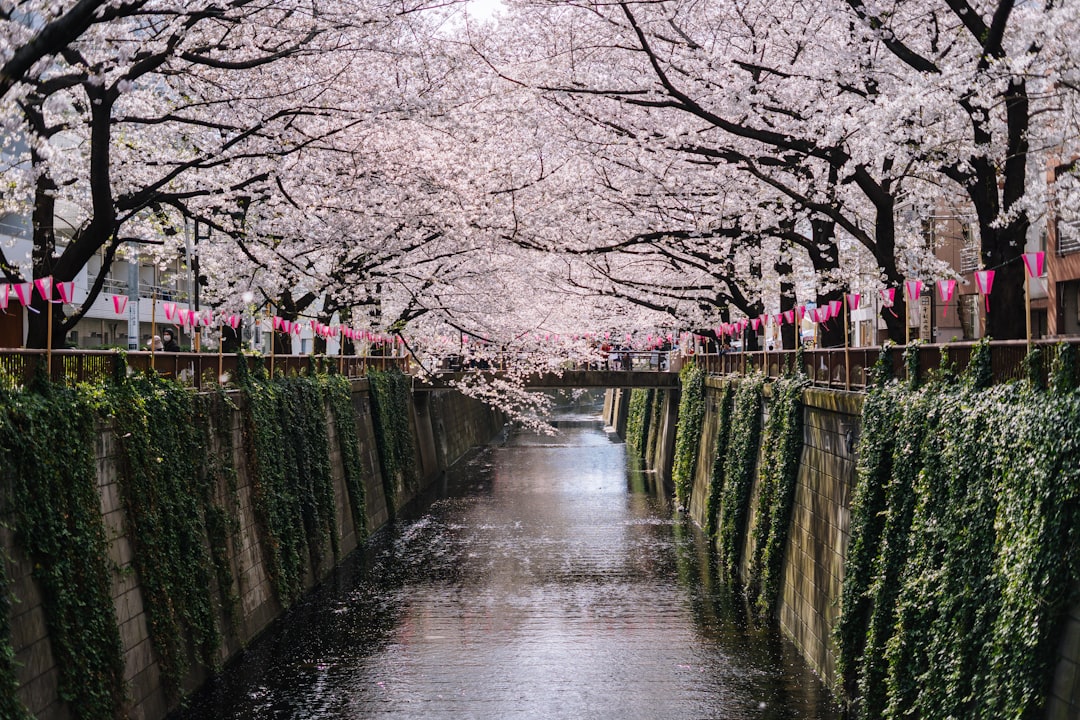
Several hundred Somei-yoshino cherry trees line the central promenade and the slopes around Shinobazu Pond. Full bloom in Tokyo usually falls in late March or early April. During the Ueno Sakura Matsuri, paper lanterns are strung along the main path and lit in the evening.
On weekends at full bloom, the promenade becomes a single slow-moving line between groups picnicking on blue tarps. Some people love this. It is the most Tokyo version of hanami there is: office groups, students, and families eating and drinking under the trees from lunchtime into the night. Others find it overwhelming.
Our advice is to decide which you want. For the atmosphere, go on a weekday evening when the lanterns are on and pick up food from a convenience store on the way. For the blossoms themselves, go early on a weekday morning, then walk down to the pond, where the trees lean over the water and there is more room to stand. For a wider comparison of where else to go in the city, our guide to Tokyo’s cherry blossom spots covers the alternatives.
If you join a picnic, the ordinary rules apply. Take all rubbish with you, do not climb or pull at the branches, and keep noise down later in the evening.
Lotus Season and the Quieter Months
Spring gets the attention, but summer may be the better season for the pond. From roughly July into August the lotus section of Shinobazu Pond fills with leaves taller than a person and pink flowers that open in the early morning. Go before 9:00, while the flowers are open and before the heat builds.
Autumn brings ginkgo yellowing along the paths in late November, and winter brings the peony garden at Toshogu and clear, empty mornings. The museums are the same in every season. That makes Ueno a reliable option in the rain and in the humid weeks of July and August, when walking outdoors elsewhere in Tokyo is hard work.
Expert Tip
Pair Ueno Park with Yanaka to the north rather than with the crowds of Ameyoko to the south. From the Tokyo National Museum it is a short walk past Kaneiji into Yanaka’s temple streets and old cemetery, which largely escaped wartime bombing. It makes a gentle afternoon after a morning of museums, and very few visitors make the connection.
Ueno Park: Frequently Asked Questions
How much time do I need for Ueno Park?
A walk through the park, the temples, and Shinobazu Pond takes about ninety minutes. Adding the Tokyo National Museum brings it to half a day, and adding a second museum or the zoo fills the whole day. For most first-time visitors, we suggest one museum plus the pond, then an afternoon somewhere else, such as Asakusa, which is a short ride away on the Ginza Line.
Is Ueno Park free to enter?
Yes. The park, the promenade, Shinobazu Pond, and the outer grounds of the temples and shrine are free, and the park is open from 5:00 to 23:00. You pay only for the museums, the zoo, boat hire, and a few inner areas such as Toshogu’s inner gate.
Are there still pandas at Ueno Zoo?
No. The last two pandas at Ueno Zoo, the twins Xiao Xiao and Lei Lei, were returned to China in January 2026. At the time of writing, there are no pandas in Japan. The zoo remains open with its other animals, and panda-themed souvenirs are still everywhere around Ueno Station.
Related Tours

Conclusion
Treat Ueno Park as a morning, not a stop. Arrive before the museums open, pick one of them and give it two unhurried hours, then walk down past Kiyomizu Kannon-do to the pond while the light is still good. That order works in every season, including peak blossom week.
Check the day of the week before anything else. A Monday visit leaves you with the trees and the temples and very little else, which is pleasant but not what most people come for. If Ueno matters to you, put it on a Tuesday to Saturday and plan the rest of your Tokyo days around it.
Plan Your Japan Trip with Local Experts
Our team has guided 40,000+ travelers across Japan. Tell us about your trip and we’ll get back to you within 24 hours.




