In this article:
- What Yanaka Ginza Actually Is
- Getting There and Choosing Your Entrance
- Eating Your Way Down the Street
- Building a Half Day Around It
- Yanaka Ginza Shopping Street: Frequently Asked Questions
Introduction
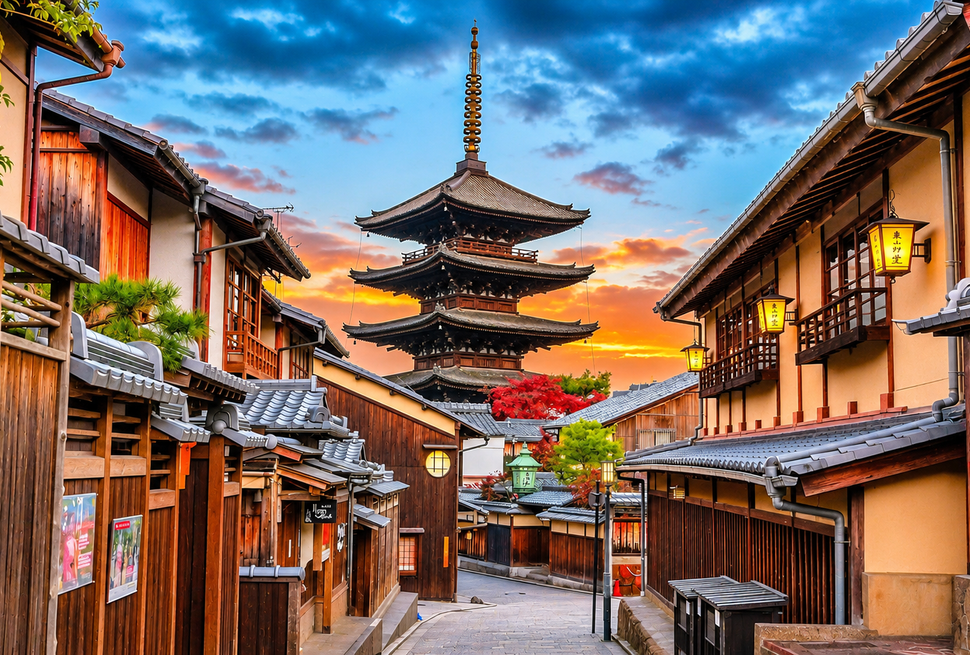
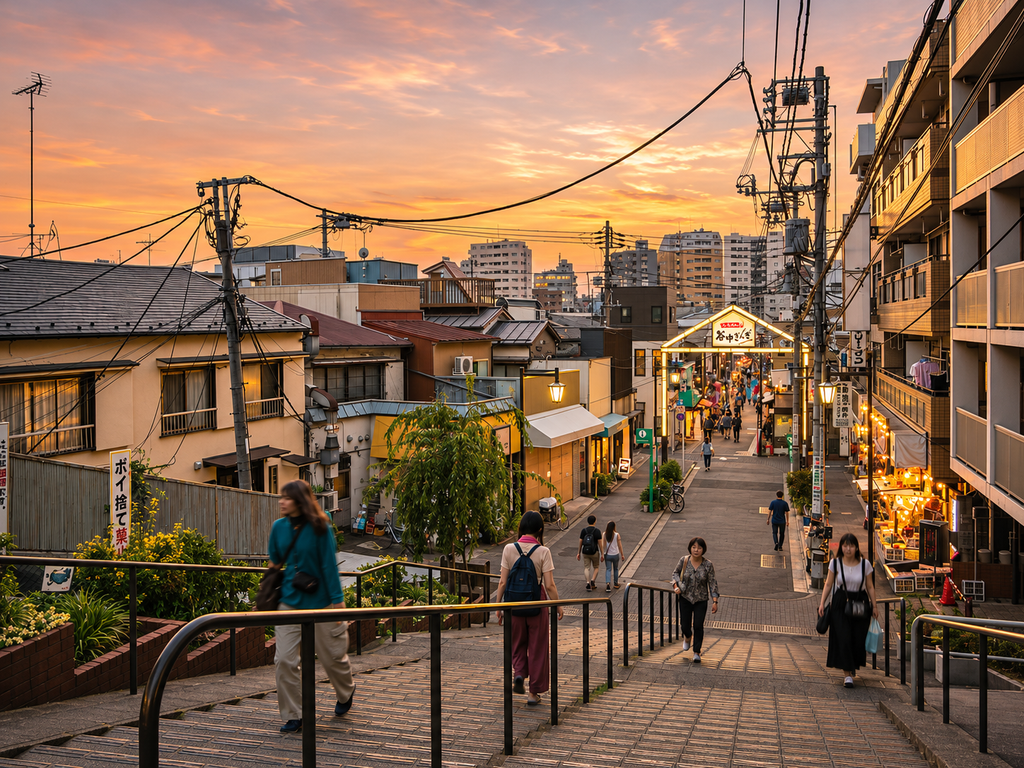
Stand at the top of the stone steps above Yanaka Ginza shopping street around four in the afternoon. The whole street is laid out below you. You can see a narrow lane of low shopfronts and cloth banners. A slow current of people moves through, carrying paper bags of croquettes.
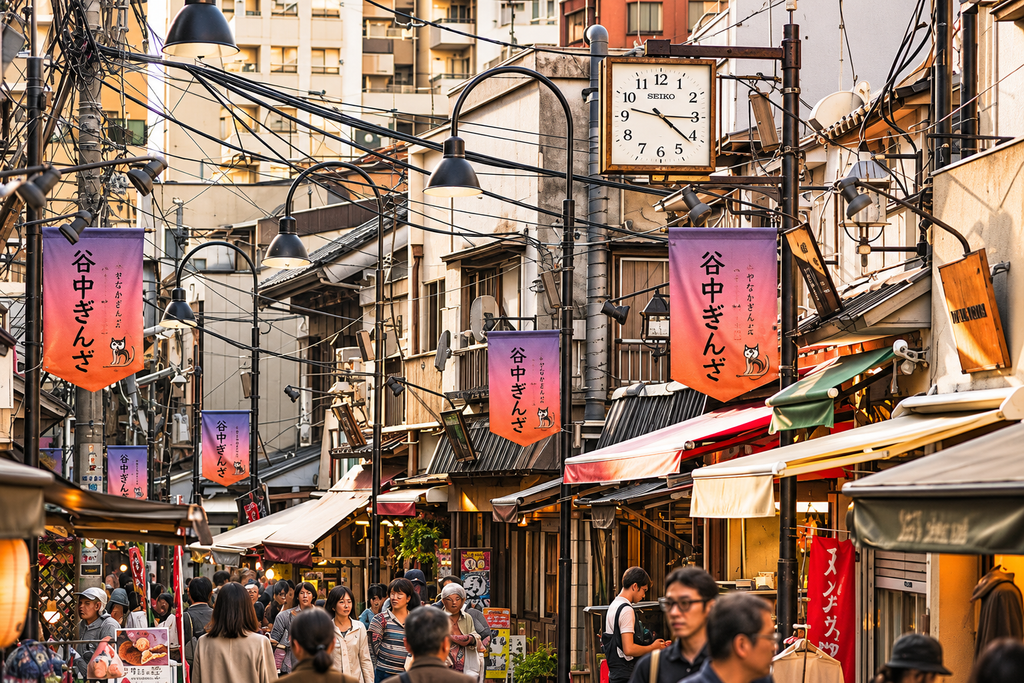
Nothing about it is grand. The street is about 170 metres long. You can walk it end to end in three minutes if you do not stop. Almost nobody manages that. There is a queue at the butcher. Cat-shaped sweets sit on a tray in one window. Down the way, a greengrocer weighs tomatoes for a woman who has clearly been buying them there for decades.
That ordinariness is the reason to come. The travelers we work with have usually seen Shibuya and Ginza by the time they ask us about Yanaka. What they want next is a part of Tokyo that still runs at the speed of daily life. This street is one of the clearest places to find it. Just make sure to arrive at the right time and from the right end.
What Yanaka Ginza Actually Is
Yanaka Ginza is a neighbourhood shopping street, and it was one long before visitors found it.
A Neighbourhood Street, Not a Tourist Arcade
The street took shape around 1945, when small shops grew up to supply the surrounding residential blocks after the war. The name borrows “Ginza” the way dozens of Japanese shopping streets did in the twentieth century. It was used as shorthand for a busy commercial strip. It has nothing to do with the luxury district of the same name.
Roughly sixty shops line the street today. Some are the same kinds of businesses it began with — butchers, fishmongers, greengrocers, a rice dealer, a hardware shop. Others are newer: sweet shops, small cafes, and stalls selling cat-themed souvenirs, ceramics, and folk crafts.
The balance matters. Nakamise in Asakusa sells almost entirely to visitors. Yanaka Ginza, on the other hand, still sells a good share of its goods to locals. Many of them live within just a few streets. You will see residents doing their evening shopping alongside travelers, which keeps prices reasonable and the mood relaxed. In our view this is the single biggest difference between Yanaka and the better-known old-Tokyo streets.
Where It Sits in Yanesen
The street belongs to an area locals call Yanesen, a contraction of Yanaka, Nezu, and Sendagi. The three neighbourhoods run into each other on the high ground north of Ueno. They share a low skyline of wooden houses and temples. Narrow lanes wind throughout the area.
Yanaka is often described as one of Tokyo’s rare surviving historic areas. It escaped the 1923 earthquake and wartime air raids with comparatively little damage. This history explains why so much of its older street pattern remains intact.
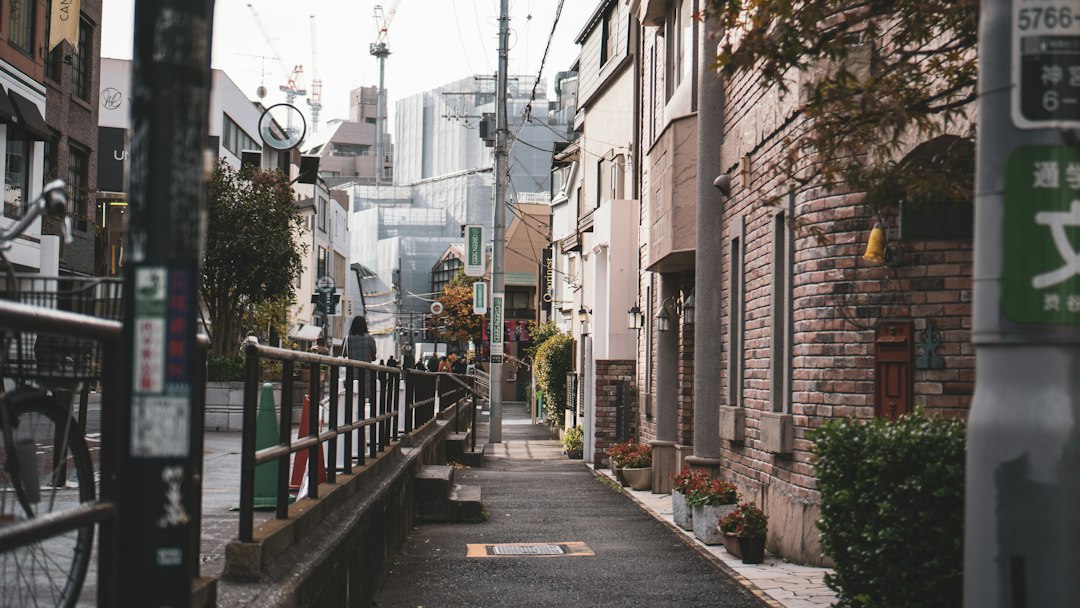
Walk just a block away from the shopping street in almost any direction. You will quickly find yourself surrounded by temple walls. Rows of potted plants line the front doors of local homes.
That context is why we treat Yanaka Ginza as the middle of a walk rather than the destination. On its own it fills an hour. As part of the surrounding area, it anchors a very good afternoon.
Getting There and Choosing Your Entrance
Two stations serve the street, and the one you choose changes the experience more than you might expect.
From Nippori and the Yuyake Dandan Steps
Nippori Station is on the JR Yamanote and Joban lines, the Keisei line from Narita Airport, and the Nippori-Toneri Liner. From the West Exit it is about a five-minute walk, uphill at first, along the edge of Yanaka Cemetery and down toward the street.
The approach ends at Yuyake Dandan, the “sunset steps”, a short flight of stone stairs that drops straight into the top of Yanaka Ginza. This is the view in most photographs of the street, and on a clear evening the light comes down the lane from behind the shops. We recommend this entrance to almost everyone. Arriving from above lets you see the whole street before you walk into it.
The steps have no ramp. Travelers with wheelchairs, strollers, or heavy luggage should use the Sendagi approach instead.
From Sendagi, the Flat Approach
Sendagi Station on the Tokyo Metro Chiyoda Line is also about five minutes away, along a level route that enters the street from the bottom. This is the more practical option if you are coming from central Tokyo on the Chiyoda Line, or if you are walking up from Nezu.
The trade-off is that you reach the steps at the end rather than the beginning. Some travelers prefer this: you climb Yuyake Dandan, turn around, and look back down at the street you have just walked.
When to Go
Timing is the decision that matters most here. Shop hours vary from one business to the next, and many close by early evening, so a late arrival can mean shutters rather than snacks.
We suggest arriving between 2pm and 4pm on a weekday. The lunchtime crowd has thinned, the butchers are still frying, and you can stay on for the light at the steps. Weekends are much busier, and the queues at the best-known food counters can stretch long enough to block the lane. Some shops also take fixed weekly holidays, so a Monday or Tuesday visit may find a few closed.
Expert Tip
Check the sunset time for the date of your visit and work backwards. In winter the sun drops in the mid-afternoon, so the steps are at their best while the shops are still open; in summer sunset comes after many shops have closed. If you have flexibility, Yanaka in late autumn or winter gives you the street and the light at the same time.
Eating Your Way Down the Street
Most people come for the food, and most of it is fried, sweet, or both. Items are small and inexpensive, which makes it easy to try four or five things across an hour.
Menchi Katsu and the Butcher Counters
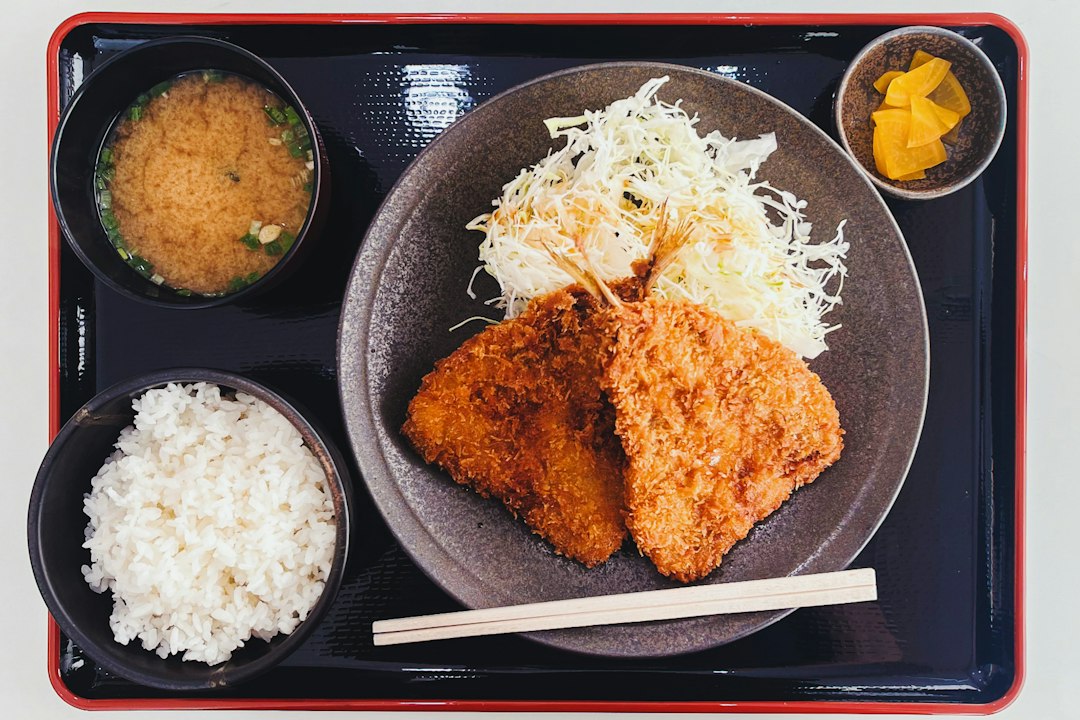
Menchi katsu, a breaded and deep-fried patty of minced meat and onion, is the food most associated with Yanaka Ginza. Several butchers on the street sell it hot from the fryer, alongside potato croquettes and other fried items, and the shops with the longest queues are generally the ones locals rate.
Niku no Suzuki is the name you will see most often in guides, a family butcher that has turned much of its counter over to prepared food. That said, the menchi katsu is good at more than one counter here. If a queue is twenty people deep, the shop a few doors down is likely to serve you something nearly as good in a fraction of the time.
Eat it immediately. A menchi katsu that has been carried around in a paper bag for fifteen minutes loses most of what makes it worth buying.
Cat Tails and Other Sweets
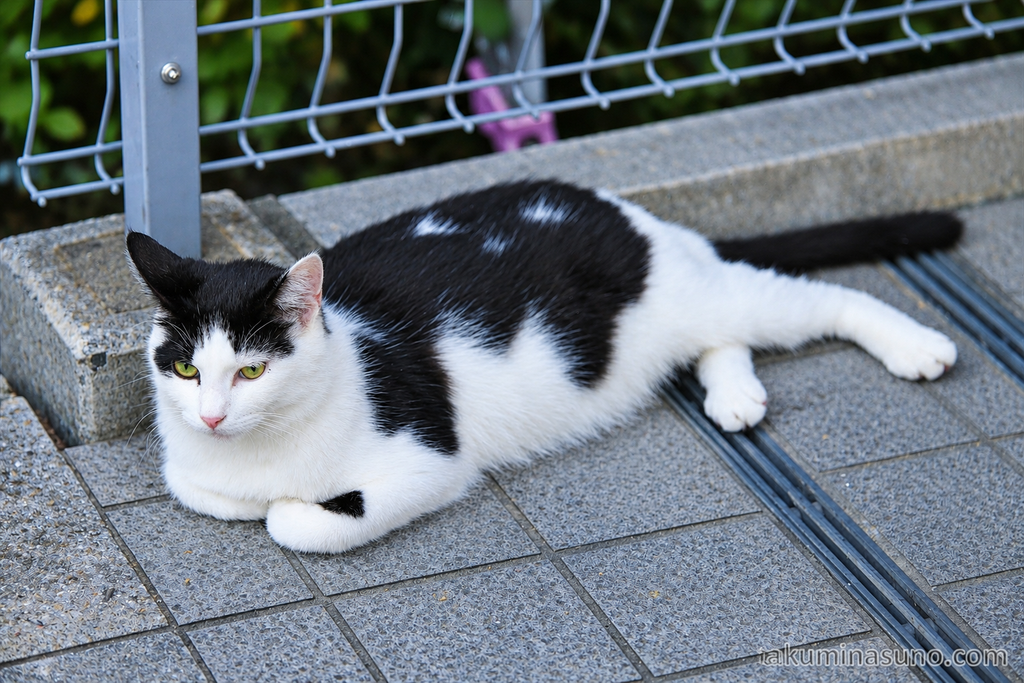
Yanaka has long been associated with cats, and the street leans into it. Cat motifs turn up on signs, shop curtains, and a good share of the souvenirs.
The most photographed example is Yanaka Shippoya, which sells baked doughnuts shaped like cat tails in a range of flavours and colours. They are light, not overly sweet, and travel well, which makes them one of the few things on the street worth buying to take back to your hotel.
Beyond that, look for traditional Japanese confectionery, freshly roasted rice crackers, and seasonal shaved ice in summer. If you are interested in sweets as gifts, our guide to authentic Japanese souvenirs covers how to choose wagashi that will survive the flight home.
Where to Eat What You Buy
In many busy Japanese shopping areas, eating while walking is discouraged, and shops often ask customers to eat beside the stall where they bought the food. Yanaka Ginza is more relaxed about this than some places, but the considerate approach is the same: buy, step to the side of the lane, and finish it there.
There are very few public bins. Shops that sell food will usually take back their own wrappers if you eat nearby, and anything else goes in your bag until you find a bin at the station. Carry a small plastic bag for this; it makes the afternoon much easier.
Bring cash as well. Some shops now accept cards or IC transit cards, but many of the small counters still work in coins and notes, and a ¥1,000 note is the most useful thing in your pocket here.
Building a Half Day Around It
Yanaka Ginza works best as one stop on a slow walk through Yanesen, and the order you do things in makes a real difference.
The Walk We Recommend
Start at Nippori and walk through Yanaka Cemetery first. It is a quiet, tree-lined public cemetery, one of the city’s well-known cherry blossom spots in spring, and the path through it brings you out close to the top of Yuyake Dandan.
Go down the steps and walk Yanaka Ginza slowly, eating as you go. At the far end it meets Yomise-dori, a longer and less-visited shopping road, and from there it is a short walk down to Sendagi and then on to Nezu Shrine, with its tunnel of red torii gates and, in April, its azalea garden.
From Nezu, the Chiyoda Line takes you back toward central Tokyo, or you can keep walking south to the museums and ponds of Ueno Park. At an easy pace, with stops, the whole route fills three to four hours. We consider this the best introduction to residential old Tokyo available within the Yamanote Line loop.
Pairing Yanaka With Asakusa or Ueno
A common plan, and a good one, is Asakusa in the morning and Yanaka in the afternoon. Senso-ji is at its quietest early, while Yanaka is at its best in the mid-afternoon, so the two fit together naturally. The transfer is easy: the Ginza Line to Ueno, then the JR Yamanote Line two stops to Nippori.
Our two-hour Asakusa walking tour starts at the Starbucks by Kaminarimon and covers Senso-ji, Nakamise, and the lanes behind it, which leaves you free to head north to Yanaka afterwards with lunch in between. Seeing both on the same day sharpens the contrast: one old-Tokyo street built for visitors, one still built for the people who live there.
If you would rather not stitch it together yourself, a private guide can combine Ueno, Yanaka, and Nezu into a single day at whatever pace you set, including when to stop for lunch and which counters are worth a queue.
Expert Tip
Leave Yanaka Ginza through the Sendagi end and turn into the side lanes rather than heading straight for the station. Within two or three minutes the shops give way to wooden houses, small temples, and residents watering plants outside their doors. That ten-minute detour is where most travelers tell us they finally understood what this part of Tokyo is like.
Yanaka Ginza Shopping Street: Frequently Asked Questions
How long do I need at Yanaka Ginza?
About an hour for the street itself, including two or three food stops and some browsing. If you add Yanaka Cemetery, the side lanes, and Nezu Shrine, allow three to four hours. We would not plan less than a full afternoon for the area, since most of what makes it worthwhile is found by walking slowly.
Are the shops open in the evening?
Mostly not. Hours vary by shop, and many close by early evening, with food counters sometimes stopping once they sell out. Yanaka Ginza is an afternoon street. If you want an evening in old Tokyo, Asakusa and Ueno have far more open after dark.
Do I need cash at Yanaka Ginza?
Yes. Card and IC transit card acceptance has spread, but many of the small food counters and family shops are cash-only or prefer cash for small purchases. A few thousand yen in notes and coins covers a typical visit comfortably.
Related Tours
Conclusion
Yanaka Ginza rewards the opposite of efficient sightseeing. Its appeal is the pace of the street, the butcher who knows every regular by name, and the quiet lanes a minute away, and none of that comes through if you arrive at 6pm with one eye on the next stop.
Plan for a weekday afternoon, come in from Nippori through the cemetery, and keep a few coins and a small bag in your pocket. Check the sunset time before you leave your hotel, and give yourself enough of the afternoon that you can still be standing at the top of the steps when the light comes down the street.
Plan Your Japan Trip with Local Experts
Our team has guided 40,000+ travelers across Japan. Tell us about your trip and we’ll get back to you within 24 hours.