
In this article:
- Naha and the Ryukyu Kingdom
- Up the West Coast to Churaumi
- The North: Castle Walls, Kouri, and Yanbaru
- The South, and the Weight of 1945
- Things to Do in Okinawa: Frequently Asked Questions
Introduction
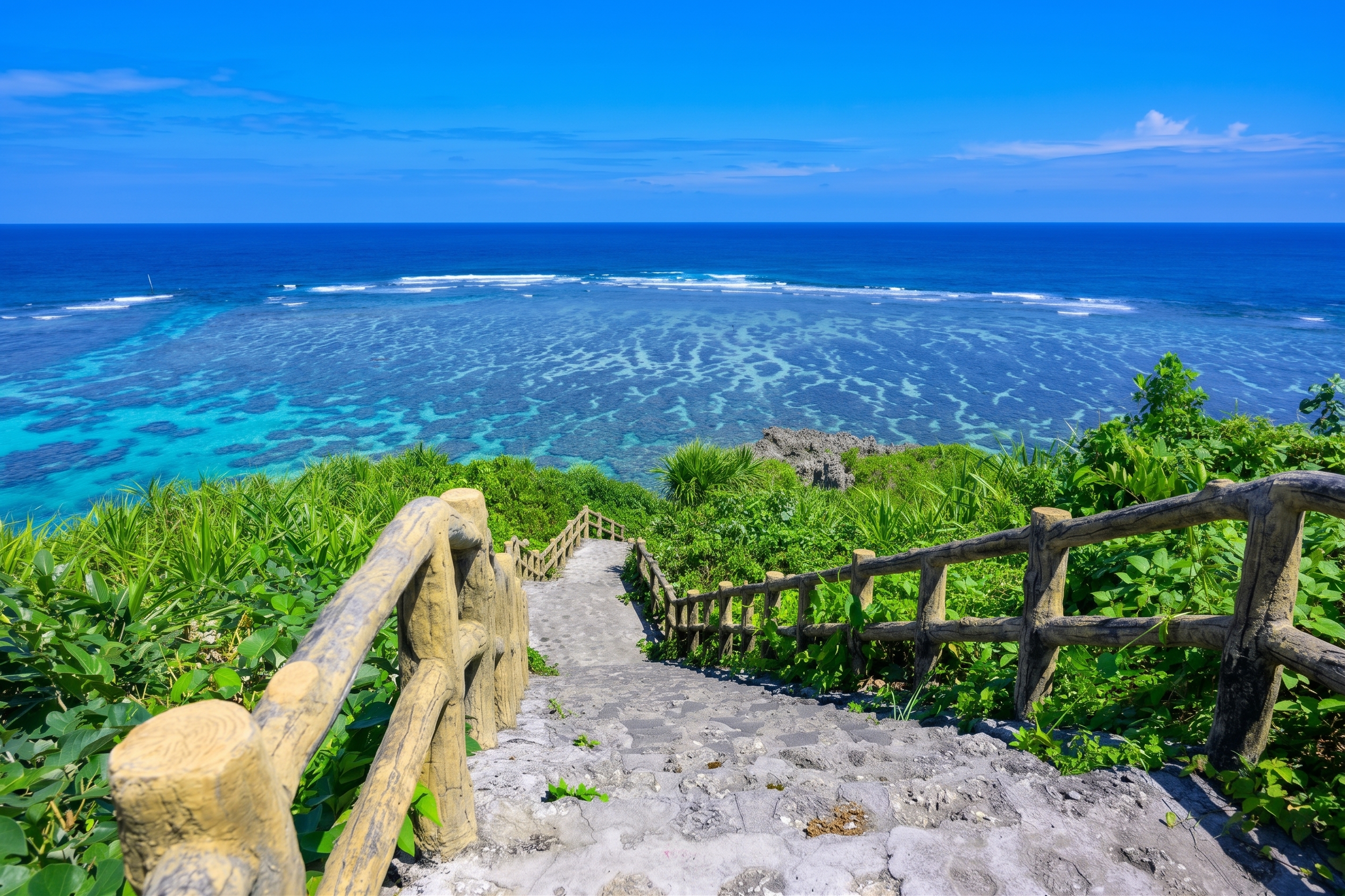
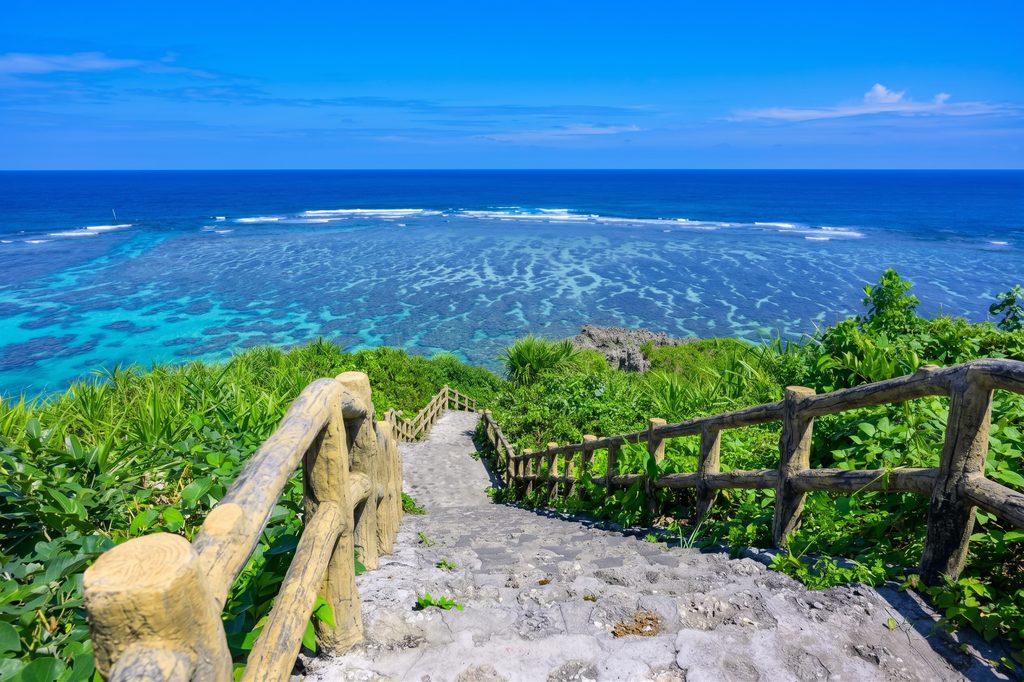
Most lists of things to do in Okinawa, Japan start with the beaches, and the beaches deserve it. Still, they are the least surprising part of the island.
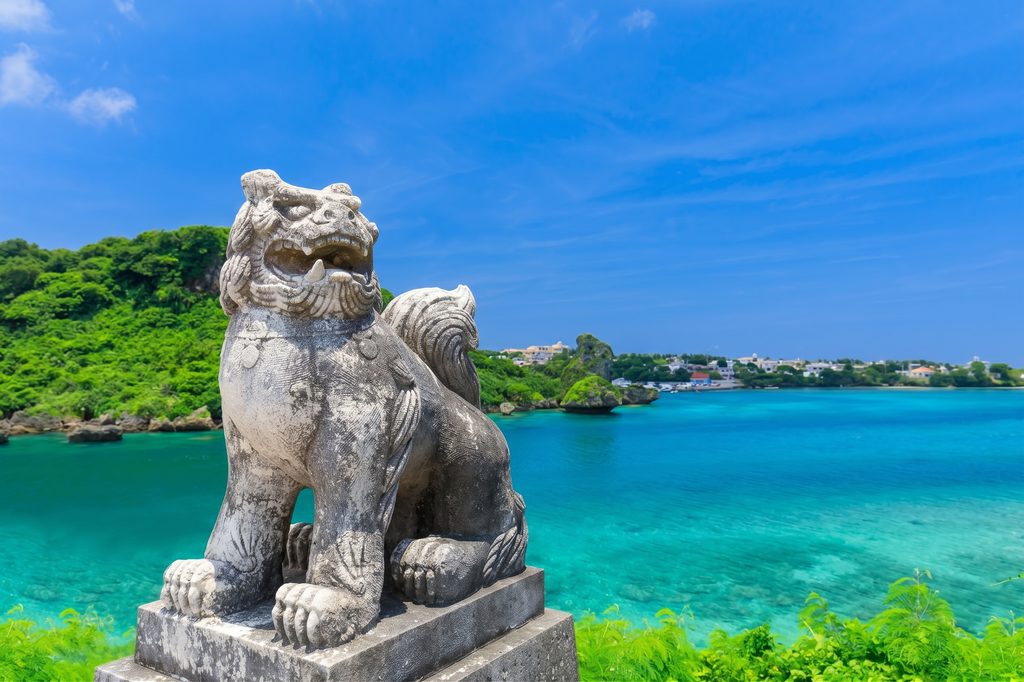
What surprises people is the rest. The castle walls curve instead of running straight. The roof tiles are red and held down with white mortar, and a lion-dog called a shisa sits on top of the house. Lunch is a bowl of noodles made from wheat, not buckwheat, topped with pork belly that has been simmered for hours. Okinawa was the Ryukyu Kingdom, an independent state trading across East and Southeast Asia, and it was only absorbed into Japan in 1879. It still does not feel like the mainland.
The travelers we guide here usually arrive expecting a resort and leave talking about the history. This guide is organized the way we plan days on the island: by direction from Naha, because the main island is longer than it looks and the driving decides everything. If you are after the water specifically, our guide to Okinawa’s beaches and caves goes deeper on that side.
Naha and the Ryukyu Kingdom
Naha is where you land, and it is worth more than a night on the way to a beach hotel. The city holds the old royal capital, the pottery quarter, and the best place on the island to understand what Okinawans actually eat.
The Yui Rail monorail runs from the airport through the center of the city and up to Shuri. For the Naha part of a trip, that is all the transport you need.
Shuri Castle, Rebuilt Again
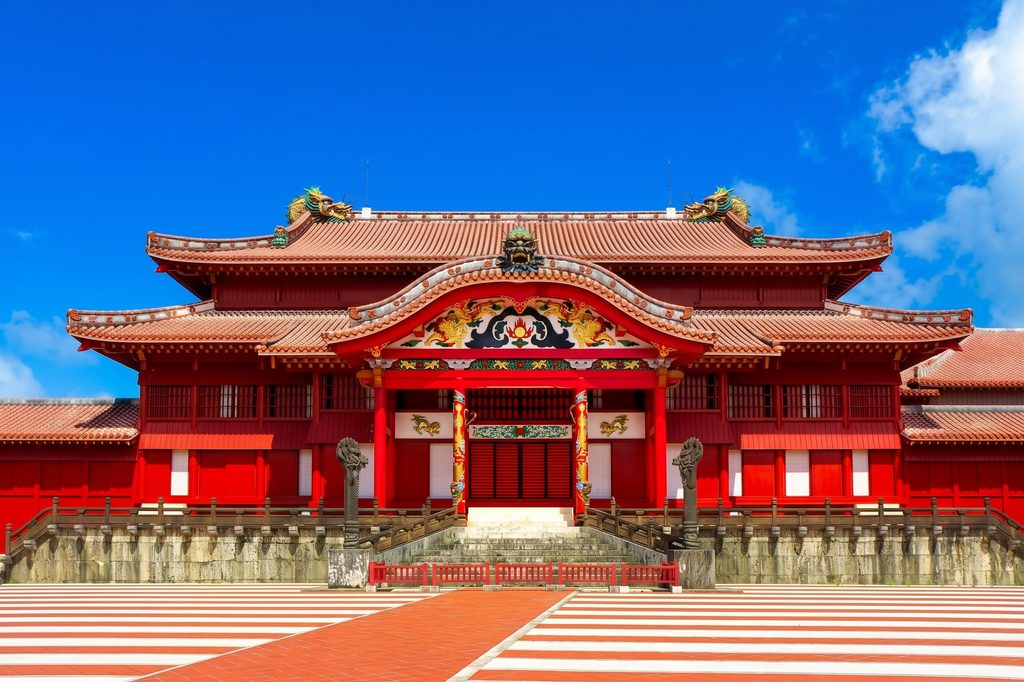
Shuri Castle was the seat of the Ryukyu kings for most of the kingdom’s history. It has burned several times, most thoroughly in the Battle of Okinawa in 1945, and most recently in a fire in October 2019 that destroyed the main hall, the Seiden, which had been reconstructed in 1992.
The rebuilt Seiden is scheduled to open to the public on 23 November 2026. Entry to the interior will use timed reservations booked in advance, so check the Shuri Castle Park site before you go rather than turning up at the gate.
Even without the interior, the grounds reward a slow walk. The stone walls follow the contour of the hill in long curves, a style you will see again at every gusuku on the island. That said, we find the view from the western terraces across Naha to the sea is what most travelers remember.
Tsuboya and the Pottery Quarter
In 1682 the royal government gathered the island’s scattered kilns into one district, and that district is Tsuboya. It is a ten-minute walk from Kokusai-dori and almost entirely different in mood.
The main street is paved in stone and lined with workshops selling yachimun, the Okinawan word for pottery. Look for the thick glazes, the fish motifs, and the heavy cups built for awamori. Walk the side lanes as well. The old climbing kiln and the red-tiled houses behind the shops are the reason to come.
Eating in Naha: Makishi Market and Okinawan Food
The Makishi Public Market reopened in a new building in 2023, and it keeps the system that made it famous. You buy fish, lobster, or shellfish from a stall on the ground floor, carry it upstairs, and a restaurant cooks it for a small fee.
Beyond the market, eat the things you cannot get elsewhere in Japan. Okinawa soba, a wheat noodle in pork broth; goya champuru, a stir-fry of bitter melon, tofu, and egg; rafute, slow-braised pork belly. Awamori, the island’s rice spirit, is distilled rather than brewed and is closer to a shochu than a sake.
In our experience the best meals in Naha are not on Kokusai-dori. They are in the lanes of the covered arcades that run off it, where the counters are small and the menus are handwritten. Bring cash for these.
Expert Tip
Do Naha on your arrival day or your last day, not in the middle of the trip. The airport is a short drive from the city center, so Shuri, Tsuboya, and a market dinner fit neatly around a flight. The days in between are better spent where the driving is.
Up the West Coast to Churaumi
The road north from Naha follows the East China Sea, and the water changes color as you go. Near the city it is a working harbor. By Onna it is the turquoise that appears on every postcard of the island.
This is the route most first-time visitors take, and it is the one our private day tour follows: Chatan, the Onna coast and Cape Manzamo, Churaumi Aquarium, and Nago Pineapple Park, with hotel pick-up at either end. The aquarium is around two hours from Naha, so this is a full day with a good deal of driving.
Chatan and the American Village
Chatan is the legacy of the postwar American presence, which still shapes central Okinawa. The American Village is a seafront of shops, bars, and a Ferris wheel that looks more like California than Japan.
It is not a place for history or quiet. However, it explains something real about modern Okinawa, and the seawall at sunset is a pleasant stop on the way back south.
Cape Manzamo and the Onna Coast
Cape Manzamo is a limestone headland that the sea has cut into the shape of an elephant’s trunk. A short path runs along the top of the cliff, and the water below is clear enough to see the reef from above.
It is also the most crowded viewpoint on the west coast by late morning. We time it for the first stop of the day where we can. The light is flatter and the tour buses have not yet arrived.
Churaumi Aquarium
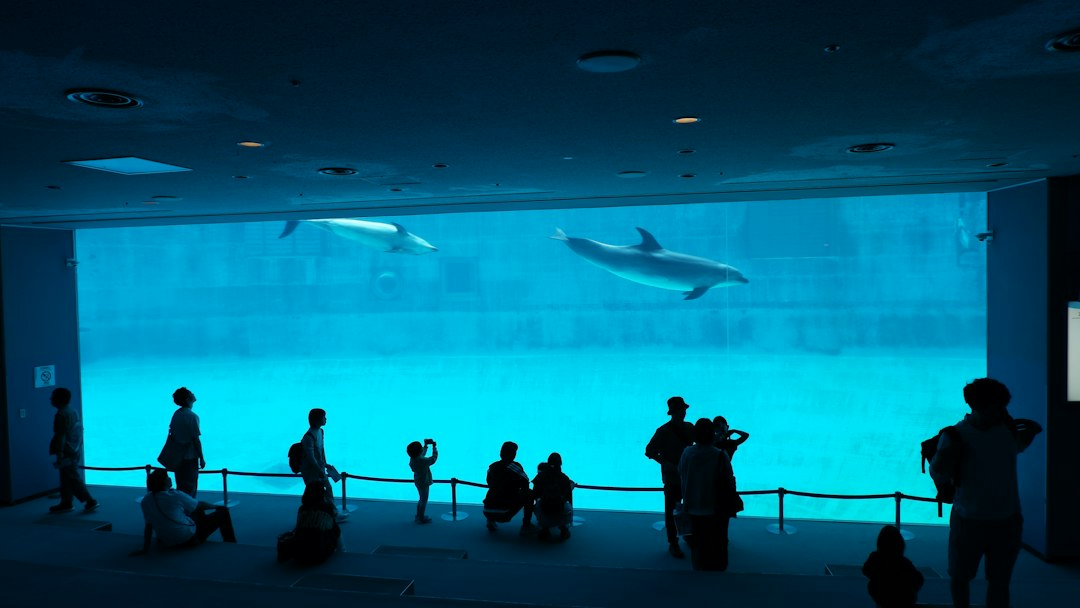
Churaumi sits inside Ocean Expo Park on the Motobu Peninsula. Its main tank, the Kuroshio Sea, holds 7,500 cubic meters of water and a population of whale sharks and manta rays, seen through an acrylic wall roughly eight meters high.
People sit in front of that wall for an hour without moving. We think that is the right way to use it. The rest of the aquarium, including the coral reef tanks near the entrance, explains what is living off the coast you have just driven along.
The aquarium is open from 8:30 to 18:30, with last entry at 17:30, and adult admission is 2,180 yen. By contrast with the Naha sights, this is where a car earns its keep: by bus, the round trip takes most of the day.
The North: Castle Walls, Kouri, and Yanbaru
Past the aquarium, the island gets quieter, greener, and emptier. If you have a second day in the north, this is where to spend it.
Nakijin Castle Ruins
Nakijin was the stronghold of the northern kingdom before the island was unified under Shuri. The castle itself is gone, but its stone walls survive, running in long serpentine curves along a ridge above the sea.
It is one of the gusuku sites inscribed as a UNESCO World Heritage Site in 2000. In our view it is the more atmospheric of the two castles to visit, because nothing has been rebuilt. You walk the walls as they are, and on a clear day you can see the outer islands from the top.
Kouri Island
Kouri is a small island joined to the mainland by a bridge 1,960 meters long. The drive across, with shallow water on both sides, is the reason most people come.
The island itself takes an hour. There is a beach by the bridge, a road that loops the coast, and a handful of cafes. Although it is heavily photographed, early mornings on the island are still quiet.
Yanbaru Forest
The northern third of the island is subtropical forest, part of a UNESCO natural World Heritage Site listed in 2021. It is home to species found nowhere else, including the Okinawa rail, a flightless bird.
Yanbaru is not a place to wander into alone with a phone map. Trails are limited and the wildlife is shy. That said, a certified local nature guide can take you into it on foot or by kayak along the mangrove rivers, and those half-days are among the least crowded experiences on the island.
The South, and the Weight of 1945
Most visitors skip the south. We think that is a mistake, because the south is where Okinawa’s two deepest stories sit: the old religion and the war.
The drives are also shorter. Sefa-Utaki is about 45 minutes from central Naha by car, and the war memorials at Itoman are closer than that.
Sefa-Utaki
Utaki are sacred groves, and Sefa-Utaki was the most important of them for the Ryukyu kingdom. It is a forested hillside with prayer sites set among the rocks, the best known being a narrow triangular gap between two leaning slabs of limestone.
There are no buildings. That is the point. The indigenous Okinawan religion places its emphasis on nature, and the site is still used for prayer.
Admission tickets are sold at the Nanjo City regional products center near the foot of the hill, not at the entrance to the grove. The site also closes for several days in the fifth and tenth months of the lunar calendar, so check the dates before you plan around it.
Peace Memorial Park and the Cornerstone of Peace
The Battle of Okinawa in 1945 was the only large-scale land battle fought on Japanese soil in the Second World War. More than 200,000 people died, a large share of them Okinawan civilians.
At the Peace Memorial Park in Itoman, the Cornerstone of Peace lists the names of more than 240,000 people who died in the battle and related conflicts, regardless of nationality or whether they were soldiers or civilians. American, British, Korean, Taiwanese, and Japanese names stand in the same rows of black granite, facing the sea.
It is a quiet, heavy place. Leave time to walk the rows slowly. Many of our travelers say it changed how they saw the rest of the island.
North or South: Choosing Your Day
If you have one full day outside Naha, choose between the aquarium and the south. Trying to combine them means five or six hours in a car.
Our rule of thumb is this.Families and first-time visitors usually prefer the north for Churaumi and the coast. Travelers with an interest in history, or on a second visit, should take the south. On our private day tour the southern route can replace the northern one entirely, with Shuri Castle and the war sites in place of the aquarium.
Expert Tip
Typhoons pass through Okinawa between roughly June and October and can close coast roads and cancel ferries at short notice. If your trip falls in that window, keep one day unplanned so a lost day can be moved rather than lost.
Things to Do in Okinawa: Frequently Asked Questions
Do I need a car in Okinawa?
For Naha alone, no. The monorail covers the airport, the city center, and Shuri. For anything north of Chatan or south of the city, yes, or a private driver. Buses exist but are slow, and the north of the island is far from Naha by any measure. Driving in Japan also requires an International Driving Permit under the 1949 Geneva Convention, which not every country issues.
When is the best time to visit Okinawa?
We like October and November, and again from March to May. The sea is still warm enough to swim in October, the heat has eased, and the crowds of the Japanese summer holidays have gone. The rainy season arrives in May and June, earlier than on the mainland, and the typhoon season runs from roughly June to October.
How many days should I spend in Okinawa?
Three full days on the main island is a comfortable minimum: one for Naha, one for the north, and one for the south. Add two or three more if you want time on the water or a trip to the Kerama Islands, which our Okinawa snorkeling guide covers in detail. Travelers with a week or more often continue south by air to Ishigaki and the Yaeyama Islands.
Related Tours

Conclusion
Plan Okinawa by direction, not by list. Decide which days go north, which go south, and which stay in Naha, and the individual sights fall into place. The mistake we see most often is a trip built around a list of twenty places scattered across a hundred kilometers of island.
Give at least one of those days to the parts that are not about the sea. The beaches are what bring most people here, but Shuri, Sefa-Utaki, and the Cornerstone of Peace are what they talk about afterward. Book the Shuri Castle interior early if you are travelling after late November, carry cash for entrance fees and small restaurants, and bring a hat whatever the month.
Plan Your Japan Trip with Local Experts
Our team has guided 40,000+ travelers across Japan. Tell us about your trip and we’ll get back to you within 24 hours.




