
In this article:
- Around Aomori Station: Floats, Cider, and an Old Ferry
- The West Side: The Aomori Museum of Art and Sannai-Maruyama
- Eating in Aomori City
- Hakkoda and Choosing Your Season
- Aomori City: Frequently Asked Questions
Introduction
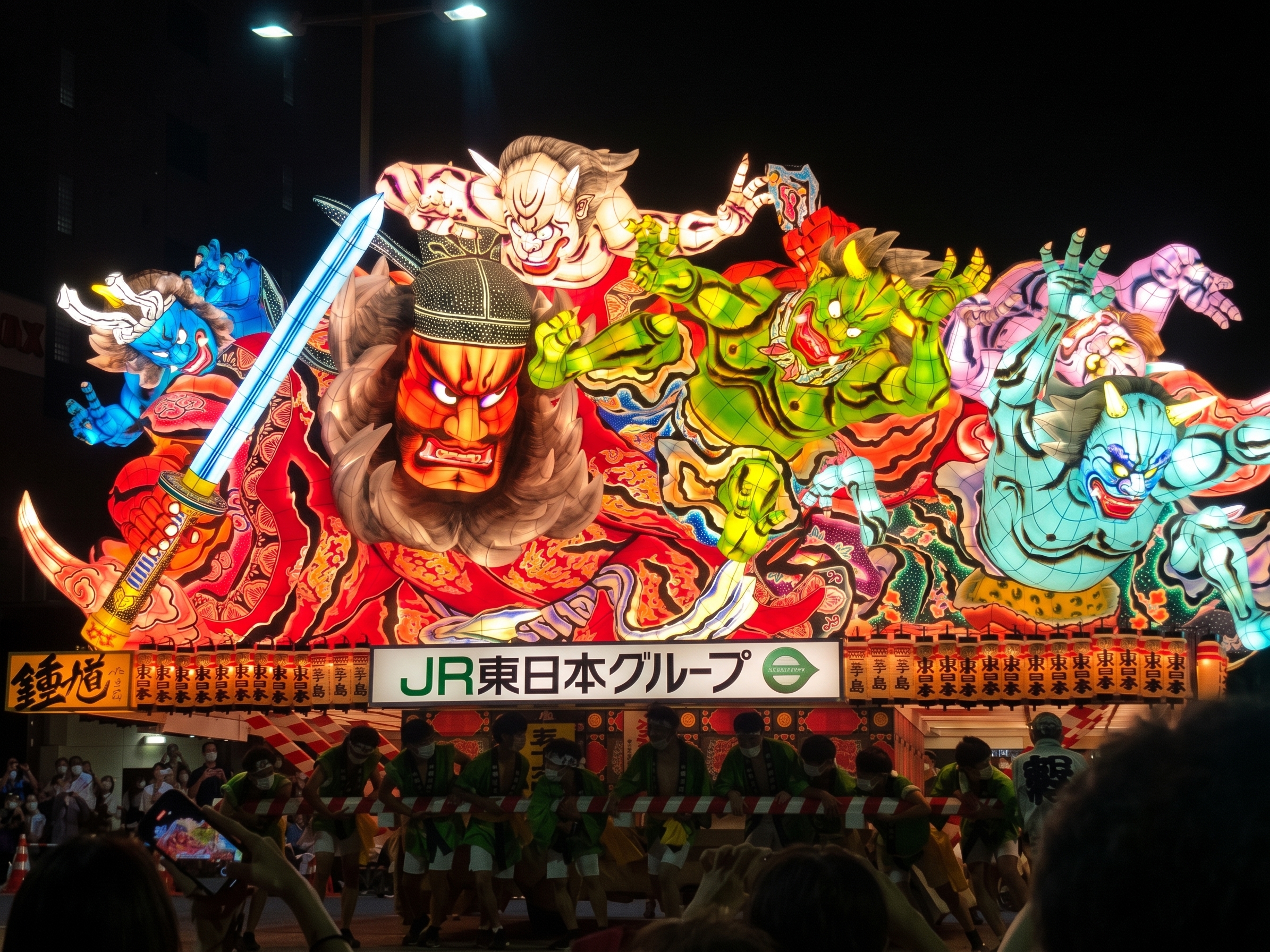
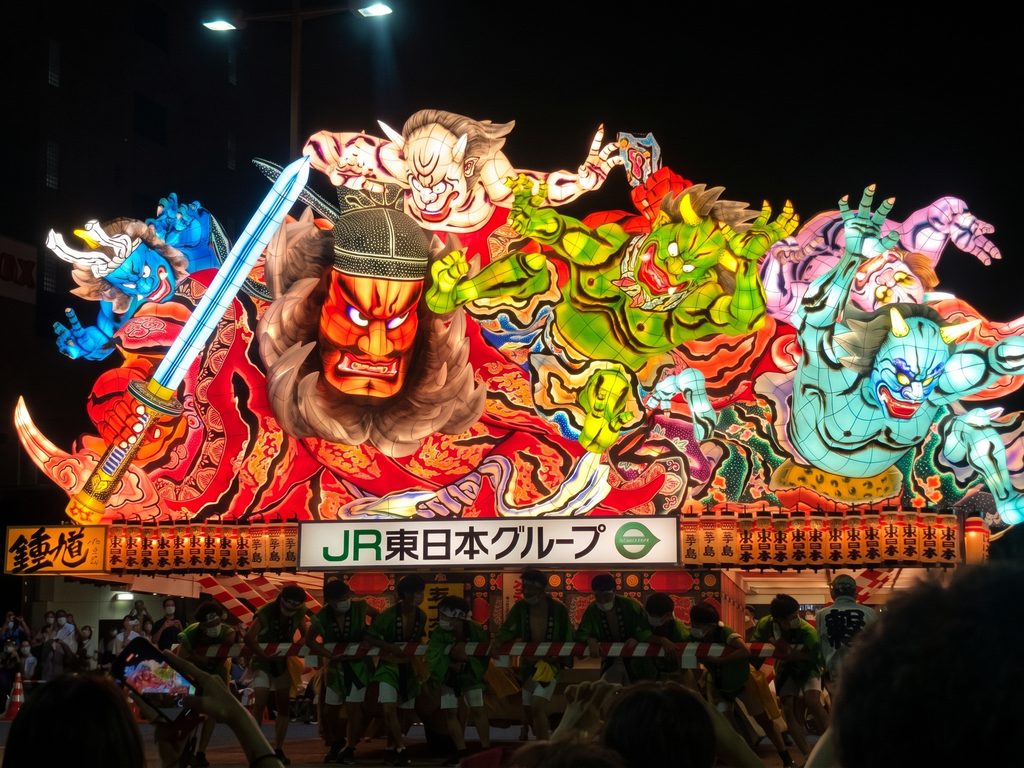
Most people know Aomori City for six nights in August, when illuminated paper warriors the height of a house are hauled through the streets. The other fifty-one weeks of the year, it is a quiet port at the northern tip of Honshu, and in our experience that version of the city is the one travelers end up liking more.
Step out of Aomori Station and the sea is right there. The bay bridge arcs overhead, a retired ferry is moored at the quay, and the smell of the fish market carries a few streets inland. Nothing here is arranged for tour buses. That is the point.
We run private days in Aomori for travelers who have already done Tokyo and Kyoto and want to see how differently the north of Japan lives. The city rewards a slower pace than its size suggests. Below is how we would spend that time, from the station waterfront out to the mountains.
Around Aomori Station: Floats, Cider, and an Old Ferry
Almost everything worth seeing in central Aomori sits within a ten-minute walk of the station. That compactness is the city’s great practical advantage.
Getting In: Shin-Aomori and Aomori Station
Aomori has two stations, and confusing them is the most common mistake visitors make. The Tohoku Shinkansen terminates at Shin-Aomori, on the western edge of the city. The fastest Hayabusa trains cover the run from Tokyo in about three hours.
Aomori Station, the old terminus on the waterfront, is where you actually want to be. A local JR Ou Line train connects the two in a few minutes. We suggest staying near Aomori Station rather than Shin-Aomori; the walk to the museums, the market, and the bay is the reason to be in the city at all.
Once you are in the center, walk. The station, the market, WA RASSE, and the waterfront are all within a few blocks of each other, and the city bus covers the run out to the art museum. Taxis are easy to find at the station and make sense for anything beyond that, including the mountains.
If you are coming up the Tohoku line from the south, a night in Sendai breaks the journey well. Our Sendai guide covers what to do there.
Nebuta Museum WA RASSE: The Festival Out of Season
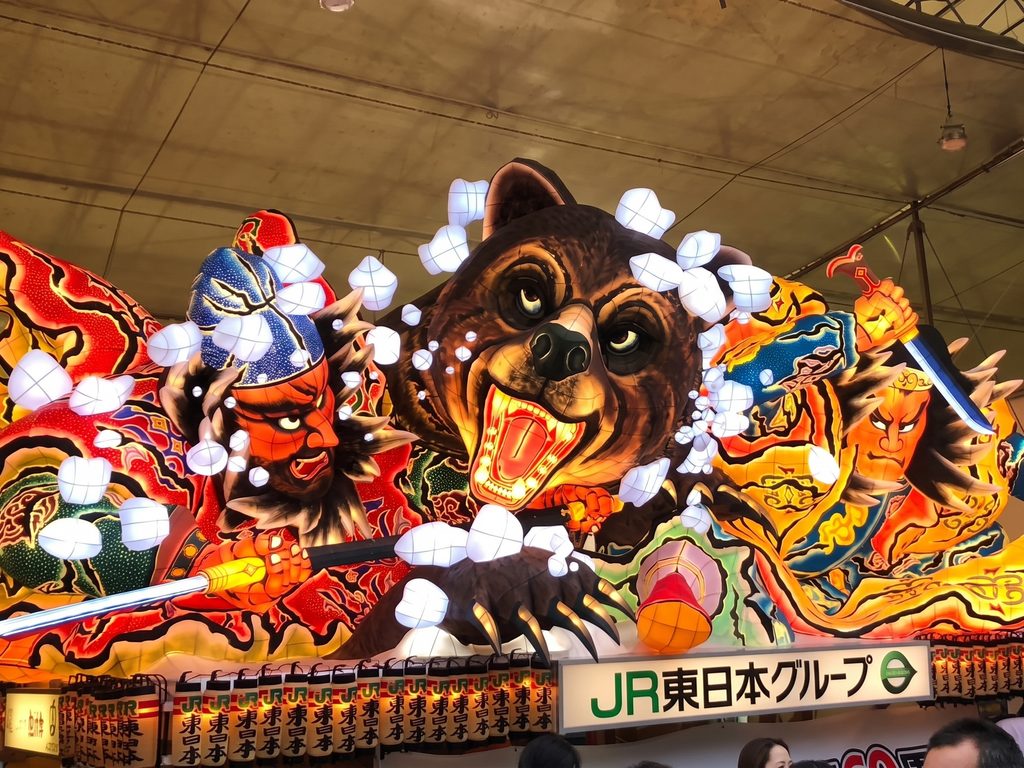
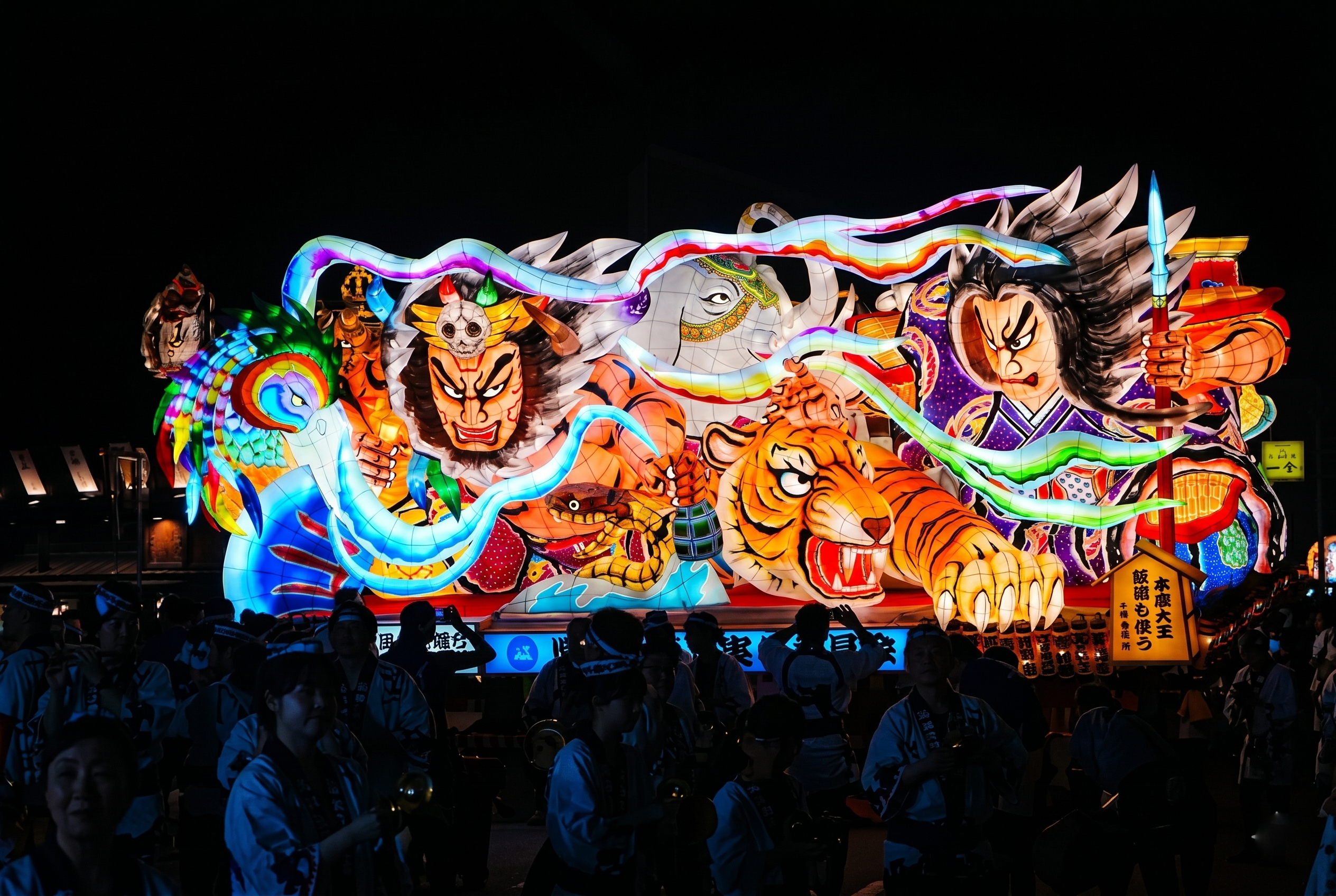
The red-slatted building beside Aomori Station is WA RASSE, the city’s museum of the Nebuta festival. Several full-size floats from recent festivals stand inside a darkened hall, lit from within, close enough to see the washi paper and the wire frames under it.
This is the place to understand what the festival actually is. The figures are designed and built each year by specialist float-makers, and the upstairs galleries explain how a single float goes from sketch to street. On some days there are drum and dance sessions in the hall, and visitors are invited to join the haneto dance.
We would argue that seeing the floats here, in a quiet room, teaches you more about the craft than the festival itself does. In August you see them moving and surrounded by a crowd. At WA RASSE you can stand under a demon’s face and study it.
A-FACTORY and the Hakkoda-maru Under the Bay Bridge
A few steps away, under the Aomori Bay Bridge, A-FACTORY is a market hall built around a small cider works. Aomori is Japan’s largest apple-producing prefecture, and the cider here is made on site from local fruit, with the production visible through glass. The tasting bar is the sensible place to start.
Beyond it, the Hakkoda-maru is moored as a museum. From 1966 until 1988 this ship carried passengers and entire railway carriages across the Tsugaru Strait to Hakodate, until the Seikan Tunnel made the crossing redundant. The car deck, with rail tracks still set into the floor, is the part to see.
Expert Tip
Walk the station waterfront in the late afternoon rather than the morning. The light comes low across Mutsu Bay from the west, the bridge and the Hakkoda-maru turn gold, and the fish market you would have visited earlier has already done its best business before noon.
The West Side: The Aomori Museum of Art and Sannai-Maruyama
Twenty minutes by bus from Aomori Station, on the edge of the city, two sites sit side by side that most visitors to Japan never hear of. Together they are the best argument for a full day here rather than a lunch stop.
A Museum Built Like an Excavation Trench
The Aomori Museum of Art opened in 2006, a white building set partly below ground. Its lower galleries are cut into the earth like the trenches of the archaeological dig next door, so you walk between raw soil walls and white plaster. It is one of the few museum buildings in Japan we think is worth the trip on its own.
Two things in the collection justify the visit. The first is Aleko Hall, a tall atrium hung with the enormous painted backdrops Marc Chagall made for the ballet Aleko. The second is Aomori-ken, an 8.5-metre white dog by Yoshitomo Nara, who was born in the prefecture. It sits in a sunken outdoor court, head slightly bowed.
Beyond those two, the museum has built its collection around artists from Aomori: the woodblock printmaker Shiko Munakata, the poet and playwright Shuji Terayama, and Tohl Narita, who designed the monsters for the original Ultraman series. That local focus is what separates it from the big national museums. You come away with a sense of how much of modern Japanese art came out of this one cold prefecture.
The outdoor path to the dog closes once snow settles in winter. However, you can still see it from inside the permanent galleries. The collection exhibition costs ¥700 for adults, with special exhibitions priced separately.
Sannai-Maruyama: A Jomon Settlement With UNESCO Status
Next door is Sannai-Maruyama, one of the largest Jomon-period settlement sites in Japan and part of the Jomon Prehistoric Sites in Northern Japan World Heritage listing. People lived here continuously for well over a thousand years, roughly five thousand years ago.
The reconstruction that stops people is the six-pillar tower, built to the dimensions of the chestnut posts found in the ground. Around it are pit dwellings, a long communal house, and burial rows. The site center holds the pottery and clay figurines, including the flat, cross-shaped dogu that the site is known for.
In practice, the two sites together take a half day. Do the museum first while you are fresh, then walk across to the site in the afternoon. English-speaking volunteer guides can be reserved at the site center, and we recommend it; the ground makes far more sense with someone pointing at it.
Eating in Aomori City
Aomori eats from Mutsu Bay and from the orchards, and it does both without fuss. Lunch in this city is cheap, fresh, and slightly chaotic.
Nokkedon at Furukawa Fish Market
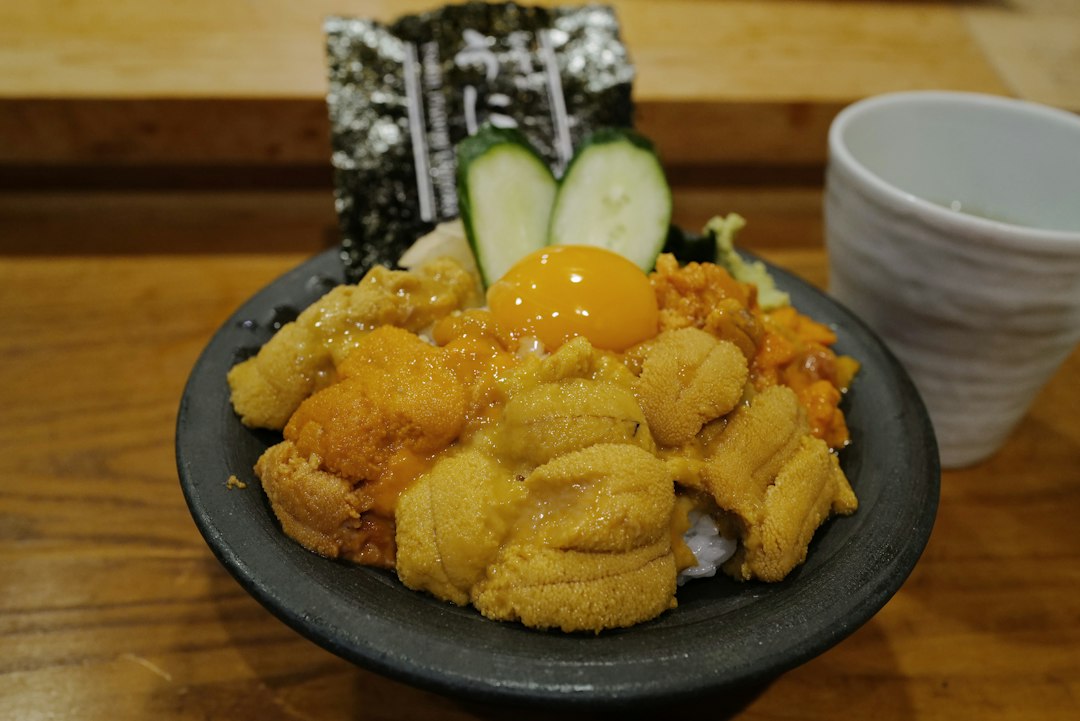
The Aomori Gyosai Center, known to most visitors as Furukawa Fish Market, is a short walk from Aomori Station and invented a format we wish more markets copied. You buy a strip of tickets at the entrance and collect a bowl of plain rice. Then you walk the stalls and trade tickets for toppings.
A slice of tuna costs a ticket or two. Sea urchin costs more. Scallops, salmon roe, squid, and sweet shrimp all go on top, and the result is called nokkedon, roughly “put-it-on bowl.” Nobody designs the same one twice.
Go early. The market opens at seven, and the best stalls run low on the premium cuts by late morning. It is the most enjoyable lunch in the city, and it costs very little.
Scallops, Apples, and the Auga Basement
Mutsu Bay scallops are the local seafood we would order over anything else. They are sweet, dense, and served every way the city can think of: raw, grilled in the shell with miso, or simmered. Ask the stall what came in that morning and order that.
For a less theatrical market, the basement of the Auga building near the station runs a working fish and produce floor where locals shop. Upstairs in the city, apples appear in everything: pies, juices, cider, and dried slices sold by the bag. Autumn is harvest season, and the variety on sale at A-FACTORY in October is remarkable.
Hakkoda and Choosing Your Season
The mountains behind Aomori City change what kind of trip this is. In summer they are green walking country; in winter they are buried.
The Ropeway and the Snow Monsters
The Hakkoda Ropeway climbs to about 1,300 metres in roughly ten minutes. The bus from Aomori Station takes a little over an hour, and driving is quicker and more flexible. At the top there are marsh trails and a loop walk in the green season, with the whole of Mutsu Bay laid out below on a clear day.
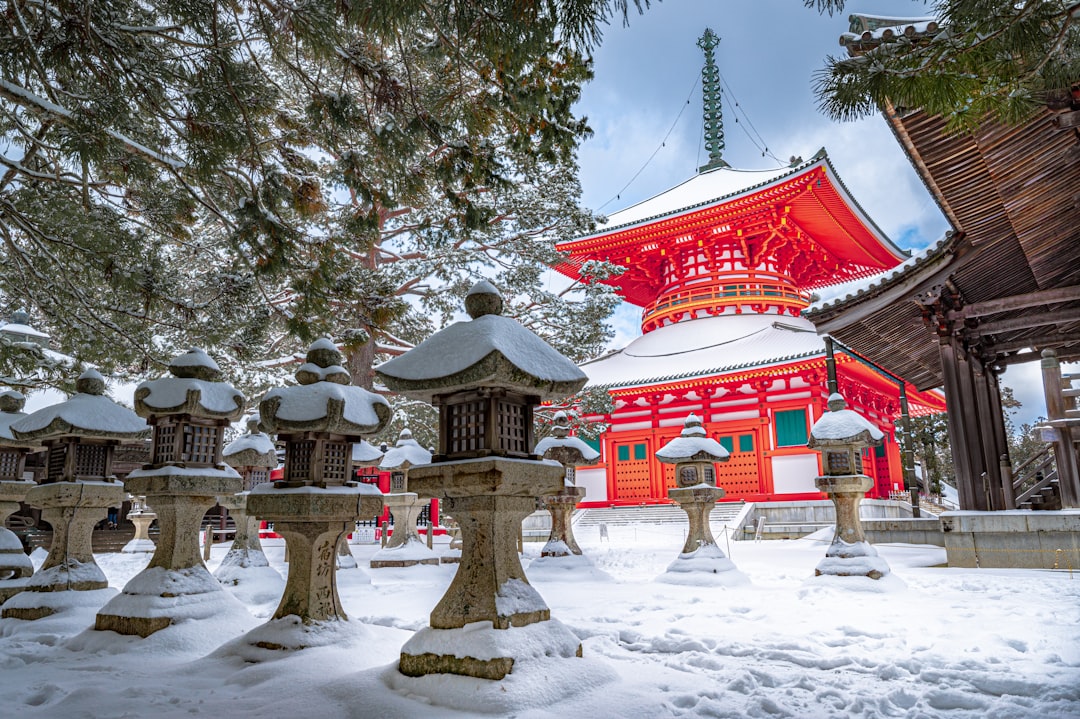
Winter is a different world. Fierce winds off the Sea of Japan coat the fir trees in layers of rime and snow until they become the white, hunched shapes called juhyo, or snow monsters. For experienced skiers, the Hakkoda backcountry is famous; for everyone else, the ropeway alone gets you among the snow monsters.
Sukayu and the Hiba-Wood Bathhouse
On the mountain road below the ropeway is Sukayu Onsen, an inn with a history going back centuries and a vast bathhouse called the Sennin-buro, or thousand-person bath. The hall is built from Aomori hiba, a local cypress, with no pillars in the bathing area.
The water is milky, acidic, and strongly sulphurous. It is also largely mixed-gender, which surprises some visitors. Read our guide to onsen etiquette before you go, and ask the inn about women-only hours if that matters to you.
Summer, Autumn, or Deep Winter
Aomori is regularly cited as one of the snowiest cities in the world, and between December and March the snow is not decorative. Sidewalks narrow to trenches, and the Hakkoda road is lined with walls of it. We love the city in that season, but only for travelers who come prepared with proper boots.
Early August is the Nebuta festival itself, from the 2nd to the 7th. The city fills completely and hotels are booked months ahead; our guide to Japan in August covers how it fits with the other Tohoku summer festivals.
For a first visit, we recommend late September to early November. The weather is settled, the apple harvest is in, and the Hakkoda slopes turn red and gold from the top down.
Beyond the City: Hirosaki and Lake Towada
Aomori City also works well as a base for the rest of the prefecture. Hirosaki, the old castle town to the southwest, is known for its castle park and the cherry blossoms that fill it in late April. Lake Towada and the Oirase Gorge lie beyond Hakkoda to the south, a caldera lake and a river walk through beech forest.
Both are reachable in a day, and both need most of one. Our advice is to pick one rather than squeeze both around the city itself. Autumn favors Oirase; spring favors Hirosaki.
Expert Tip
Hakkoda sits outside the city and needs a vehicle, and the weather on the mountain can be very different from the weather at the station. If you want the ropeway in your day, decide it in advance and keep the morning free for it; clouds tend to build over the summit in the afternoon, and a closed ropeway is common in strong winter winds.
Aomori City: Frequently Asked Questions
How many days do you need in Aomori City?
One full day covers the core: the station waterfront, the fish market, the art museum, and Sannai-Maruyama. Two days lets you add Hakkoda and Sukayu without rushing. Beyond that, use Aomori as a base for Hirosaki or Lake Towada, which each need most of a day.
Is Aomori worth visiting outside the Nebuta Festival?
Yes, and in some ways it is better. WA RASSE keeps full-size floats on display year-round, and the rest of the city, including the museum, the Jomon site, the market, and the mountains, works regardless of the season. Outside August you also get normal hotel prices and space to move.
How do you get from Tokyo to Aomori City?
Take the Tohoku Shinkansen to Shin-Aomori, which takes about three hours on the fastest Hayabusa trains, then change to a local JR train for the short ride to Aomori Station. There are also direct flights from Haneda to Aomori Airport, with buses from the airport into the city.
Related Tours


Conclusion
Aomori City does not ask much of you. The station puts you on the waterfront, the market feeds you by eleven, and the art museum and the Jomon site fill an afternoon that most itineraries through Tohoku skip entirely.
Plan it as a base rather than a stopover. Stay near Aomori Station, not Shin-Aomori, give the city at least one full day plus a second for Hakkoda, and carry cash, because entry fees, market tickets, and bus fares here are still paid the old way.
Plan Your Japan Trip with Local Experts
Our team has guided 40,000+ travelers across Japan. Tell us about your trip and we’ll get back to you within 24 hours.




