In this article:
- Two Things Called Sushi Egg
- Why Tamago Is the Chef’s Test
- Tamago Styles: Sweet Tokyo, Savoury Kansai
- Eating Sushi Egg in Japan
- Sushi Egg: Frequently Asked Questions
Introduction
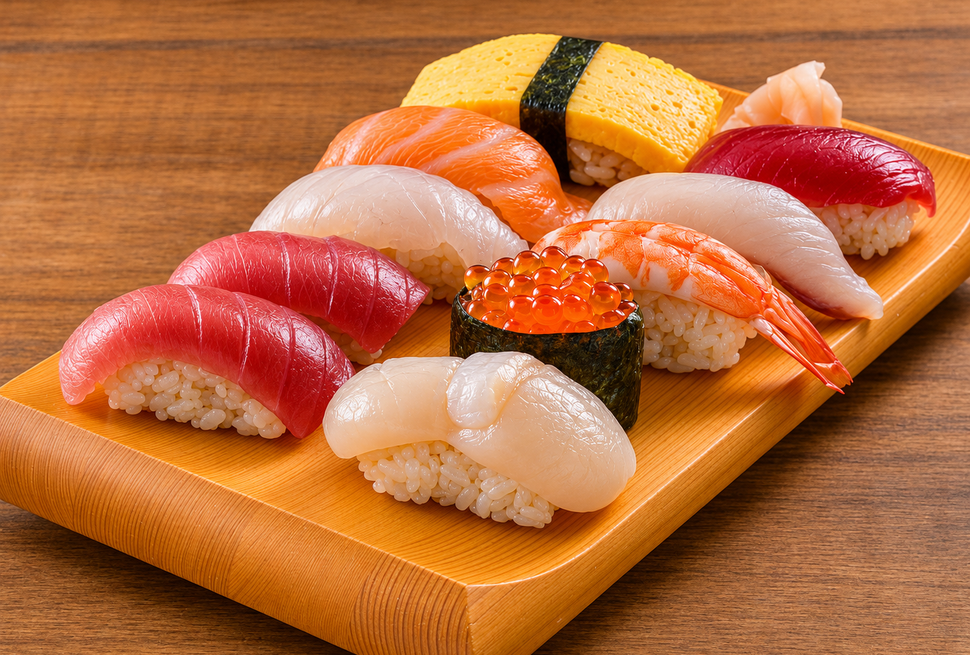
Most visitors who search for sushi egg are looking at one of two things: a yellow block of omelette on rice, or a spoonful of bright orange beads on top of a roll. People call both “egg” in English. In a Japanese sushi restaurant they sit at opposite ends of the menu, and they say very different things about the place serving them.
The omelette is tamago. It is the cheapest-looking piece at the counter and, by long tradition, one of the most revealing. Chefs and serious diners treat it as a quiet audit of the kitchen: how the chef managed the heat, how much time went into it, whether the house makes its own or buys it in.
The roe is a separate story — flying fish, smelt, and salmon eggs, each with its own texture and price. We walk travelers past both nearly every morning in Tsukiji, and the questions are always the same. Here are the answers, starting with what is actually on the plate.
Two Things Called Sushi Egg
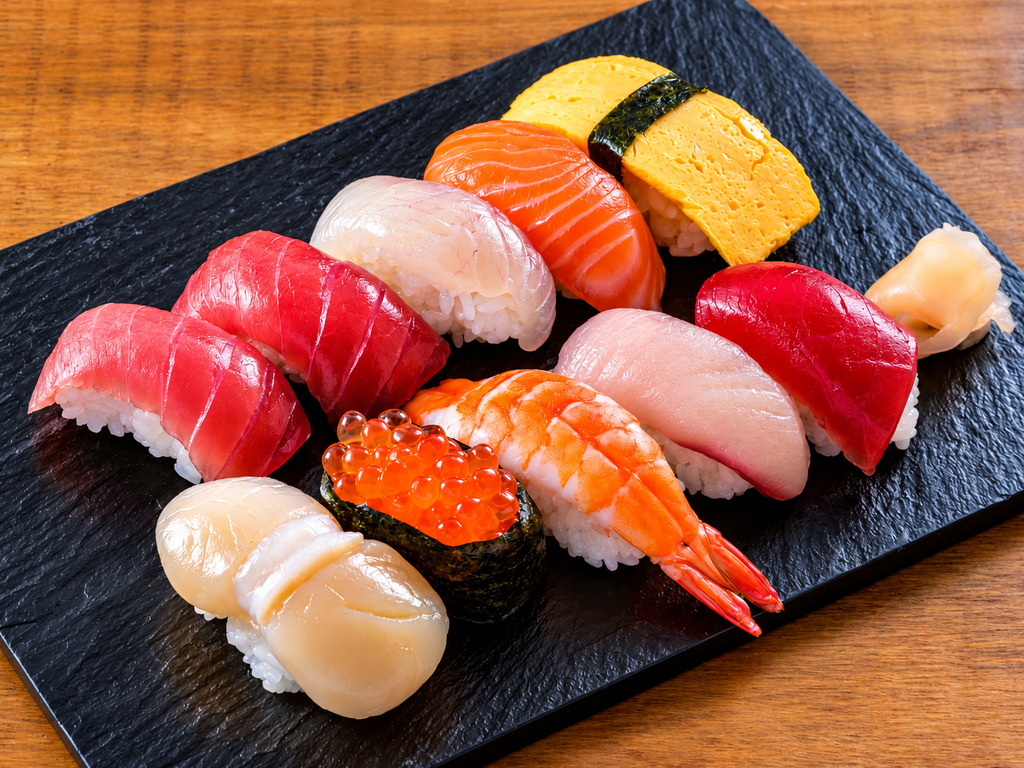
Japanese has separate words for these, which is the first thing worth knowing. Ask for tamago and you get omelette. Ask for the roe by name and you get roe.
Tamago: The Sweet Omelette on Rice
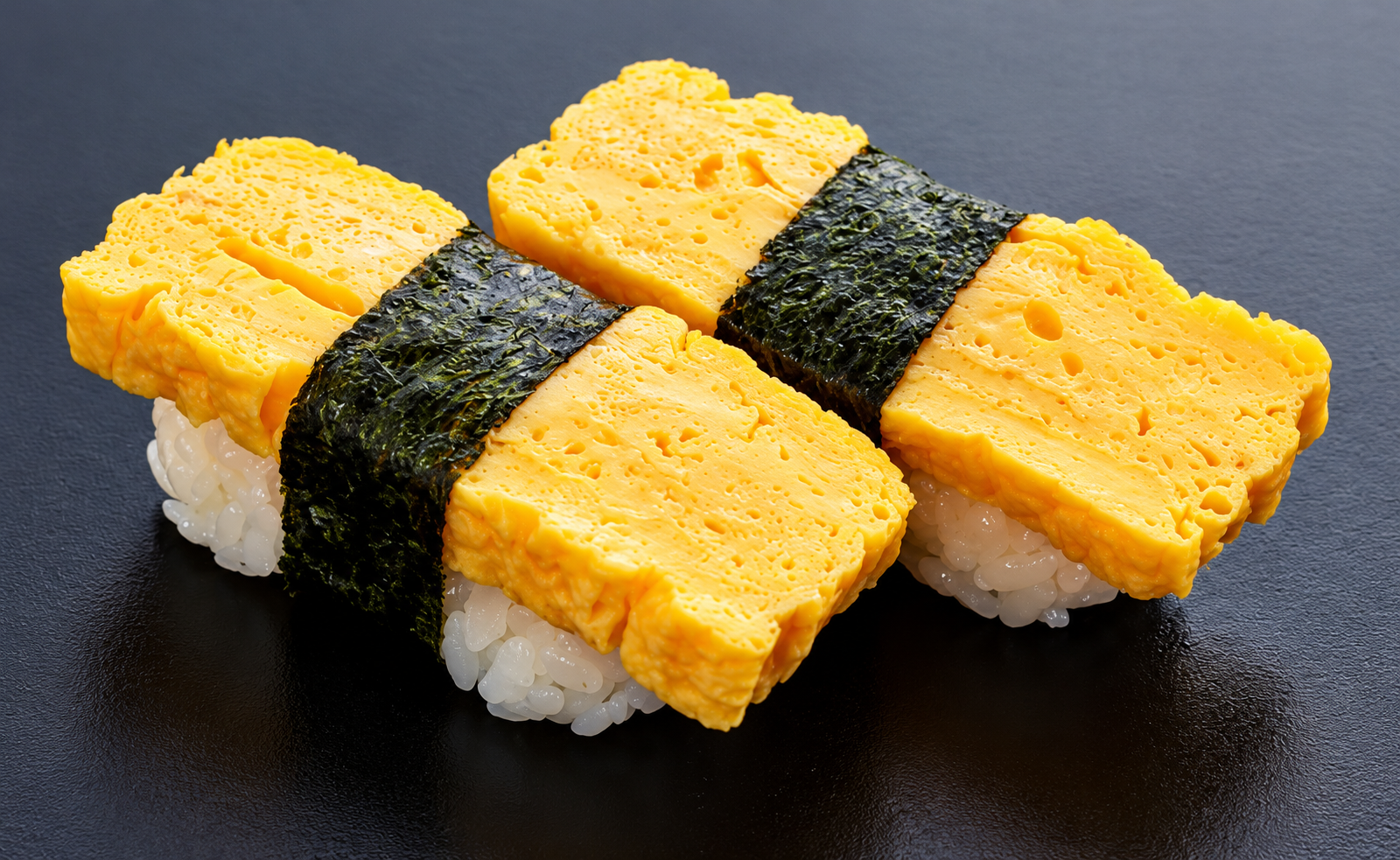
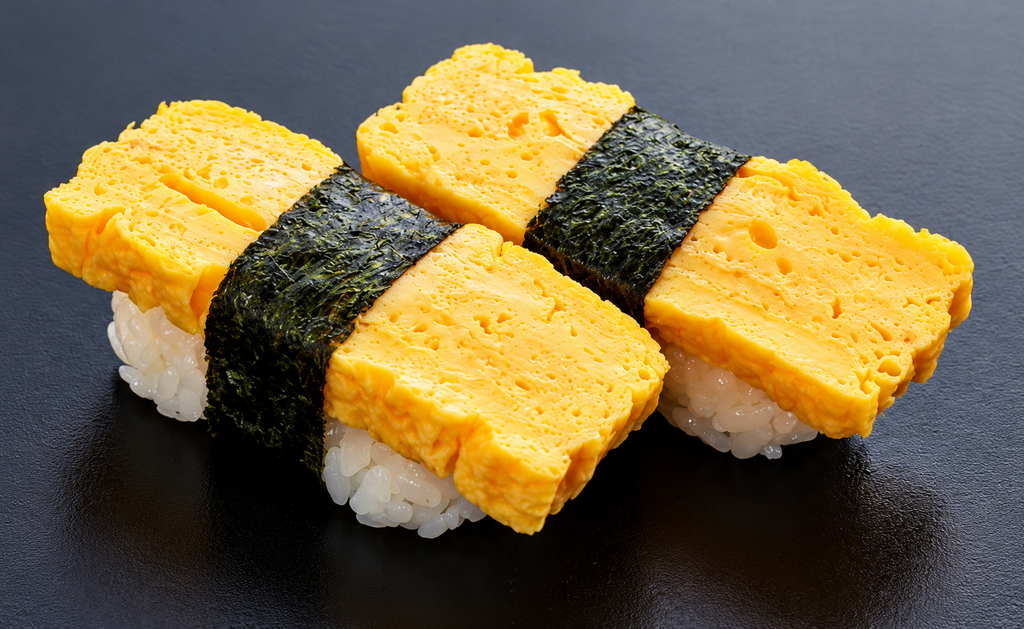
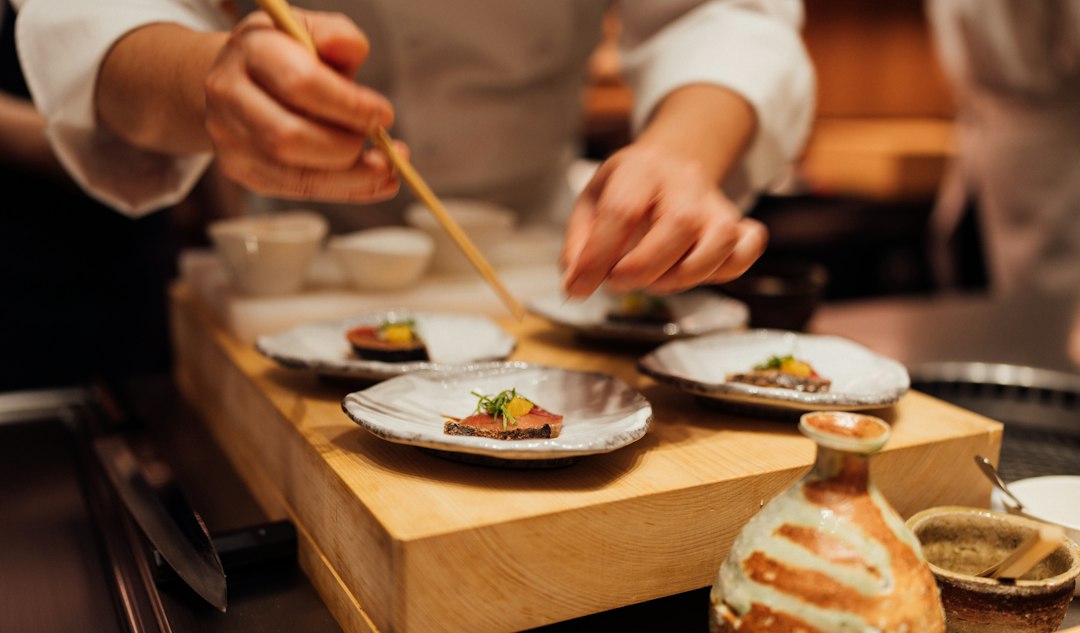
Tamago simply means egg, and at a sushi counter it refers to tamagoyaki: eggs beaten with sugar, a little soy sauce or salt, often mirin and sometimes dashi, then cooked in thin layers and rolled into a block. Chefs slice the block and serve it as nigiri, usually holding it to the rice with a narrow band of nori.
The flavour is sweet, which surprises first-timers. That sweetness is the point. Against vinegared rice it reads almost like a savoury custard, and it is the piece that tends to win over children and anyone wary of raw fish.
Sushi bars have their own slang for it. Behind the counter, sushi chefs often call it gyoku, from an alternative reading of the character for egg. You will hear the word more than you will need to use it.
Fish Roe: Tobiko, Masago, Ikura
The other kind of sushi egg is roe, and three types cover most of what you will see.
Tobiko is flying fish roe. The beads are small, crunchy, and naturally orange-red, although restaurants often colour it black with squid ink, green with wasabi, or yellow with yuzu. It is the coating on many inside-out rolls and the topping on gunkan.
Masago is smelt roe, usually from capelin. It is smaller and softer than tobiko, with less snap, and producers frequently dye it to look like it. Cheaper rolls outside Japan often use masago where the menu implies tobiko. In Japan you will see it less at good counters.
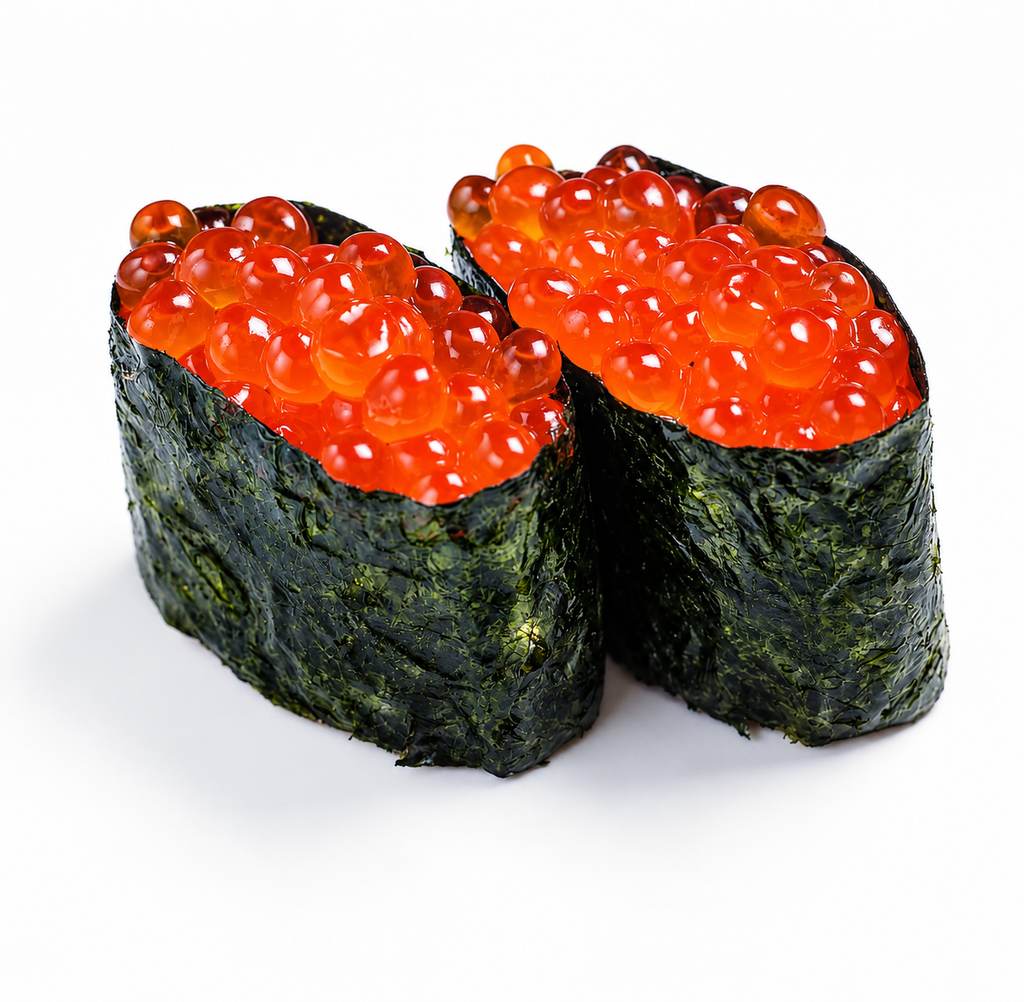
Ikura is salmon roe, and it is a different experience altogether. Each bead is several millimetres across, translucent and glossy, and bursts with a salty, faintly sweet liquid. In Japan, chefs typically cure it in soy sauce and sake and serve it as gunkan, and restaurants price it well above the other two.
What Is Not an Egg
Visitors often describe uni—the orange-gold tongues that chefs serve on gunkan—as roe. It is not quite. Uni is the reproductive gland of the sea urchin, and the texture — soft, creamy, almost melting — is nothing like a bead of roe.
Japan has other roe that rarely reaches sushi menus abroad: kazunoko, herring roe pressed into firm, crunchy strips and eaten at New Year, and tarako or its spicy cousin mentaiko, pollock roe more often found in onigiri and pasta than on nigiri. If you see them at a counter, order them. They are a good sign of a place cooking for locals.
Expert Tip
If you want to taste the difference between roe types, order ikura and tobiko side by side at a conveyor-belt shop rather than at an omakase counter. The comparison costs very little, and the contrast between the large soft pop of salmon roe and the dry crackle of flying fish roe is clearer in two consecutive bites than in any description.
Why Tamago Is the Chef’s Test
A slice of egg has nothing to hide behind. There is no fish to source, no knife work on display, and no seasonal rarity to impress anyone. What is left is technique.
Layers, Heat, and Patience
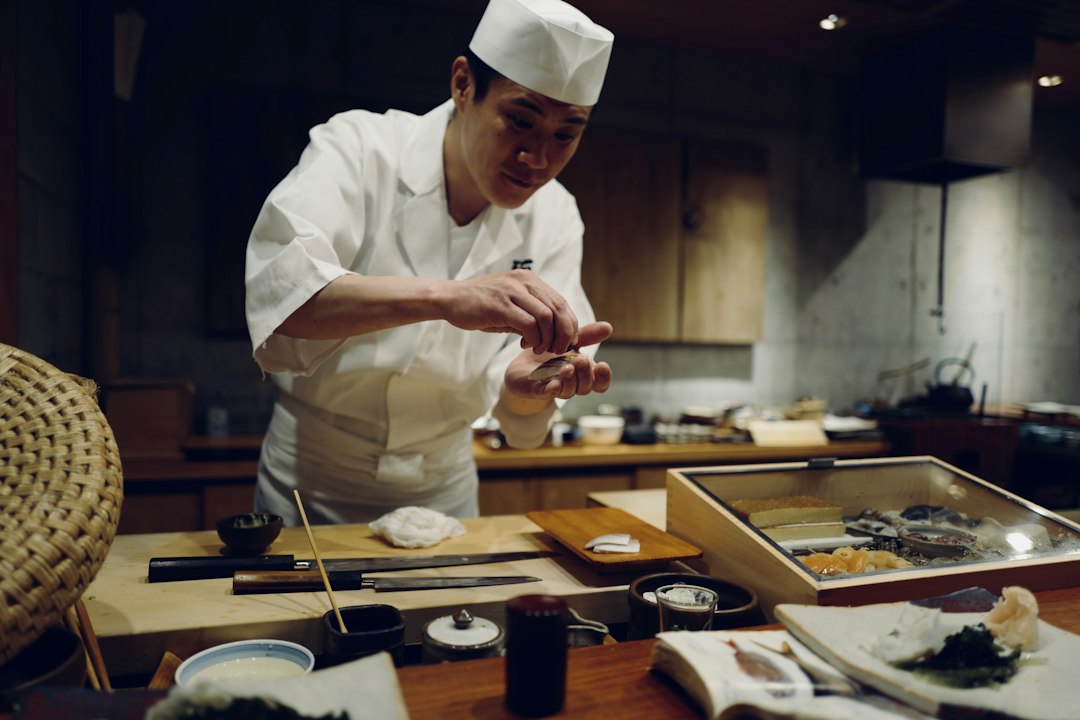
The chef builds tamagoyaki in a rectangular pan, one thin layer at a time. The chef pours each layer, allows it to half-set, then rolls it over the one before it, before oiling and refilling the pan again. Too much heat and the outside browns and toughens before the inside sets. Too little and the layers never bond.
A well-made block is even all the way through, moist without being wet, and holds its shape when the chef slices it. A poorly made one shows its seams, weeps liquid, or tastes of scorched sugar. That visibility is why people have long treated it as a measure of how carefully a kitchen works.
There is an old story, repeated in English and Japanese sushi writing, that some diners would order tamago before anything else to judge the chef. We are not sure how often anyone does this today. Still, we think the instinct is sound: whoever takes trouble over the egg rarely cuts corners on the tuna.
The Edomae Version With Shrimp
At traditional Edomae counters in Tokyo, tamago can be something closer to a cake than an omelette. Chefs blend eggs with ground shiba shrimp or white fish paste, sometimes with grated yam, and bake them slowly over low heat into a thick, dense, faintly sweet slab. The texture resembles castella sponge more than breakfast eggs.
This style takes a long time and a lot of attention, which is why many shops now buy their tamago from specialist makers instead. A counter that still makes its own in this style is telling you something about its priorities. We cover the wider tradition in our guide to Edomae sushi.
The Apprentice Story Everyone Quotes
Many Western readers first heard about tamago through the 2011 documentary Jiro Dreams of Sushi. In one of its best-known scenes, an apprentice at Sukiyabashi Jiro, Daisuke Nakazawa, describes making the egg more than 200 times before Jiro finally approved it, and weeping when Jiro finally accepted his work.
People often retell the scene as if every sushi apprenticeship works this way. It does not. However, it captures something real about how sushi masters regard the dish inside the trade: a piece that looks simple and that critics judge harshly precisely because of that.
Tamago Styles: Sweet Tokyo, Savoury Kansai
Ask a Tokyoite and a Kyotoite what tamagoyaki should taste like and you will get two different answers. Both are right for their region.
Atsuyaki and Dashimaki
In the Kanto region around Tokyo, the sushi-shop standard is atsuyaki: thick, golden-brown on the outside, and noticeably sweet. Sugar and soy sauce lead, and the result is firm enough to slice cleanly and sit on rice.
In Kansai — Osaka and Kyoto — the more familiar style is dashimaki tamago. A generous amount of dashi goes into the eggs and the sugar is reduced or left out, so the omelette is paler, softer, and savoury, with liquid that runs when you press it. It is wonderful with grated daikon and a little soy sauce. On rice it is harder to handle, which is one reason the sweeter version dominates at sushi counters.
Our view: try both, but on separate days. The sweet Tokyo version belongs with sushi, while dashimaki is at its best as a side dish at dinner.
Kinshi Tamago and Other Supporting Roles
Egg also turns up at sushi restaurants in smaller parts. Kinshi tamago is a paper-thin omelette sliced into fine golden threads and scattered over chirashi bowls. Thin sheets of omelette sometimes replace nori as a wrapper. Quail egg yolk is cracked raw onto gunkan of tobiko or natto at some shops, a rich addition that divides opinion.
Inside futomaki, the thick rolls sold at supermarkets and festivals, a long strip of tamagoyaki is almost always one of the fillings. It is the most common way many Japanese people eat sushi egg at home.
Eating Sushi Egg in Japan
The best tamago in Tokyo is not always found at a sushi counter. Some of it is sold over a shop front, warm, on a stick.
Tsukiji Outer Market, Standing Up
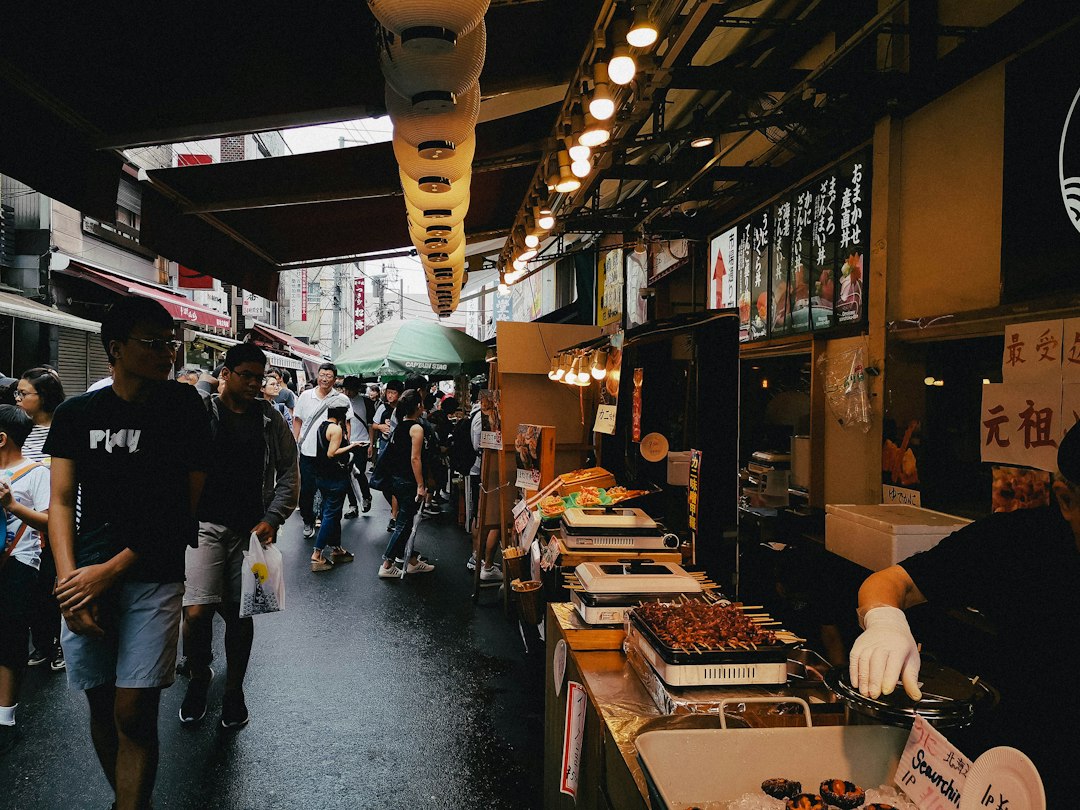
The Tsukiji Outer Market has several shops that make tamagoyaki and nothing else, and some of them have supplied the city’s sushi restaurants for generations. In the morning you can watch the cooks work rows of square pans through the shop window, rolling and flipping blocks in a steady rhythm.
Some sell slices or skewers to eat on the spot. It is eaten standing, often still warm, and it tastes noticeably different from the cold slice on nigiri — softer, steamier, with the sweetness more forward. Bring cash. Most of these stalls do not take cards.
On our Tsukiji street food tour, which starts at Tsukiji Hongwanji before moving into the outer market, tamagoyaki is the stop we point to for anyone who does not eat raw fish. It suits travelers who are not ready for sashimi first thing in the morning. Our guide to what to eat at Tsukiji Outer Market covers the rest of the route.
Expert Tip
Go to the tamagoyaki shops before late morning. The market is busiest early, but that is also when the pans are running and the egg is freshest; by early afternoon many stalls are closing and some have sold out. If you can only eat one thing standing up in Tsukiji, make it a warm slice of egg rather than a skewer of tuna you could eat anywhere.
At the Sushi Counter
In an omakase meal you do not order tamago; it arrives. It is often served near the end of the sequence, sometimes as the final piece, and at some counters it comes as a slice on its own without rice — closer to a dessert than a course.
Pay attention when it lands. Is it the dense, shrimp-enriched Edomae kind or a lighter rolled omelette? Is it warm? Some chefs will tell you, if you ask, whether it was made in-house. Those small differences say more about the restaurant than its tuna. For booking and behaviour at high-end counters, see our guide to Tokyo omakase dining.
At a counter where you order piece by piece, it is fine to ask for tamago whenever you like. Say “tamago, onegaishimasu” and it will come.
Conveyor-Belt and Izakaya Versions
Conveyor-belt chains serve tamago nigiri as a standard, inexpensive plate. It is usually bought in rather than made on site, sweet and firm, and perfectly pleasant. For a family with children it is often the most-ordered piece of the meal.
Izakaya are the other place to look. Dashimaki tamago is a fixture on izakaya menus, served in a thick, quivering roll with grated daikon. Our Shinjuku food tour starts in Omoide Yokocho and works through four eateries with izakaya-sized dishes shared across the table, which is the setting where you see how ordinary egg cooking is here. It is a useful reminder that in Japan, egg is everyday food first and sushi topping second.
Sushi Egg: Frequently Asked Questions
Is tamago sushi raw?
No. Tamago is a fully cooked omelette, built up in layers in a pan and served at room temperature or slightly warm. That makes it one of the few traditional nigiri with nothing raw on it, which is why it is often recommended to first-time sushi eaters and to children.
Is sushi egg vegetarian?
Not always. Tamagoyaki is frequently made with dashi, which is normally based on bonito flakes, and the Edomae style contains ground shrimp or fish paste. Fish roe is obviously not vegetarian. If you avoid fish, ask whether the egg contains dashi or seafood before ordering, and see our guide to vegetarian food in Japan for the phrases that help.
What is the orange egg on sushi?
Usually tobiko, flying fish roe, which is small, crunchy, and bright orange. On cheaper rolls it may be masago, a smaller and softer smelt roe dyed to look similar. Large, glossy, red-orange beads that burst in the mouth are ikura, salmon roe.
Related Tours
Conclusion
Order the egg. At a conveyor-belt shop it is a safe, sweet plate; at a serious counter it is the piece that tells you what kind of kitchen you are sitting in front of. Either way, it costs little and teaches a lot.
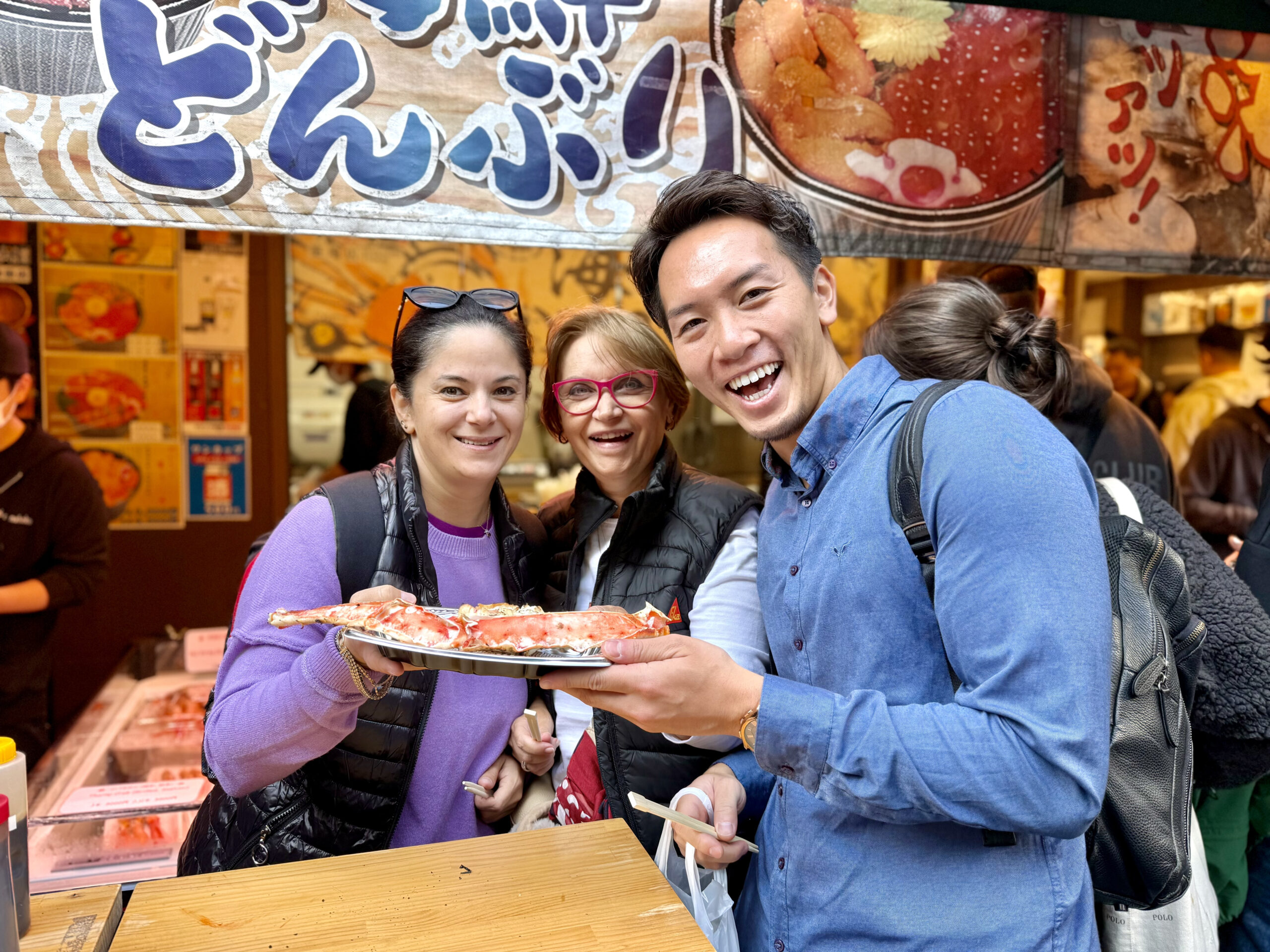
When you are in Tokyo, eat it at least once warm, standing up at a Tsukiji tamagoyaki shop in the morning, and once at the end of a sushi meal. The gap between those two experiences is the clearest lesson in Japanese egg cooking you will get, and it takes about two bites to understand.
Plan Your Japan Trip with Local Experts
Our team has guided 40,000+ travelers across Japan. Tell us about your trip and we’ll get back to you within 24 hours.