
In this article:
- Kitano: The Hillside the Foreign Merchants Built
- The Old Settlement, Chinatown, and the Harbour
- Above the City: Nunobiki, Mount Rokko, and Arima Onsen
- Eating and Drinking in Kobe
- Things to Do in Kobe, Japan: Frequently Asked Questions
Introduction
Most travelers treat Kobe as a lunch stop. They ride twenty minutes from Osaka, eat a plate of beef, and leave before the harbour lights come on.
That is a mistake, and an understandable one. The list of things to do in Kobe, Japan does not look like Kyoto’s, because the city’s story is different. Kobe was among the ports opened to foreign trade in 1868, and the merchants who settled here built brick houses on the hillside, stone offices by the water, and a Chinatown in between. Then, on 17 January 1995, the Great Hanshin Earthquake flattened much of it, and the city rebuilt itself within a few years.
What you get today is a compact, walkable city with a mountain behind it, one of Japan’s oldest hot spring towns inside its borders, and the country’s largest sake-brewing district along its eastern shore. The sections below follow the order we usually walk it: down from the hills, along the water, up the mountain, and finally to the table.
Kitano: The Hillside the Foreign Merchants Built
Kitano is where the foreign residents chose to live, and it is still the best place to start. The district sits on a slope about ten to fifteen minutes’ walk uphill from Sannomiya or Shin-Kobe Station, and the gradient is steeper than it looks on a map.
The houses are known collectively as ijinkan, roughly “foreigners’ residences.” Several are open as small museums, a few are private, and the rest have become cafes and shops. The streets between them are still lived in, which is what keeps the place from feeling like a theme park.
Weathercock House and Moegi House
If you enter only one house, make it the Weathercock House. It was built in 1909 for a German merchant, Gottfried Thomas, and its red brick and the iron rooster on the spire have become the symbol of the district. Inside, the fireplace, the Art Nouveau stained glass, and the heavy furniture give a sense of how comfortably a successful trader lived here before the First World War.
Moegi House, a few steps away, is the pale green clapboard residence built in 1903 and later home to an American Consul-General. A joint ticket covers both. We think this pair gives you the clearest picture of Kitano for the least time and money.
Choosing Which Houses to Enter
There are around a dozen paid houses, and combination tickets are sold for many of them. Resist the urge to buy the largest bundle. By the fourth interior the parlours start to blur, and the hill is tiring in summer.
A better approach is to choose two houses, then spend the remaining time walking the lanes above Kitano-zaka, where the views back down to the harbour open up between the rooftops. Wear shoes with grip. The stone paving is smooth and the slopes are real.
Ikuta Shrine on the Way Down
Walking back toward Sannomiya, you pass Ikuta Shrine, one of the oldest shrines in Japan and now surrounded by department stores and office towers. It has been rebuilt after floods, war, and the 1995 earthquake. That history of repeated reconstruction is part of why residents hold it in such regard.
The small grove behind the main hall, the Ikuta Forest, is a quiet five minutes of old trees and shade in the middle of the city. Most visitors walk straight past it. Still, it is the part of the shrine we would keep if we could keep only one.
Expert Tip
Walk Kitano from the top down, not the bottom up. Take a taxi from Sannomiya to the upper end of the district, visit the Weathercock House first, and let gravity carry you back through the lanes to Ikuta Shrine and the shopping streets. You arrive at lunch with fresh legs rather than having spent them on the climb.
The Old Settlement, Chinatown, and the Harbour
South of the station, Kobe changes character within a few blocks. The hillside houses give way to stone banks and trading offices, then to the red gates of Chinatown, and finally to the open waterfront.
Kyukyoryuchi: Stone Buildings and Kobe City Museum
Kyukyoryuchi, the former foreign settlement, is the grid of streets where the trading houses kept their offices. Many of the stone and brick buildings survived or were restored, and the ground floors now hold fashion boutiques and cafes. Daimaru Kobe anchors the western edge.
Kobe City Museum sits inside a former bank building in the settlement. Its collection focuses on the city’s contact with the outside world, including Namban art, the paintings made after the first Portuguese traders reached Japan. It is the best hour you can spend indoors in Kobe on a wet day.
Nankinmachi for Street Food
Nankinmachi is small. Two main streets cross at a central plaza, and you can walk the whole of it in ten minutes. It is also one of the three Chinatowns in Japan most people have heard of, and at lunchtime the queues at the pork bun counters are long.
Eat standing up, as locals do, and move on. However, this is a place for snacks rather than a sit-down meal; the beef is waiting further along.
Meriken Park, the Port Tower, and the Earthquake Memorial
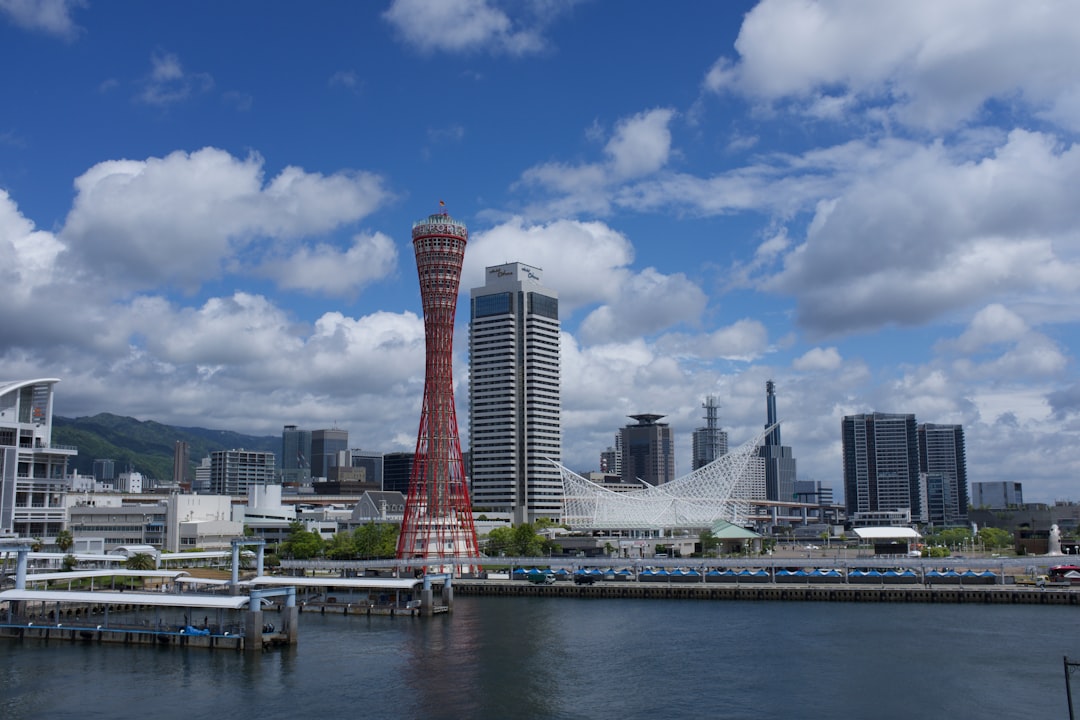
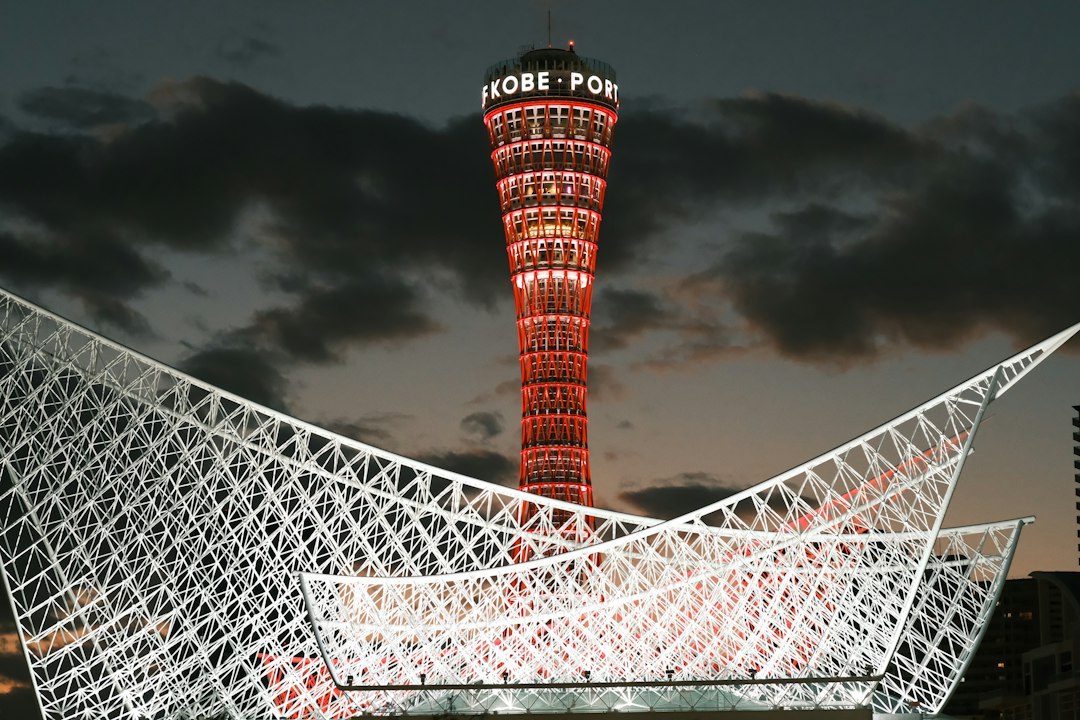
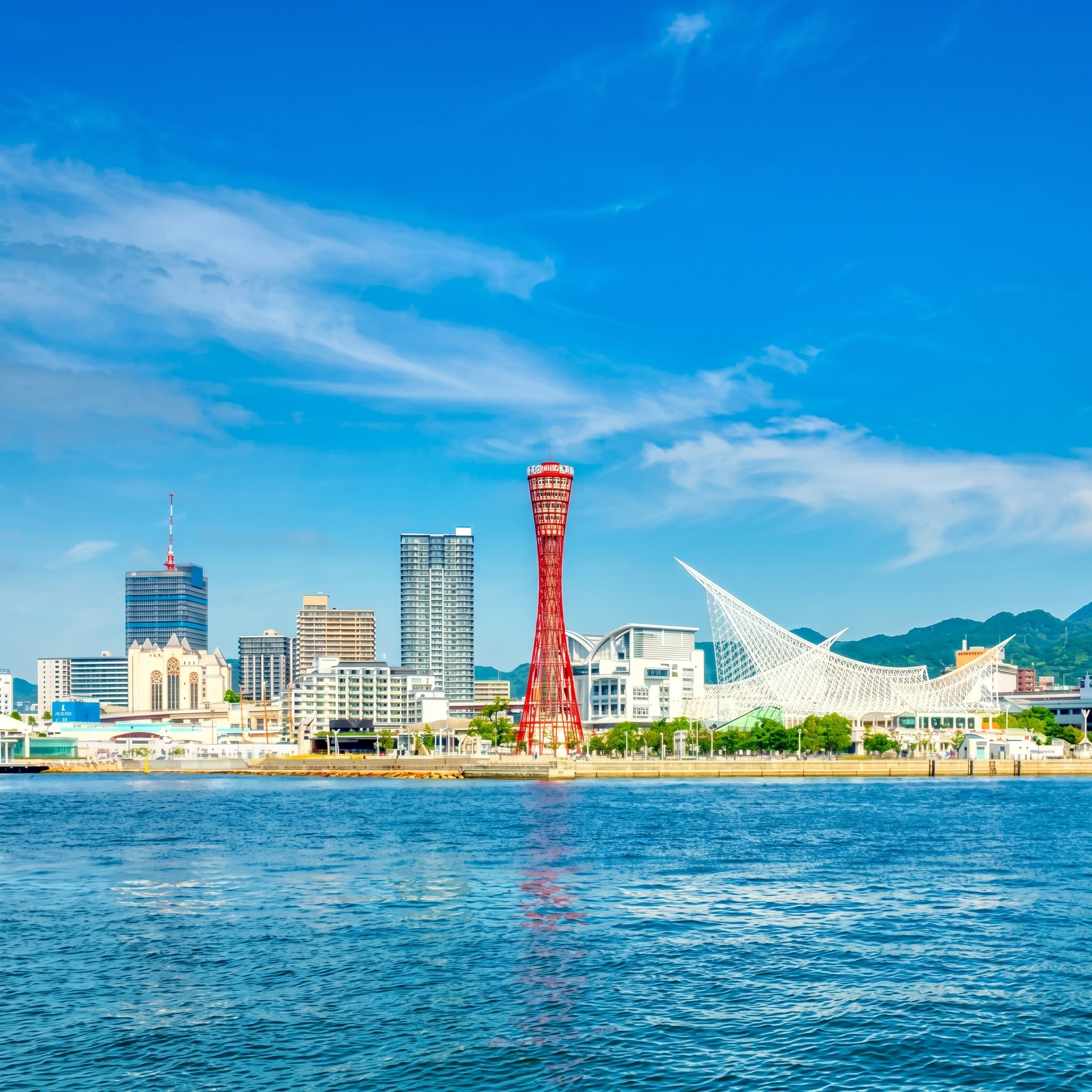
Meriken Park is the harbour’s open front. The red lattice of Kobe Port Tower reopened in April 2024 after a long renovation, and it now has a rooftop deck above the old observation floor. From up there the city’s shape becomes obvious: a narrow strip of buildings pressed between the water and the mountains.
At the park’s eastern edge, the Port of Kobe Earthquake Memorial Park preserves a section of damaged quay as it was left in 1995. Tilted lamp posts and broken paving sit behind a railing. It is a short visit, and it explains more about modern Kobe than any museum panel.
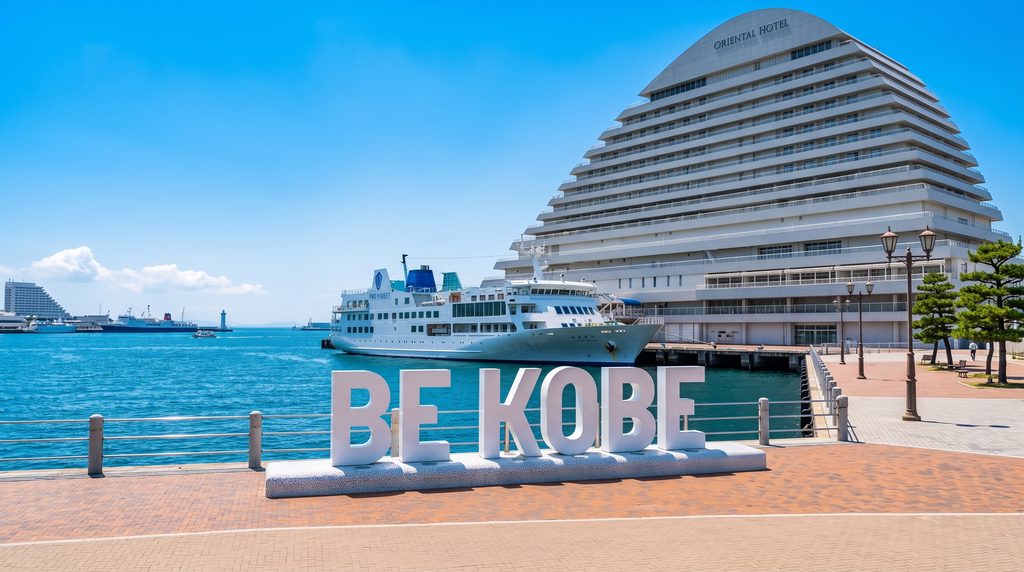
Across the water, Kobe Harborland is the shopping and dining side of the port. We find it pleasant in the evening, when the lights come on, and unremarkable during the day.
Above the City: Nunobiki, Mount Rokko, and Arima Onsen
Kobe’s mountains are close enough to reach from the city centre in minutes. That proximity is the thing visitors from Tokyo or Osaka find hardest to believe.
Nunobiki Falls and the Herb Garden Ropeway
Behind Shin-Kobe Station, a footpath climbs into the forest to Nunobiki Falls, a series of cascades that has appeared in Japanese poetry for centuries. The walk is short and steep. You can hear the water before you see it.
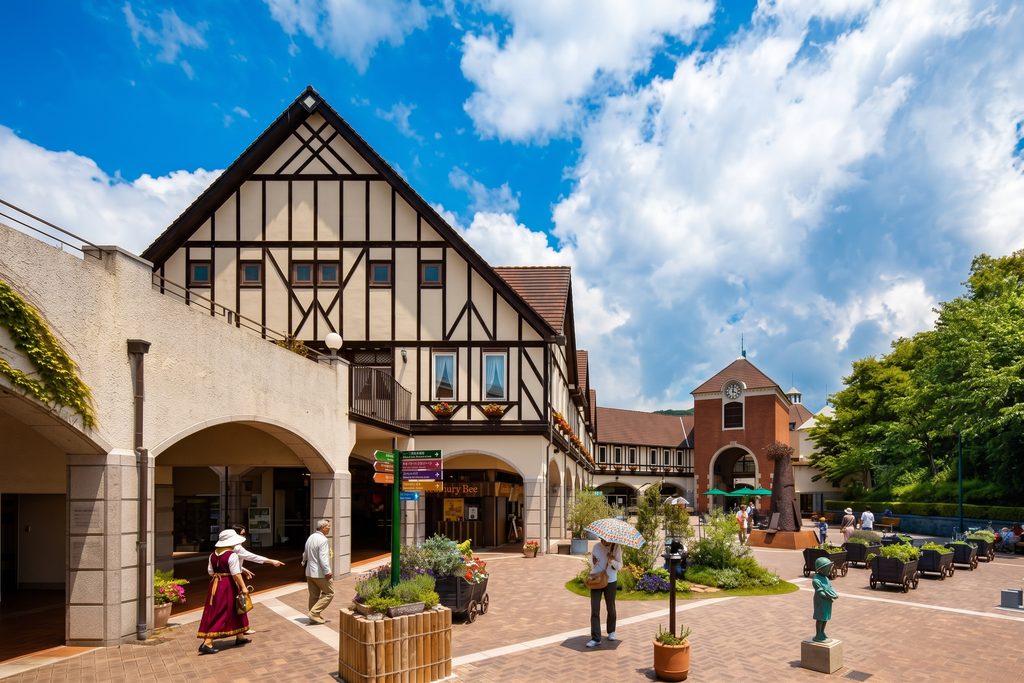
The Nunobiki Herb Garden sits higher up and is reached by ropeway from near the station. It is a reasonable half-hour if you are travelling with someone who enjoys gardens. For everyone else, the falls alone justify the detour, and they cost nothing.
Mount Rokko for the Evening View
Mount Rokko is the ridge that forms Kobe’s backdrop, reached by bus and the Rokko Cable Car from the eastern side of the city. The night view from the top, across Kobe, Osaka Bay, and on a clear evening as far as Osaka, is widely counted among the finest in Japan.
Timing is everything here. Go up in the late afternoon, watch the city change as the sun drops, and come down after dark. In fog or rain there is nothing to see, and on those days our guides steer travelers elsewhere rather than spend two hours on an empty viewpoint. Mount Maya, the neighbouring peak, offers a similar outlook from the Kikuseidai platform and is usually quieter.
Arima Onsen: Gold Water and Silver Water
Arima Onsen lies on the far side of Mount Rokko, still within Kobe city limits, and ranks among the oldest hot spring towns in Japan. From Sannomiya the train journey takes around thirty to forty minutes, with a change at Tanigami onto the Kobe Electric Railway.
The town is known for two waters. Kinsen, the “gold spring,” is iron-rich and salty, clear when it emerges and rust-brown once it meets the air. Ginsen, the “silver spring,” is clear and carbonated. The two public bathhouses, Kin no Yu and Gin no Yu, let you try each without staying at a ryokan.
In our view, Arima deserves an overnight stay rather than a dash. The lanes empty once the day-trippers leave, and a ryokan dinner followed by a late bath in the brown water is the version most travelers remember. Our Arima Onsen guide covers the ryokan choices in more detail.
Expert Tip
Plan Arima around Tuesdays. Kin no Yu closes on the second and fourth Tuesday of the month and Gin no Yu on the first and third, so on most Tuesdays one of the two is shut. Bring a small towel of your own, since the gold water can stain pale fabric, and aim to arrive before the afternoon wave of day-trippers from Osaka.
Eating and Drinking in Kobe
Kobe beef is the reason many travelers come, and it is also where they are most likely to be disappointed. The name appears on menus all over the city, and the quality behind it varies enormously.
Finding Certified Kobe Beef
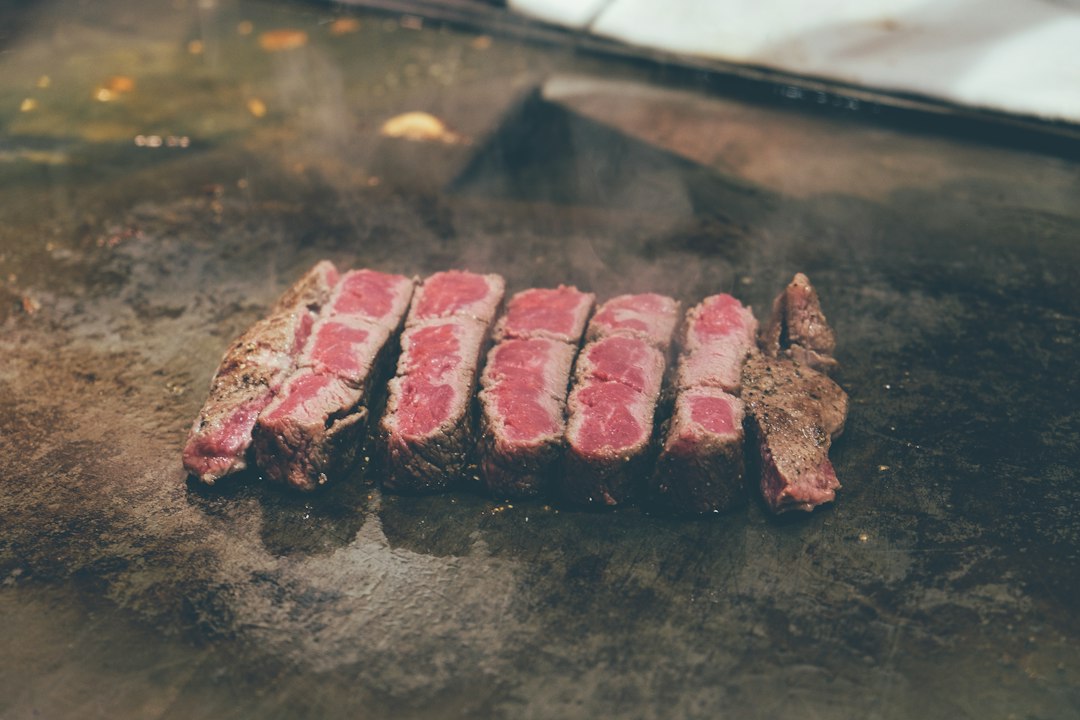
“Kobe beef” is a protected designation, not a description. It must come from Tajima cattle born and raised in Hyogo Prefecture and meet the grading rules of the Kobe Beef Marketing and Distribution Promotion Association, including a marbling score of BMS No.6 or higher. Plenty of excellent wagyu fails those tests, and plenty of restaurants sell it under a looser description.
Certified restaurants typically display a small bronze statue of a Tajima cow and can show you a certificate carrying the animal’s ten-digit identification number. The carcass itself is stamped with a nojigiku, the wild chrysanthemum that is Hyogo’s prefectural flower. If a restaurant cannot show the certificate, assume you are eating something else.
Most visitors eat it teppanyaki style, cooked on a steel griddle in front of them, and our guide to teppanyaki dining explains how those meals run. On our private Kobe day tour, choosing the right counter is one of the things travelers value most; our guides know which places serve certified beef and which are trading on the name. The good ones fill up, so reserve ahead.
The Sake Breweries of Nada
Along the shore east of the city centre, Nada Gogo is a group of five historic brewing districts that together make up Japan’s largest sake-producing area. Soft water from the Rokko mountains, cold winters, and a port for shipping built the industry here.
Two brewery museums are the easiest introduction, and both are free to enter. Hakutsuru occupies a wooden brewhouse from the Taisho era, with English explanations of each stage of brewing. Kiku-Masamune, a short walk away, shows traditional tools and has a tasting counter. If you want to understand what you are tasting, our sake tasting guide is a useful primer before you go.
Yoshoku, Bakeries, and Sobameshi
A century of foreign residents left Kobe with a taste for bread and Western-style cooking. The city has an unusually dense bakery culture, and yoshoku, the Japanese take on dishes like hayashi rice and beef stew, is served in long-running family restaurants around Motomachi.
Sobameshi is the local working lunch: chopped noodles and rice fried together on a griddle with sauce. It is cheap, filling, and nothing like what you will find in Kyoto. That contrast is part of the point of coming.
Things to Do in Kobe, Japan: Frequently Asked Questions
Is Kobe worth a day trip from Osaka or Kyoto?
Yes. The JR special rapid reaches Sannomiya from Osaka Station in about twenty minutes, and Kyoto is under an hour away. A single day covers Kitano, Ikuta Shrine, the settlement, Chinatown, the harbour, and a Kobe beef lunch comfortably. Add Mount Rokko only if the evening is clear.
Can I see Kobe and Arima Onsen in one day?
You can, but something gives. The most workable version is Kitano and a beef lunch in the morning, then Arima in the afternoon for a bath and a walk through the old lanes. You would drop the harbour and the mountain. If your schedule allows, spend the night in Arima instead.
How do I know if a restaurant serves real Kobe beef?
Ask to see the Kobe Beef certificate with the ten-digit identification number, and look for the bronze Tajima cow statue that certified restaurants display. Genuine Kobe beef is expensive, so a cheap “Kobe beef” set menu is a warning sign. When in doubt, ask the restaurant directly whether it is certified.
Related Tours

Conclusion
Kobe works best when you stop treating it as a detour between Osaka and Kyoto. Give it a full day, start high in Kitano and walk down toward the sea, and let the evening decide whether you go up Mount Rokko or stay by the harbour.
Two decisions are worth making before you arrive. Reserve a certified Kobe beef restaurant, because the good ones fill up and the uncertified ones are everywhere. And if you have a second day, spend it in Arima Onsen rather than adding another city; Himeji, further west, is better kept for a day of its own.
Plan Your Japan Trip with Local Experts
Our team has guided 40,000+ travelers across Japan. Tell us about your trip and we’ll get back to you within 24 hours.




