In this article:
- What Arima Is
- Gold Water and Silver Water
- The Two Public Baths
- Mount Rokko and the Ropeway
- Eating and Walking the Town
- Arima Onsen: Frequently Asked Questions
Introduction
The water at Kin-no-Yu comes out of the tap the colour of rust and leaves a ring on everything it touches.
Arima’s gold water is heavy with iron and salt, and when it meets air the iron oxidises and the water turns opaque red-brown. It stains towels permanently. It also holds heat in the body longer than any onsen water we know, to the point where walking out into a cold January street afterwards is genuinely comfortable.
The town is small, steep, and old — it appears in the eighth-century chronicles, which makes it one of the three oldest documented hot springs in Japan. It is also thirty minutes from Sannomiya in central Kobe, which is a combination that almost nothing else in the country offers.
What Arima Is
A compact hot spring town in a valley on the northern side of Mount Rokko, administratively part of Kobe.
How Old
Arima appears in the Nihon Shoki, compiled in 720, and in the Man’yoshu poetry anthology. Emperors visited in the seventh century.
That places it alongside Dogo in Shikoku as one of the oldest hot springs in Japan with a continuous written record. It is also counted among the three great springs in the classical ranking, with Kusatsu and Gero.
The town does not lean on this heavily, which is to its credit. There is no reconstructed ancient bathhouse to tour.
The Geology
Arima’s water is unusual. It is not volcanic in origin despite the setting — the springs are fed by ancient seawater carried deep underground by a subducting tectonic plate and forced back up through the fault system, which is why the water is saline and why it carries such an unusual mineral load.
That explains the salt content, the iron, and the extremely high mineral concentration relative to most Japanese onsen. It also explains why two chemically distinct waters emerge within a few hundred metres of each other.
Hideyoshi
Toyotomi Hideyoshi, who unified Japan in the late sixteenth century, came here repeatedly and funded reconstruction after an earthquake damaged the springs.
Excavations beneath the town uncovered the remains of a bath from his period, now preserved in a small museum, the Taiko no Yudono-kan. It is a modest site and worth twenty minutes.
His wife Nene is commemorated around the town as well, and the association is the main historical thread the town presents to visitors.
Expert Tip
Do not take a white towel into the gold water. The iron content stains fabric permanently and the discolouration does not wash out — inns and bathhouses supply towels for exactly this reason and will tell you not to use your own good one. If you are carrying a favourite tenugui around Japan collecting onsen, leave it in the locker at Arima.
Gold Water and Silver Water
The two waters are the reason to come, and they feel entirely different.
Kinsen, the Gold Water
Iron- and salt-rich, colourless underground and turning opaque red-brown within minutes of contact with air. Opaque enough that you cannot see your own knees.
The salt content coats the skin and slows heat loss, which is the source of the traditional claim that it warms the body for hours. Whatever the mechanism, the effect is real and noticeable — a bath at Arima in winter carries you through the evening in a way that most onsen do not.
Traditionally associated with muscle pain, cold sensitivity, and skin conditions. It is hot, heavy, and the more distinctive of the two.
Ginsen, the Silver Water
Clear and colourless, from separate sources — carbonated springs and radium springs, both classified as ginsen.
The carbonated water is the interesting one. Fine bubbles form on the skin, and the effect is stimulating rather than sedating. It is cooler than the gold water and you can stay in it much longer.
The two are genuinely complementary. Bathing in gold first and silver second is the usual order and works well; the reverse leaves you overheated at the end.
Which to Choose
Do both if you have the time. They are ten minutes apart on foot and a combined ticket is sold.
If you only have one bath in you: gold water, because it is the one you cannot get elsewhere. Clear carbonated springs exist in other parts of Japan; opaque iron-salt water at this concentration is rare.
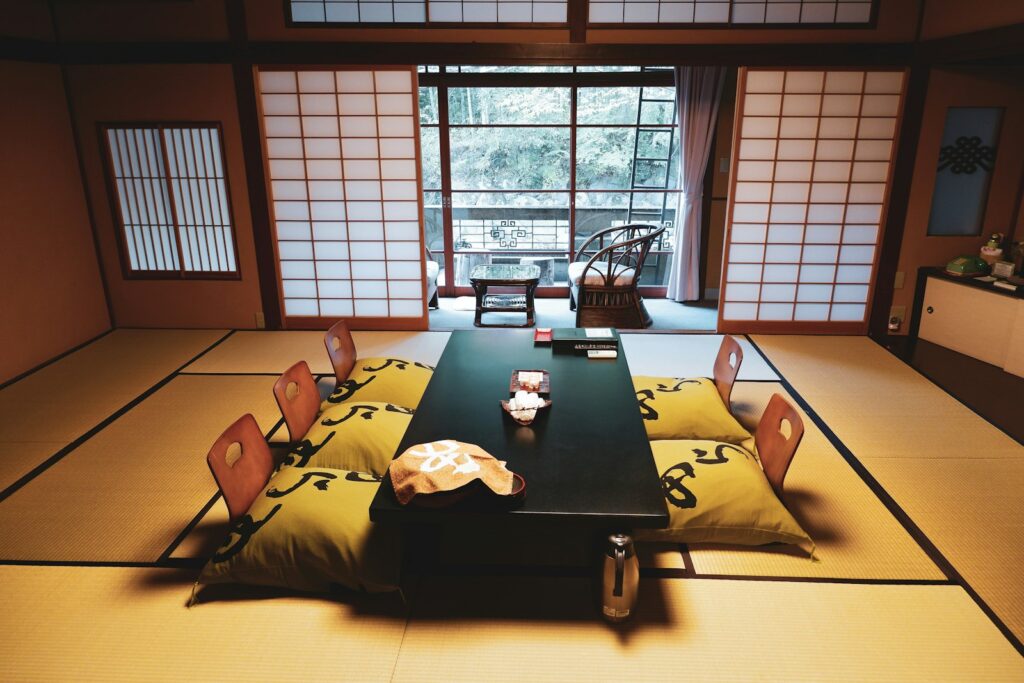
Many ryokan in the town have both, which is the simplest solution and one argument for staying the night.
The Two Public Baths
Kin-no-Yu and Gin-no-Yu are the municipal bathhouses and they are how most day visitors experience Arima.
Kin-no-Yu
In the centre of the town, a short walk up from the bus stop, and the busier of the two. Gold water, hot, in a plain modern building.
It is functional rather than atmospheric — this is a public bath, not a designed experience. The water is the point.
Outside the entrance there is a free footbath fed by the same source, and a drinking fountain dispensing the spring water, which is salty and metallic and worth trying once.
Gin-no-Yu
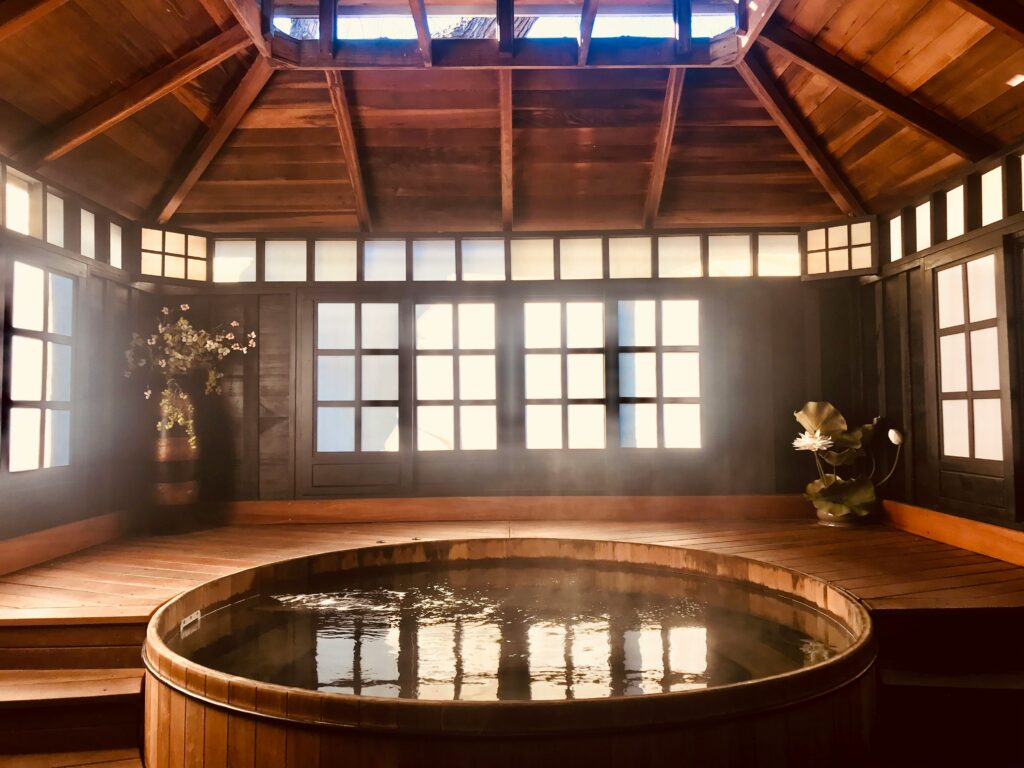
A few minutes uphill, quieter, with the carbonated silver water in a calmer wooden-finished interior.
Less crowded than Kin-no-Yu at almost every hour. If you are doing one bath and want the more pleasant room, this is it.
Both close one day a month on different schedules, so check before making a specific plan.
Practicalities
Small entrance fees, with a combination ticket for both. Towels are sold or rented at the desk — buy the cheap one rather than using your own, for the reason above.
Lockers are provided. Both baths are busy on weekends and public holidays and quiet on weekday mornings.
For a longer, more resort-like experience, the town has several larger day-use facilities attached to hotels, most of which admit non-staying visitors for a higher fee.
Mount Rokko and the Ropeway
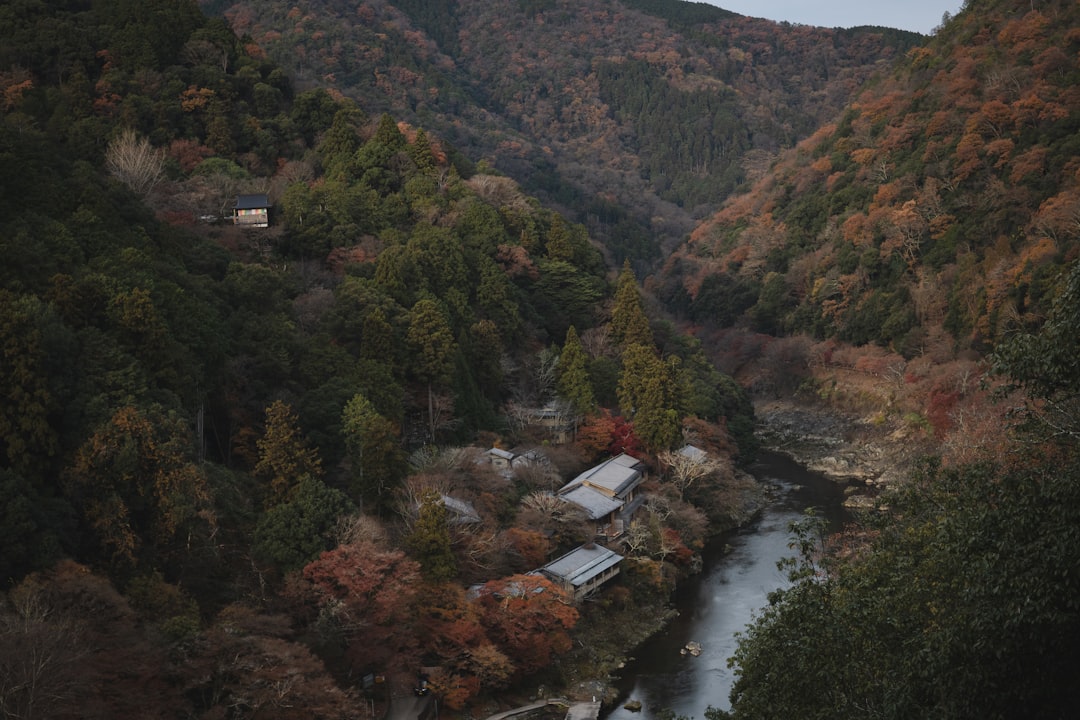
The best reason to build a full day around Arima rather than an afternoon.
The Ropeway
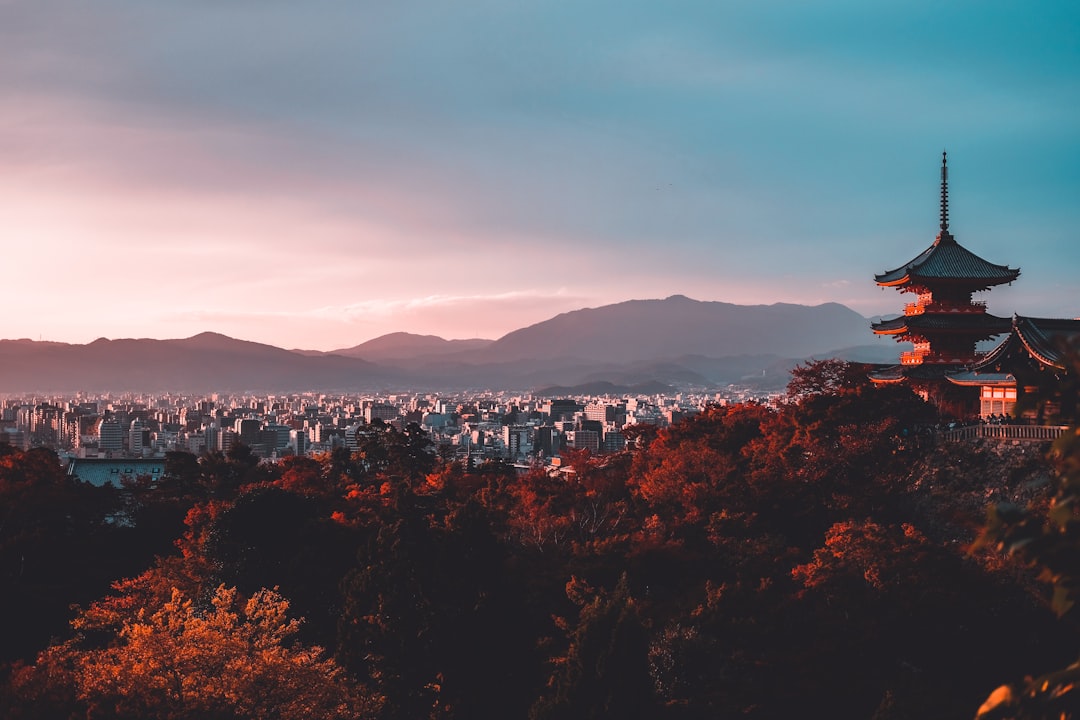
The Rokko-Arima Ropeway climbs from Arima over a wooded valley to the top of Mount Rokko in about twelve minutes.
It is a genuinely good ride, particularly in autumn when the valley below turns. Services are reduced in winter and the line closes for maintenance periods, so check operating status before planning the route.
From the summit, a cable car descends the other side toward Kobe, which means you can travel Kobe to Arima over the mountain rather than through the tunnel and see the whole thing on the way.
The Night View
Mount Rokko’s view over Kobe, Osaka Bay, and the coastal cities is one of the three great night views of Japan, and locally it is called the ten-million-dollar night view.
It is genuinely spectacular — a curve of city lights along a dark bay, with the Akashi Kaikyo Bridge lit to the west.
The logistics require attention. Last services down the mountain are earlier than the good light in summer, and the route back to Arima closes before the route down to Kobe. If you want the night view, plan to descend toward Kobe and stay there, or check the final ropeway departure carefully.
The Botanical Garden and the Rest of the Summit
The Rokko Alpine Botanical Garden sits near the summit and holds high-altitude and northern species that do not grow at sea level nearby. It is well kept and quiet.
There is also an open-air museum of contemporary sculpture, an observation deck, and walking trails along the ridge. The summit area is cool in summer, which is historically why Kobe’s foreign residents built houses up here.
Expert Tip
Ride the ropeway up from Arima and the cable car down to Kobe rather than doubling back. The standard visitor arrives in Arima from Kobe by bus or train, bathes, and returns the same way, which wastes the mountain entirely. Going up and over turns a bath into a full day with a summit, a view, and a descent into a different city — and it costs very little more.
Eating and Walking the Town
Arima is small — the old quarter is a handful of steep lanes — and walking it takes an hour.
Tansan Senbei
Thin, crisp, faintly sweet wafers made with the town’s carbonated spring water, which gives them their texture. Sold everywhere, and made fresh in front of you at several shops.
Buy the warm ones from a shop with the iron press running. The packaged tins are fine and the fresh ones are considerably better.
They are Arima’s defining souvenir and they travel well.
Arima Cider
Carbonated soft drink made with the spring water, produced locally since the Meiji period, sold in glass bottles.
It is sweeter than a modern drink and it is a period piece. Worth one.
Sansho and Tsukudani
Arima sansho — the local Japanese pepper — has a specific reputation and appears in a style of preparation named after the town, where beef or fish is simmered in soy with sansho. Arima-ni.
The pepper itself, sold ground or whole, is a considerably better souvenir than most things in a Japanese onsen town gift shop. It is intensely citrusy and numbing.
Walking the Lanes
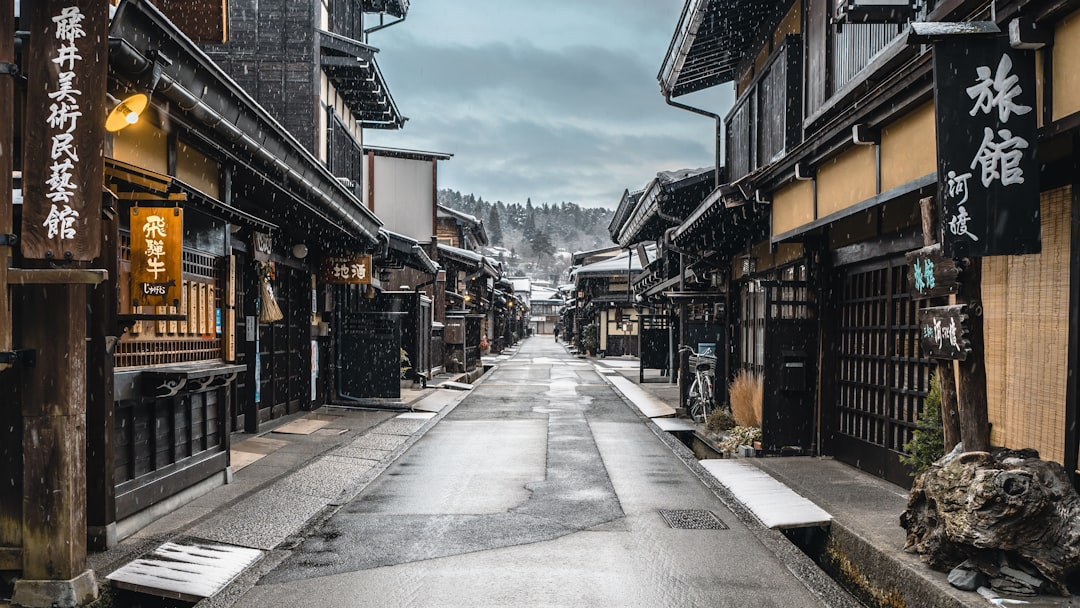
The old streets above Kin-no-Yu are the pleasant part of the town: narrow, sloping, lined with wooden shopfronts, a few small temples, and the Nene bridge.
It takes forty minutes and it is genuinely attractive rather than merely photogenic. Go before the coaches arrive or after four.
Arima Onsen: Frequently Asked Questions
Does Arima work as a day trip from Kobe or Osaka?
Better than almost any other onsen town in Japan. From Sannomiya in central Kobe it is roughly thirty minutes by direct bus, and from Osaka about an hour. That makes a half-day entirely realistic: arrive mid-morning, bathe at Kin-no-Yu, walk the old lanes, eat, and return. Adding the ropeway and Mount Rokko makes it a full day. Staying overnight gives you the town in the evening and access to ryokan baths with both waters, which is better — but unlike Kusatsu or Kinosaki, Arima does not require it.
How does bathing in gold water differ from silver water?
Gold water is opaque, salty, iron-heavy, and hot, and it leaves you warm for hours afterwards — the salt coating slows heat loss from the skin. It feels heavy and it is the more dramatic of the two. Silver water is clear, cooler, and in the carbonated version produces fine bubbles on the skin with a stimulating rather than sedating effect. You can stay in silver water much longer. Most people find gold water more memorable and silver water more comfortable. Doing gold first and silver second is the conventional order and it works.
Are the public baths tattoo-friendly?
Policies at municipal and hotel baths in Japan vary and change, and Arima’s are not uniformly permissive — this is not Kinosaki. If you have tattoos, the reliable route here is a private rental bath, kashikiri, which many of the town’s ryokan and hotels offer to day visitors as well as guests for a fixed fee. Book one ahead by phone or through your accommodation. Do not rely on a blog post, including this one, for a specific facility’s current rule; ask when booking.
Related Tours
Conclusion
Bathe in the gold water. It is the thing here that exists almost nowhere else, and the sensation of walking out into a cold street still warm an hour later is the reason people have been coming to this valley since the seventh century.
Then take the ropeway over Mount Rokko instead of the bus back. Arima on its own is a good half-day; Arima with the mountain and the descent into Kobe is one of the better days available in Kansai, and hardly anybody does it.
Plan Your Japan Trip with Local Experts
Our team has guided 40,000+ travelers across Japan. Tell us about your trip and we’ll get back to you within 24 hours.