
In this article:
- Why the Building Matters More Than the View
- Getting There Without Getting Lost
- Inside the Floating Garden Observatory
- When to Go: Sunset, Night, or Morning
- Umeda Sky Building: Frequently Asked Questions
Introduction
Most observation decks in Japan are the same experience at different heights: a lift, a sealed glass room, a gift shop. The Umeda Sky Building in Osaka is different, and the difference is visible from the street before you buy a ticket.
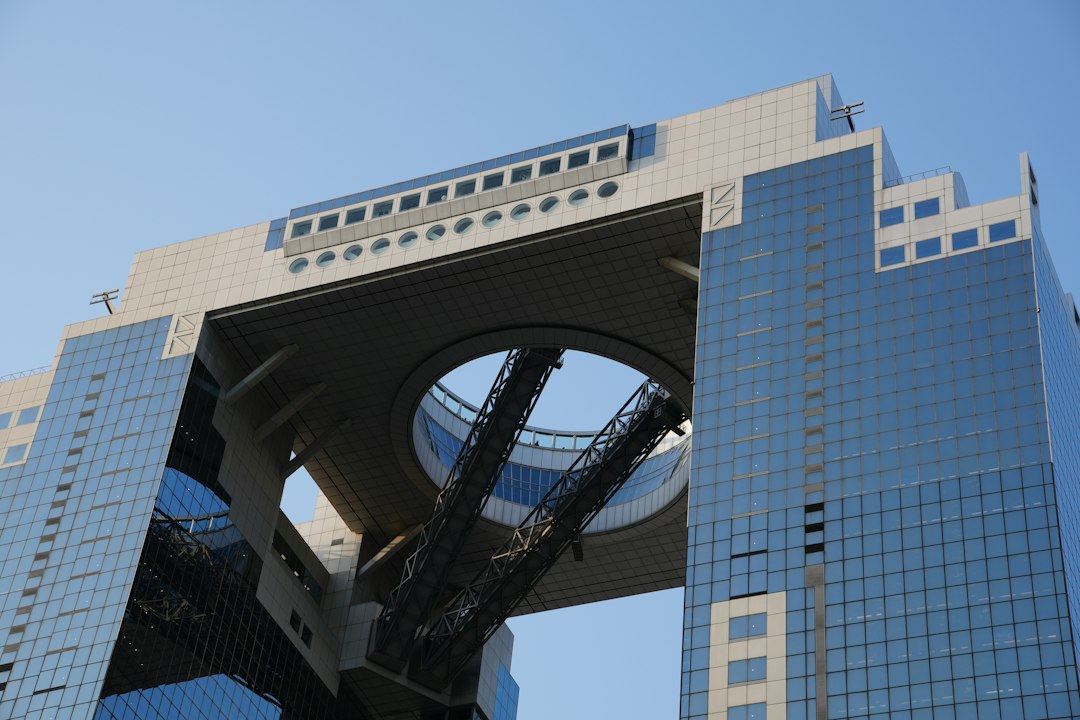
Two slim towers of mirrored glass rise side by side in the Kita district, and forty floors up they are joined by a ring-shaped platform that looks as if it has been left hanging in the air. That platform is the Kuchu Teien, or Floating Garden Observatory. At the very top there is no glass at all, only a railing, the wind, and the whole of Osaka laid out in every direction.
We send a lot of travelers here, usually at the end of a day spent at street level in Namba or around the castle. It works best when you know what you are going for, how to find the entrance, and when the light is worth the queue. That is what this guide covers.
Why the Building Matters More Than the View
Osaka has taller places to stand. The reason to come here is the structure you are standing on.
Two Towers and a Bridge in the Sky
The building was designed by the architect Hiroshi Hara and completed in 1993, and it was one of the first skyscrapers anywhere to connect two towers at the top. Each tower has forty floors. Between them, at the upper levels, sits the observatory, with an open atrium below it through which you can look straight down to the ground.
The facade is clad in half-mirrored glass that picks up whatever the sky is doing. On an overcast afternoon the towers turn grey and almost disappear. At sunset they take on the colour of the clouds, which is when photographers gather at the base.
Its reputation outside Japan owes a lot to a 2008 list in The Times of London, which placed it among the world’s great buildings alongside the Parthenon and the Sagrada Familia. That is a generous comparison. Still, stand under the atrium and look up, and you can see why an architecture critic made it.
How the Top Was Built From the Ground Up
The observatory section was not assembled in the sky. It was built at ground level and then hoisted into place between the two towers, a technique that was new to construction at the time.
Knowing this changes how the ring looks from below. It stops being a decorative crown and becomes what it is: a very large, very heavy piece of engineering that someone lifted forty storeys.
Getting There Without Getting Lost
Umeda is one of the most confusing station complexes in Japan, and the Sky Building sits just outside it. The towers are visible from almost everywhere, which does not help as much as you would think.
From JR Osaka Station
Head for the Central North Exit on the second floor of JR Osaka Station and follow the signs north. The route ends with a short underground walkway, about forty metres long, that passes beneath the road. Come up the stairs on the other side, cross the street, and you are at the base of the towers.
The Osaka Convention and Tourism Bureau gives the walk as seven minutes. In our experience first-time visitors take closer to fifteen, mostly because they stop to check their phone at every junction. Allow for that if you are chasing a sunset.
From Hankyu and the Osaka Metro
From Hankyu Osaka-Umeda or the Midosuji Line at Umeda, the route is slightly longer and joins the same underground walkway at the end. The official site publishes step-by-step directions with photographs for all three stations. They are worth opening on your phone before you set off.
If you are coming from Namba, the Midosuji Line runs directly to Umeda. Tap through with an ICOCA card and the transfer takes no thought at all.
Tickets and Hours
The observatory is open daily from 9:30 to 22:30, with last entry at 22:00. Admission is ¥2,000 for adults and ¥500 for children aged four to twelve; under-fours go free.
You buy tickets at the counter on the 39th floor, which takes cash and credit cards, or in advance online. Advance tickets are not essential on most days. On weekend evenings in autumn, however, the counter queue can be the slowest part of the visit, so an online ticket buys you time at exactly the moment you need it.
Expert Tip
Walk around the outside of the towers before you go up, not after. From the plaza directly beneath the atrium you can look up through the gap and see the escalator tubes and the underside of the observatory at once, which is the single best angle on the building. After dark the plaza is harder to read, and by then most people are too tired to bother.
Inside the Floating Garden Observatory
The visit is a sequence rather than a single room, and it rewards taking it slowly. There are three levels: the 39th floor, the 40th floor, and the open rooftop.
The Glass Escalator
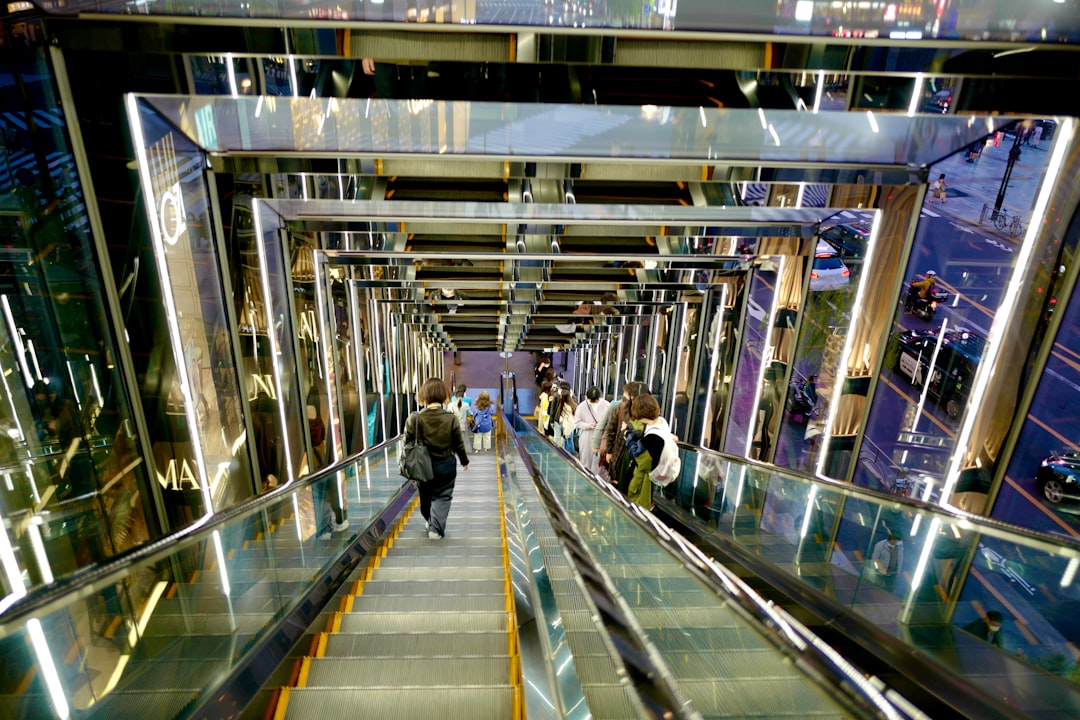
A lift takes you from the ground to the 35th floor. From there, a glass-walled escalator carries you across the open gap between the towers up to the 39th floor, with nothing beneath you but the atrium and the plaza far below.
For many visitors this is the part they remember. It lasts under a minute. Stand on the right, face outward, and let the people in a hurry walk past you.
The 39th and 40th Floors
The 39th floor is the ticket counter, a cafe, and the shop. Move on quickly.
The 40th floor is the indoor observation level, a glazed ring with views in every direction and seating along the windows. It is warm, quiet, and useful in winter or rain. That said, the glass reflects the interior lights after dark, which makes night photography from inside frustrating. Treat it as a place to warm up between turns on the roof.
The Open-Air Rooftop
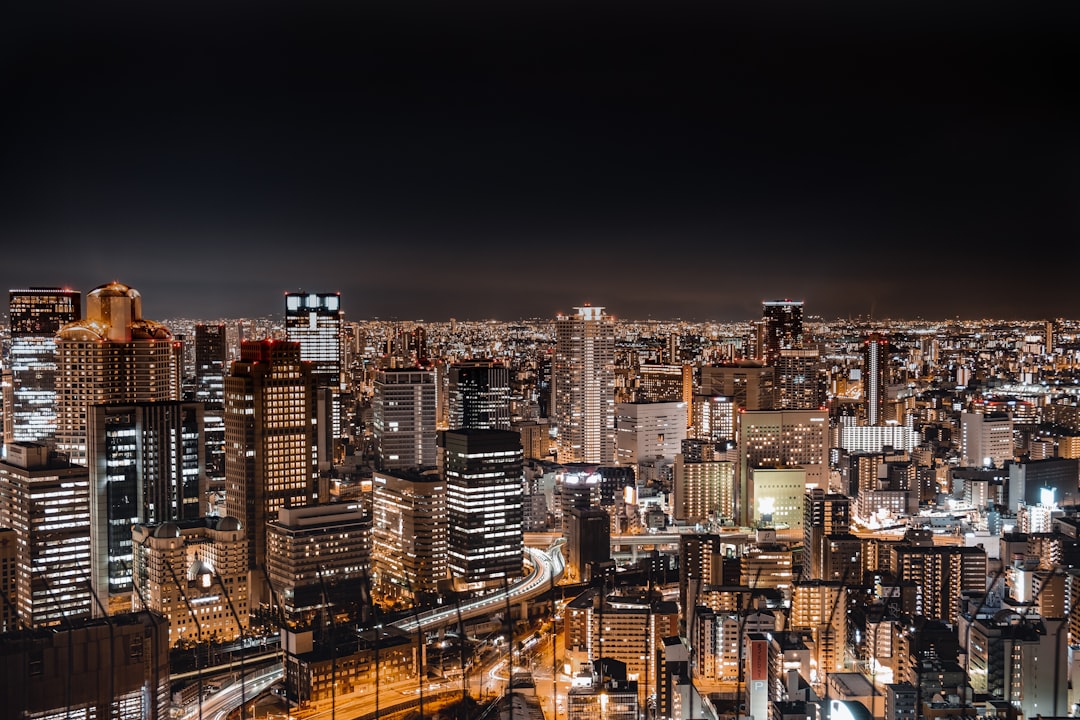
Take the stairs up and the ceiling disappears. The rooftop is a circular open-air deck with a 360-degree view, and it is the reason to come. To the north the Yodo River curves through the city; to the west, on a clear day, the Rokko mountains above Kobe; to the south and east, the endless low grid of Osaka.
After dark a band of small lights set into the floor, known as the Lumi Sky Walk, glows along the walkway. It sounds like a gimmick and mostly is not. With the city lit below and the floor lit underfoot, the edges of the deck become hard to judge, and the effect is closer to standing in the air than anything a sealed observatory can offer.
The rooftop is exposed, and the building closes it in heavy rain, lightning, or strong wind, sometimes at short notice. Umbrellas are not permitted up there. Bring a jacket in any season except high summer, because it is noticeably colder and windier than the street.
Expert Tip
If the weather looks uncertain, check the forecast for wind rather than rain. A dry but gusty evening is more likely to close the rooftop than a light drizzle, and without the roof the ticket buys you the indoor ring only. On a marginal day, ask at the 39th-floor counter whether the rooftop is open before you pay.
When to Go: Sunset, Night, or Morning
Timing makes more difference here than at almost any other viewpoint in the city. The same ¥2,000 buys a very different experience at 10:00 and at 19:00.
The Case for Arriving Before Sunset
Our recommendation for most travelers is to arrive about forty-five minutes before sunset. You see the city in daylight first, which gives you the geography: the river, the mountains, the direction of Namba. Then you watch the light go and the grid switch on beneath you, one district at a time.
The catch is that everyone else has the same idea. The rooftop is at its most crowded in the half hour around sunset, particularly on Fridays and weekends. Get to the railing early and hold your place. Afterwards, stay on for an hour; the crowd thins quickly once the sky is fully dark, and the night view from the roof is at its best when it is quietest.
Sunset in Osaka ranges from around five in the evening in winter to after seven in midsummer. Look up the exact time for your date rather than guessing.
Weekday Mornings for Clear Air and Space
If you care more about the view than the atmosphere, go at opening on a weekday. The air tends to be clearer in the morning, particularly in winter, and you may have the rooftop almost to yourself.
It is also the easiest time for photographs of the building itself. The plaza at the base is quiet, and the morning light falls cleanly on the mirrored facade.
At Ground Level and Below
Leave time for the base of the building. Around the towers is a planted garden with walking paths and water, a green pocket that most visitors walk straight past on the way to the lift.
In the basement is Takimi Koji, a dining alley built to look like an Osaka street from the early Showa era, with lanterns, narrow lanes, and small restaurants serving okonomiyaki, kushikatsu, and other city staples. It is a recreation, not a historic street, and it does not pretend otherwise. Even so, for a casual dinner after the rooftop it is convenient and more atmospheric than most station food courts.
Fitting It Into an Osaka Day
The Sky Building makes most sense as the last stop of a day, not the first. Osaka is a city best understood at street level, and the view means more once you have walked some of what you are looking at.
On our Osaka Highlights walking tour, travelers see the city from the top of the castle main tower in the morning, then ride the subway south to Tennoji and Dotonbori. Standing on the Sky Building roof that evening and picking out the castle, lit and small in the distance, closes the loop neatly. For a fuller plan across several days, our three-day Osaka itinerary shows where it fits.
A private day with a guide can be shaped the same way. Tell us when you book that you want to finish in Umeda, and your guide will plan the route so that you reach the Sky Building as the light starts to go, rather than rushing north from Dotonbori at the last minute.
Umeda Sky Building: Frequently Asked Questions
How long should I spend at the Umeda Sky Building?
Plan on about an hour for the observatory itself, and longer if you are waiting for sunset and staying into the night. Add another hour if you want to eat in Takimi Koji in the basement. Walking time from Osaka Station and back is short but easy to underestimate, so allow at least fifteen minutes each way.
Is the rooftop open when it rains?
Not always. The open-air rooftop can close for heavy rain, lightning, or strong wind, and closures are not always announced in advance. The indoor 40th floor stays open, but most of the value of the visit is on the roof, so on a wet day we would move it to another evening if your schedule allows.
Is it worth it if I have already been up a tower in Tokyo?
Yes, because it is a different kind of experience. Towers such as the Tokyo Skytree win on height, but you see the view through glass. The Sky Building is lower and open to the sky, and the architecture is part of what you came for. If you only do one observation deck in Osaka, we would make it this one.
Related Tours


Conclusion
The Umeda Sky Building rewards a little planning more than most viewpoints do. The building is the attraction as much as the view, the rooftop is weather-dependent, and the difference between a crowded sunset and a quiet night on the deck is often just an hour of patience.
Check the sunset time and the wind forecast on the morning of your visit, and leave Osaka Station earlier than the map suggests. Then take the glass escalator slowly, go straight to the roof, and stay after the crowd leaves. That last hour is when the building does what it was designed to do.
Plan Your Japan Trip with Local Experts
Our team has guided 40,000+ travelers across Japan. Tell us about your trip and we’ll get back to you within 24 hours.




