
In this article:
- Why This Museum Is Worth the Detour
- Inside the Museum: Pacing Three Zones With Children
- Tickets, Hands-On Programs, and the Outdoor Dig Site
- Getting to Katsuyama and Building It Into a Hokuriku Trip
- Fukui Dinosaur Museum: Frequently Asked Questions
Introduction
Most families who ask us about the Fukui Dinosaur Museum have a child who already knows more about theropods than either parent does. That child is usually right: this is the one museum in Japan that a dinosaur-obsessed eight-year-old will remember long after the temples of Kyoto have blurred together.
The museum sits outside Katsuyama, a small town in the mountains of eastern Fukui Prefecture, above the quarry that has produced most of Japan’s dinosaur fossils. Inside a silver dome, more than forty skeletons stand in a single open hall. Several of them belong to species that were first described from bones dug up a few kilometres away.
Getting there takes some planning. Tickets are sold by time slot, the hands-on programs fill up, and Katsuyama is an hour beyond Fukui Station by local train. None of it is difficult once you know how the pieces fit, and the sections below walk through each one in the order you will need them.
Why This Museum Is Worth the Detour
Japan has plenty of dinosaur exhibitions. Only one of them is built on top of the country’s dinosaur research.
Katsuyama and Japan’s Richest Dinosaur Quarry
Katsuyama lies roughly 25 kilometres east of Fukui City, in a valley ringed by forested hills. The rock around the town dates to the Early Cretaceous, and excavations in the Kitadani area have yielded more dinosaur fossils than anywhere else in the country.
The museum opened in 2000 as a research institution as much as a public attraction, and it still functions as both. After an expansion and renovation it reopened in 2023 with a larger building and new galleries. That research role is what separates it from the dinosaur halls of Tokyo or Osaka: the scientists working here are describing new material from the same hillside you can visit in the afternoon.
The Silver Egg and the Descent Into the Hall
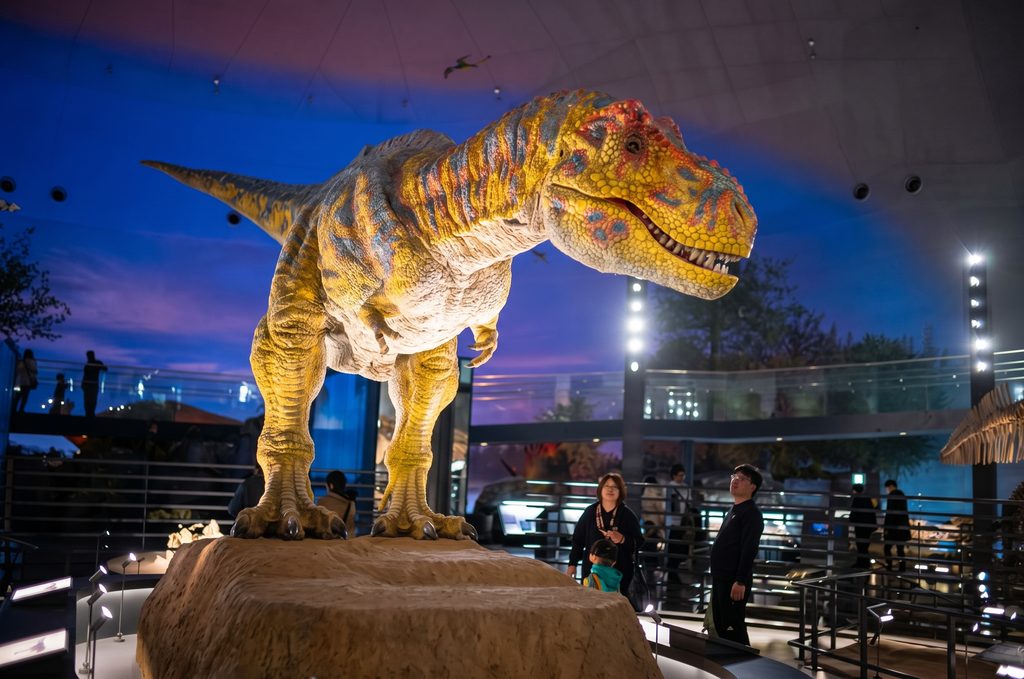
The building was designed by Kisho Kurokawa, one of the architects behind Japan’s postwar Metabolist movement. From the car park it reads as a giant silver egg half-sunk into the ground, and it looks nothing like the concrete boxes most regional museums occupy.
The entrance is at the top. You then ride a long escalator down past a wall of rock strata and emerge in the main hall, where the skeletons appear all at once beneath the dome. Children tend to stop walking at this point. So do adults, if we are being honest, and it is worth letting the moment run rather than hurrying everyone on to the first display.
Species You Will Only Meet Here
Several dinosaurs carry the prefecture’s name: Fukuiraptor, Fukuisaurus, Fukuititan, and Fukuivenator, alongside Koshisaurus and the early bird Fukuipteryx. All were described from fossils found in Fukui.
For children who have grown up on Tyrannosaurus and Triceratops, this is the real revelation of the visit. They are seeing animals that do not appear in the standard picture books, and they are standing in the region where those animals lived. We suggest reading the names aloud together before you go, so the labels in the hall already feel familiar.
Inside the Museum: Pacing Three Zones With Children
The permanent exhibition is divided into three zones: Dinosaur World, Earth Sciences, and History of Life. English labels are provided throughout, so a family without Japanese can follow the displays without a guide.
Plan on three hours at the museum as a baseline, longer if you add a hands-on program. Families who budget ninety minutes almost always leave feeling they rushed it.
Dinosaur World: Skeletons, Animatronics, and the Diorama
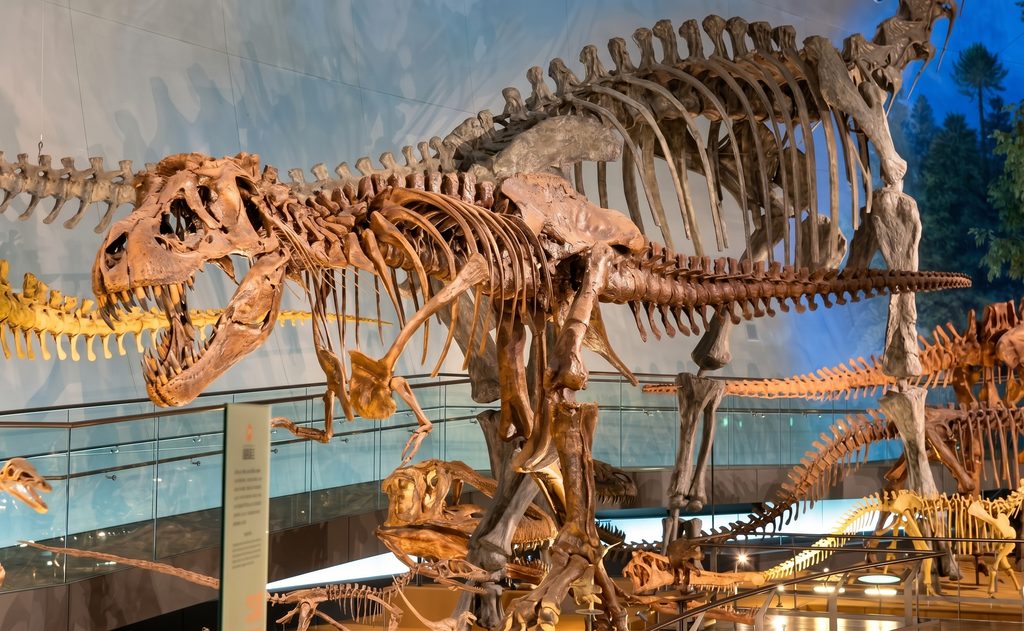
This is the zone everyone comes for, and it occupies the floor of the dome. Full skeletons stand at ground level, so younger children can walk around the feet of a sauropod rather than peering up at it from behind a barrier.
Life-size animatronic dinosaurs move and roar in a reconstructed Cretaceous landscape. For toddlers this can be a little much. If you have a nervous three-year-old, approach from the side of the hall furthest from the moving models and let them watch from a distance first.
We would start here rather than following the suggested route. Children arrive with the most energy, and Dinosaur World is where they will spend it best.
Earth Sciences and History of Life
Most families move through these zones too quickly, and it is a mistake. The History of Life galleries trace the line from early organisms to the evolution of birds from dinosaurs, which is the single idea that tends to reorganise how older children think about the whole subject.
Earth Sciences covers the formation of the planet, rocks, and minerals, with touchable specimens. For children aged about eight and up, this is where the visit turns from spectacle into understanding. Younger children may be happier returning to the skeletons.
Lunch, Rest, and the Glass-Walled Laboratory
The museum has a restaurant, a shop, and a small theatre. On weekends and public holidays the restaurant fills quickly, and a waiting list operates when every table is taken. Eating early, before noon, avoids most of the queue.
Look for the research laboratory windows as you move through the building. Through the glass you can sometimes see staff preparing fossils, picking rock away from bone with fine tools. It is quiet, slow work, and oddly absorbing for children who have just come from the animatronics.
Expert Tip
Take the first time slot of the day, even if it means an early start from Fukui. The dome is at its quietest in the first hour, before tour groups and weekend traffic arrive, and children can see the skeletons without a crowd in front of them. On weekends and holidays the museum itself warns that traffic backs up waiting for parking spaces.
Tickets, Hands-On Programs, and the Outdoor Dig Site
The booking system is the part of this trip that catches visitors out. Arriving without a ticket on a busy day can mean not getting in at all.
Timed-Entry Tickets: Book Online up to 60 Days Ahead
Entry is by date and time slot, purchased and paid for online in advance. Tickets go on sale 60 days before the visit date, and the museum does not take bookings by phone. Walk-up tickets are sold at machines on the day only if the slot has spare capacity.
Permanent exhibition admission is ¥1,000 for adults, ¥800 for high school and university students, and ¥500 for elementary and junior high school students and visitors aged 70 and over. Preschool children enter free. Special exhibitions are charged separately.
Standard hours are 9:00 to 17:00, with last entry at 16:30. The museum closes on the second and fourth Wednesday of each month and over New Year, but stays open every day during the summer holidays, when hours are extended. For a family trip, we would book the moment your dates are fixed, particularly for weekends, Golden Week, and August.
Fossil Research Programs: T.rex Skull, Cleaning, and CT Scans
The museum runs four hands-on research programs, each lasting about two hours. The ticket bundles the program with permanent exhibition entry and costs ¥2,200 for adults and ¥1,100 for elementary and junior high school students.
Fossil Cleaning, in which participants use real preparation tools to free a dinosaur tooth from rock, and CT Fossil Observation, which uses an X-ray CT scanner to look inside specimens, run all year. From late April to early November a T.rex skull reconstruction program operates, and from mid-November to mid-April it switches to a fossil-hunting session using rock from the Kitadani quarry.
The programs are open to elementary school age and above, and elementary children must be accompanied by a parent. The booking pages do not advertise English-language instruction, so assume the session will be run mainly in Japanese. Our view is that Fossil Cleaning works best for families without Japanese, because the task is visual and the tools make their purpose obvious within a minute.
The Outdoor Dinosaur Museum: Splitting Rock at the Quarry
For many children this is the highlight. The Outdoor Dinosaur Museum is a guided excursion to the excavation area, run by bus from the main museum. The whole tour takes about two hours, of which the round-trip bus ride accounts for roughly forty minutes.
On site, participants use a hammer and chisel to split rock and search for fossils. The museum frames it as joining the excavation team, and anything significant you find may go into the collection for research. The fee is ¥1,300 for adults and ¥650 for elementary and junior high school students, with preschool children free.
It operates from mid-April to early November and closes for winter. Gloves are required, and the museum recommends long sleeves, long trousers, and trainers, plus water and rain gear. Dress children in clothes that can come home dusty.
Getting to Katsuyama and Building It Into a Hokuriku Trip
Fukui Station is the gateway. Since the Hokuriku Shinkansen was extended to Tsuruga in March 2024, it has become far easier to reach from both Tokyo and the Kansai side.
From Fukui Station: Echizen Railway, Bus, or Car
The Echizen Railway Eiheiji Katsuyama Line runs from Fukui Station to Katsuyama in about an hour. It is a small local line through rice fields and the Kuzuryu river valley, and the slower pace is part of the day. At Katsuyama Station, a bus runs to the museum in around fifteen minutes, or a taxi takes about ten.
Driving is the more practical choice for most families with luggage or small children. The museum is roughly forty minutes from Fukui by the Chubu Jukan Expressway, and the car park has space for around 1,300 cars. On busy days, though, the queue into that car park backs up along the approach road.
Before you leave Fukui, look for the dinosaur models on the square outside the station. They are a small thing, but children notice.
From Kyoto, Osaka, and Kanazawa via Tsuruga
From Kyoto or Osaka, take the Thunderbird limited express to Tsuruga, where you change to the Hokuriku Shinkansen. Fukui is about 23 minutes on from Tsuruga. From Kanazawa the shinkansen runs directly to Fukui in well under an hour.
That makes a day trip possible from either Kyoto or Kanazawa, but it is a long day, especially with children. Our strong recommendation is to stay one night in Fukui, reach Katsuyama for the first time slot, and move on the following afternoon. For the Kyoto end of the route, our guide to riding the shinkansen with luggage covers the practicalities of moving a family between trains.
Pairing the Museum With Tsuruga, Eiheiji, and Kanazawa
The dinosaur museum rarely needs to be the whole reason for coming to Fukui. The same Echizen Railway line passes the approach to Eiheiji, the head temple of Soto Zen, and Kanazawa’s gardens and samurai streets are a short shinkansen ride north. Our overview of Kanazawa’s samurai districts and gardens is a natural next chapter for families continuing up the coast.
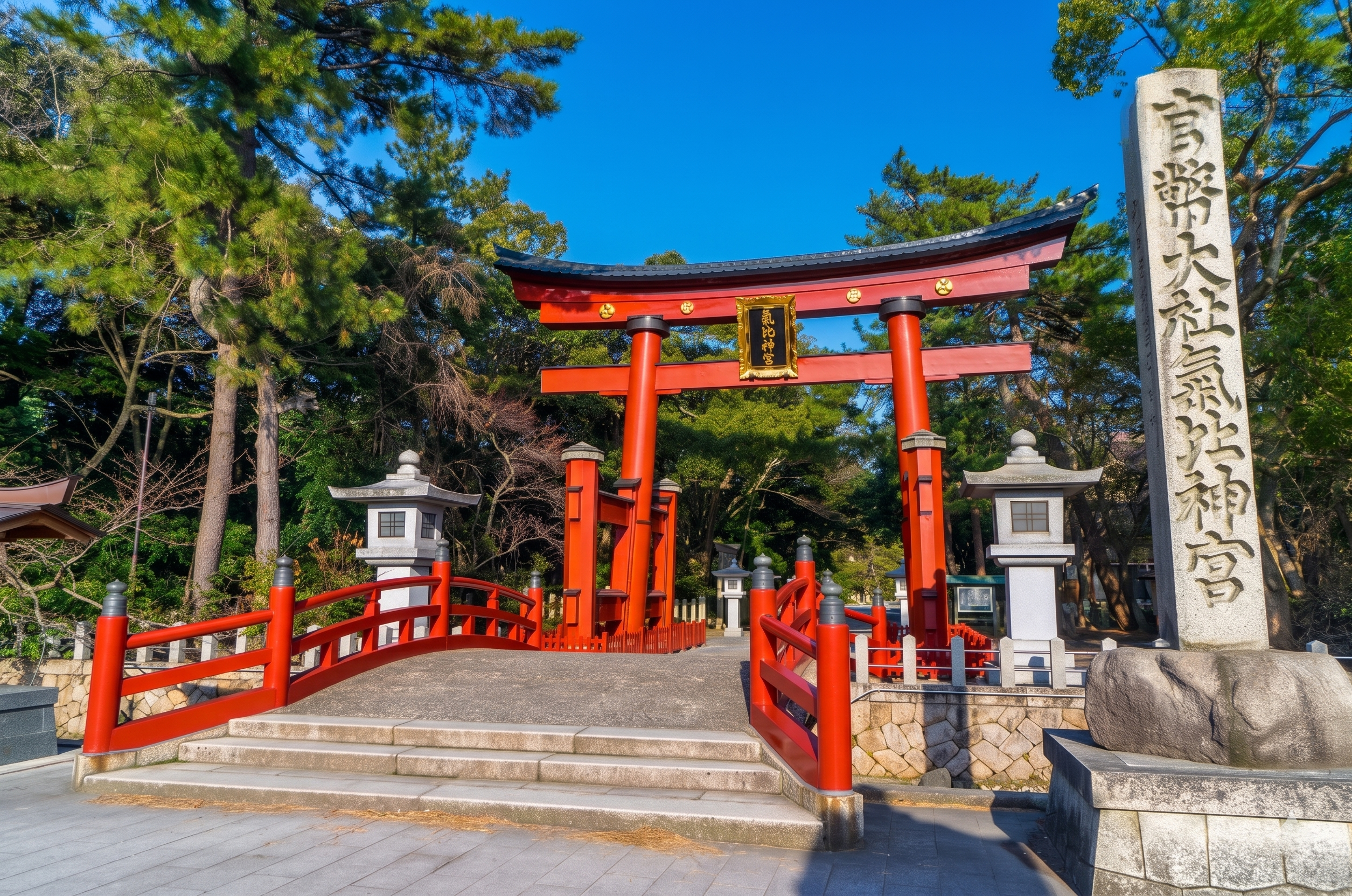
Tsuruga, where you change trains anyway, is the stop we would add. On our private Tsuruga day, the guide walks guests through Kehi Jingu and its great wooden torii, the red brick warehouses on the waterfront, and the Port of Humanity museum, which tells the story of the Jewish refugees who came ashore there in 1940 carrying Sugihara’s transit visas. Older children who have spent a day on deep time often respond strongly to a story that is human-scale and recent.
The day usually ends with grilled mackerel, the local dish, or crab if you are travelling between November and March. For families with teenagers, it balances the museum well: one day on the Cretaceous, one day on the twentieth century.
Expert Tip
Book the Outdoor Dinosaur Museum for the morning and the galleries for the afternoon, not the other way round. Children who have just split rock at the quarry look at the skeletons differently, because they now know what it takes to get one out of the ground. It also puts the outdoor session in the cooler part of the day, which matters in July and August.
Fukui Dinosaur Museum: Frequently Asked Questions
Do I need to book tickets for the Fukui Dinosaur Museum in advance?
Yes, in practice. Entry is by timed ticket bought online, with sales opening 60 days ahead. Same-day tickets are sold at the museum’s machines only when a slot has not sold out, which on weekends and during school holidays is rarely the case. Book the hands-on programs and the Outdoor Dinosaur Museum at the same time, since they have their own limited capacity.
Is the Fukui Dinosaur Museum suitable for young children?
Very much so, with a few adjustments. Preschool children enter free and the skeletons in the main hall stand at ground level, though the animatronics can frighten toddlers. The research programs start at elementary school age, so under-sixes will spend the day in the galleries and play areas rather than at a workbench. Our broader guide to traveling Japan with kids covers strollers, trains, and pacing across a longer trip.
Can you visit the Fukui Dinosaur Museum as a day trip from Kyoto or Kanazawa?
It is possible, but we would not plan it that way with children. From Kyoto you need a limited express to Tsuruga, a shinkansen to Fukui, and then an hour on the local line to Katsuyama before you reach the museum. From Kanazawa the journey is shorter. An overnight in Fukui turns a rushed round trip into a relaxed morning at the museum and an afternoon free for somewhere else.
Related Tours


Conclusion
Book the time slot before you book anything else. Once you have an entry time at the Fukui Dinosaur Museum, the rest of the plan falls into place around it: the night in Fukui, the early train or drive to Katsuyama, and the program or dig that suits your children’s ages.
Then leave room on either side. The museum is the reason your family came to Fukui, but Tsuruga’s waterfront, Eiheiji in the hills, and Kanazawa to the north are all within an hour. A child who spent the morning splitting Cretaceous rock will sleep well that night, and the parents will have seen a part of Japan that most visitors never reach.
Plan Your Japan Trip with Local Experts
Our team has guided 40,000+ travelers across Japan. Tell us about your trip and we’ll get back to you within 24 hours.




