In this article:
- What Hinamatsuri Is
- Reading the Display
- The Food
- Public Displays Worth Seeing
- Putting Them Up, and Taking Them Down Fast
- Japanese Doll Festival: Frequently Asked Questions
Introduction
A full hina display occupies a substantial part of a Japanese living room for two weeks. It can cost as much as a small car. Families take it down within twenty-four hours of the festival ending because of a superstition about marriage.
That combination tells you most of what is interesting about Hinamatsuri. It is a domestic rather than a public festival, and people take it seriously. Its origins go back to purification rites practised a thousand years ago.
Visitors in late February and early March will see hina displays everywhere without necessarily knowing what they are. They appear in hotel lobbies, station concourses, and department store windows. You can also see them in the front rooms of old houses in Kyoto. Owners sometimes open the shutters specifically so people can look in.
What Hinamatsuri Is
Girls’ Day, 3 March, a wish for the health and future happiness of daughters.
The Date and the Occasion
Hinamatsuri falls on the third day of the third month, one of five seasonal festivals adopted from the Chinese calendar. It is not a public holiday and nobody takes the day off.
Families with daughters display the dolls, eat particular dishes, and take photographs. Schools and nurseries make paper versions. Department stores start selling doll sets in January.
The wish is explicit and traditional: health, and a good marriage. The second half of that has aged in a way many Japanese families now treat lightly, but the phrasing persists.
Nagashi-bina and the Heian Origins
The older practice, and still performed in a few places, is nagashi-bina — floating paper dolls down a river.
The logic is transference. People rubbed misfortune and impurity onto a simple doll. They then set it on the water and let the current carry it away. This was a purification rite, not a celebration.
Separately, aristocratic girls in the Heian period played with small dolls in a pastime called hina-asobi. The two traditions gradually merged over the centuries. By the Edo period, the dolls had become elaborate, expensive, and permanent display objects rather than disposable figures thrown into a river.
Nagashi-bina survives at a handful of shrines, notably in Tottori and at Shimogamo Shrine in Kyoto. On 3 March, visitors can watch paper dolls float down the water.
A Family Object
A full set is a serious purchase, often given by the maternal grandparents on a first daughter’s first March.
Good sets are handmade by specialist workshops. They feature details such as faces made from crushed oyster-shell gesso and miniature silk robes, and prices range from several hundred thousand yen to several million. Families store them in labelled boxes and bring them out every year for decades.
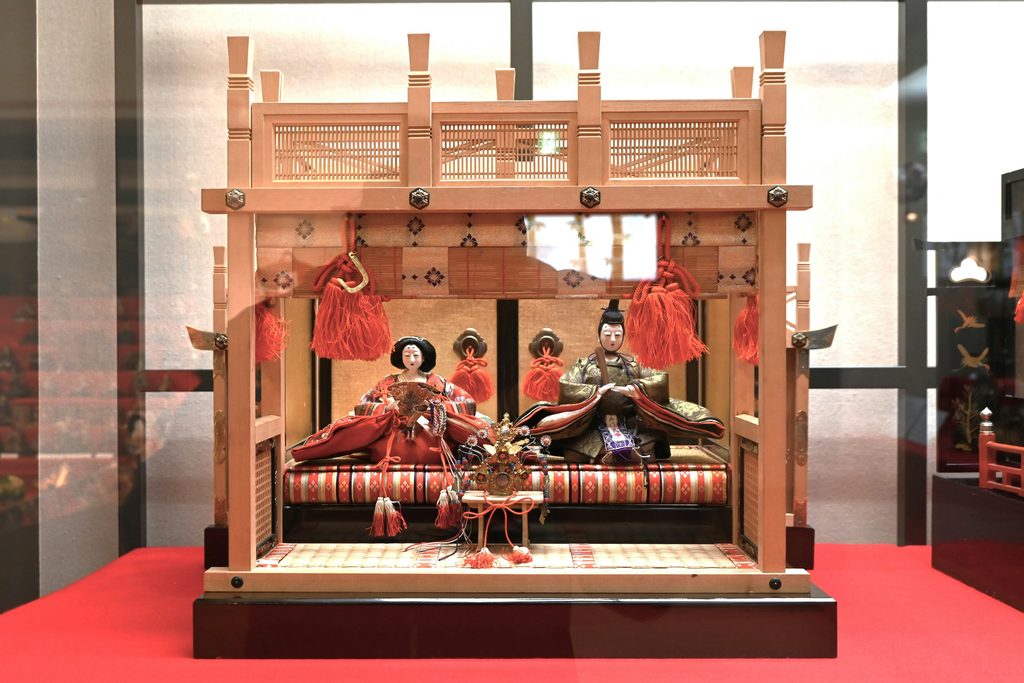
Many families display an inherited set. Many families now display a simplified set with just the imperial pair on a small stand. The traditional seven-tier version is often too large for a modern apartment.
Expert Tip
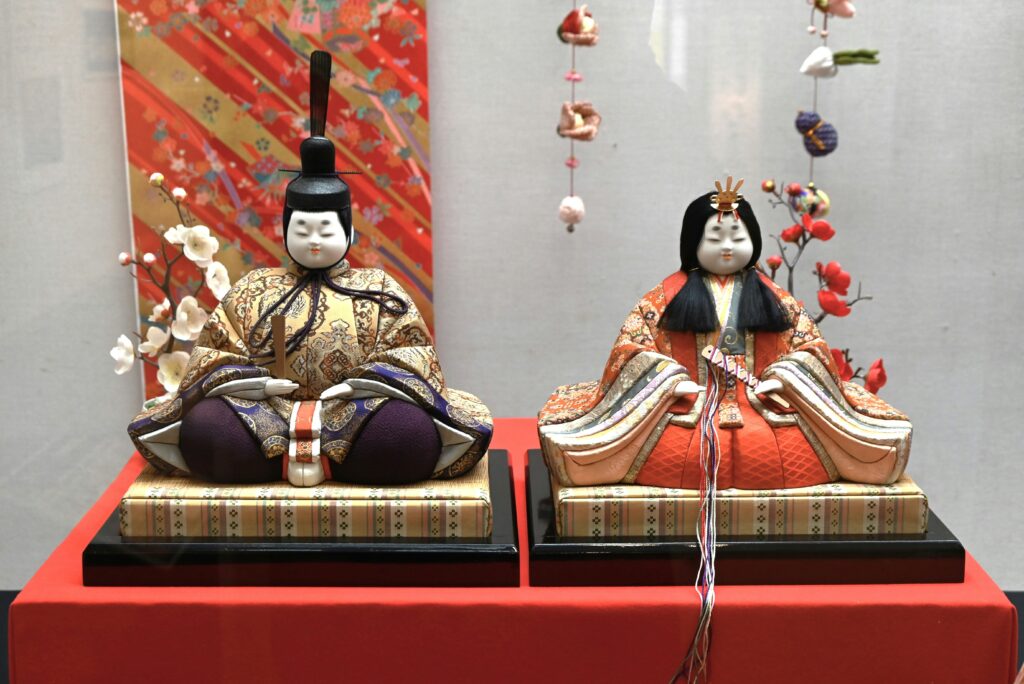
Look at which of the two top dolls stands on the left as you face the display. In the Kanto style, standard nationally, the emperor is on the viewer’s left. In the Kyoto style, he is on the right — the older arrangement, following the traditional Japanese convention that the left side, from the seated figure’s own perspective, is the position of higher rank. Encountering a Kyoto-style set outside Kansai usually means the family has roots there, and asking about it is a good conversation.
Reading the Display
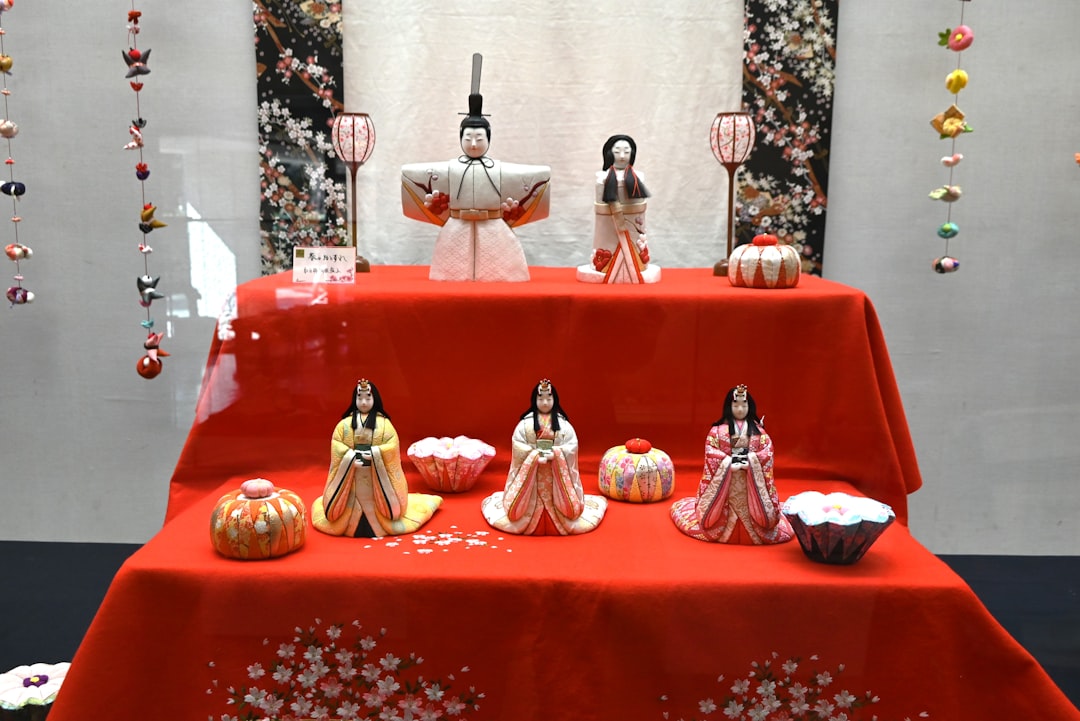
The full set is a Heian court, arranged by rank on seven tiers covered in red cloth. Once you know the order you can read any display in the country.
The Top Tier
The emperor and empress—odairi-sama and ohina-sama—sit against a gold folding screen. Paper lanterns and a pair of small potted trees flank them.
He holds a ritual baton, she a fan. Behind them the screen; between them, on some sets, a stand bearing sake vessels.
If a household displays only one tier, it usually chooses this one. This is by far the most common arrangement in modern homes.
Ladies, Musicians, Ministers, and Guards
The second tier holds three court ladies serving sake. People usually seat the middle doll while the outer two stand, which shows that the arrangement is correct.
The third tier is five musicians: three drums of different sizes, a flute, and a singer holding a fan. The singer is the one with no instrument, and putting him in the wrong position is the classic error.
The fourth tier holds two ministers, one old and one young, positioned as guards with bows and arrows. The fifth tier holds three servants, and artists traditionally depict their faces as laughing, crying, and angry.
The Lower Tiers and the Stand Itself
The sixth and seventh tiers hold furniture and vehicles in miniature: chests, a mirror stand, braziers, a palanquin, and an ox-drawn carriage. These are dowry goods, and they are frequently the finest craftsmanship in the set.
The stand is the hina-dan, and the red cloth over it serves more than a decorative purpose — people traditionally believed that red warded off evil, the same belief behind the red bibs on roadside Jizo statues.
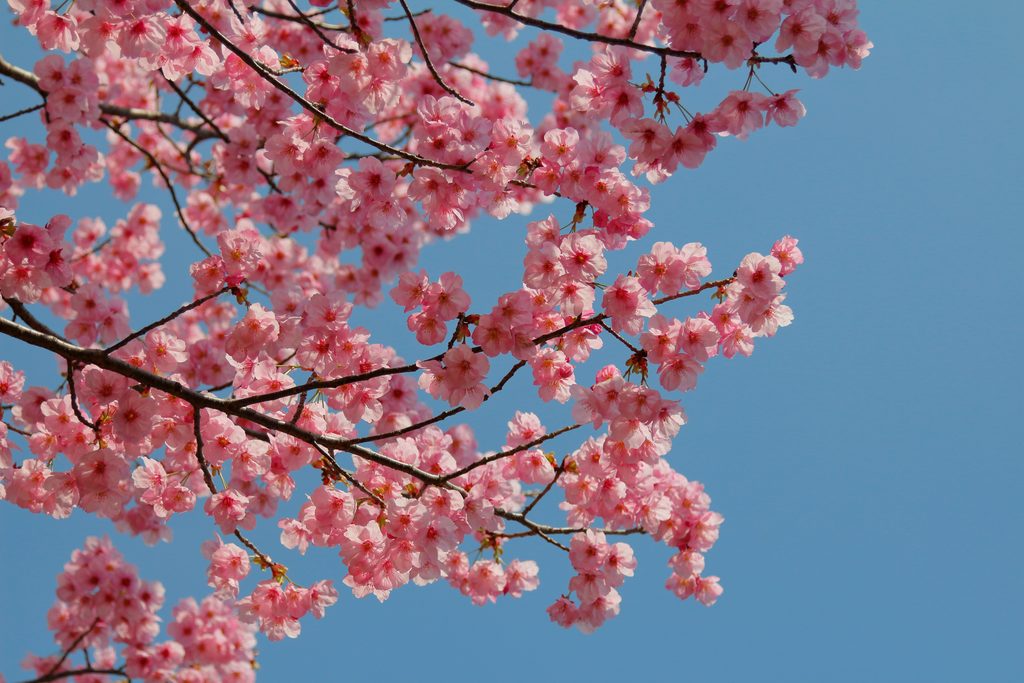
Families also display peach blossoms. The festival’s other name, Momo-no-Sekku, means the Peach Festival, and tradition associates the flower with warding off evil and with feminine qualities.
The Food
Four dishes, each carrying a specific meaning, and all of them are genuinely good.
Chirashizushi
Sushi rice in a bowl or a shallow lacquer box, scattered with sashimi, omelette shredded into threads, boiled prawn, lotus root, and snow peas.
The components are chosen for meaning. Prawn is longevity, on account of the bent back of old age. Lotus root, with holes you can see through, is a clear view of the future. Beans are health and diligence.
It is also simply the most photogenic dish in Japanese home cooking, which does no harm to its position at a festival about displaying things.
Hamaguri Clam Soup
A clear soup with clams in the shell, and the meaning is precise: a hamaguri shell fits only its original partner and no other.
The dish is therefore a wish for a happy marriage. At a formal meal, people traditionally serve the clams with both halves of the shell, placing the meat in one half and laying the other alongside — a detail that only makes sense once you know what it represents.
Hishimochi and Hina-arare
Hishimochi is a diamond-shaped stack of three layers of rice cake: pink, white, and green. The pink is warding off evil, the white is purity or snow, the green is health and new growth — read together, snow melting to reveal green shoots under pink blossom.
Hina-arare are small puffed rice crackers in the same colours, sweet in Kanto and savoury in Kansai. Supermarkets sell them throughout February, making them the easiest edible souvenir of the season.
Shirozake and Amazake
Shirozake is a sweet, thick white sake that contains alcohol, and adults traditionally drink it at the festival.
Amazake is a non-alcoholic substitute made from fermented rice. People serve it to children, and it is now more common than shirozake. It is thick, sweet, and served warm, and it is also what temple stalls hand out at New Year.
Public Displays Worth Seeing
Public displays run from early February to around 3 March, and several are worth building a day around.
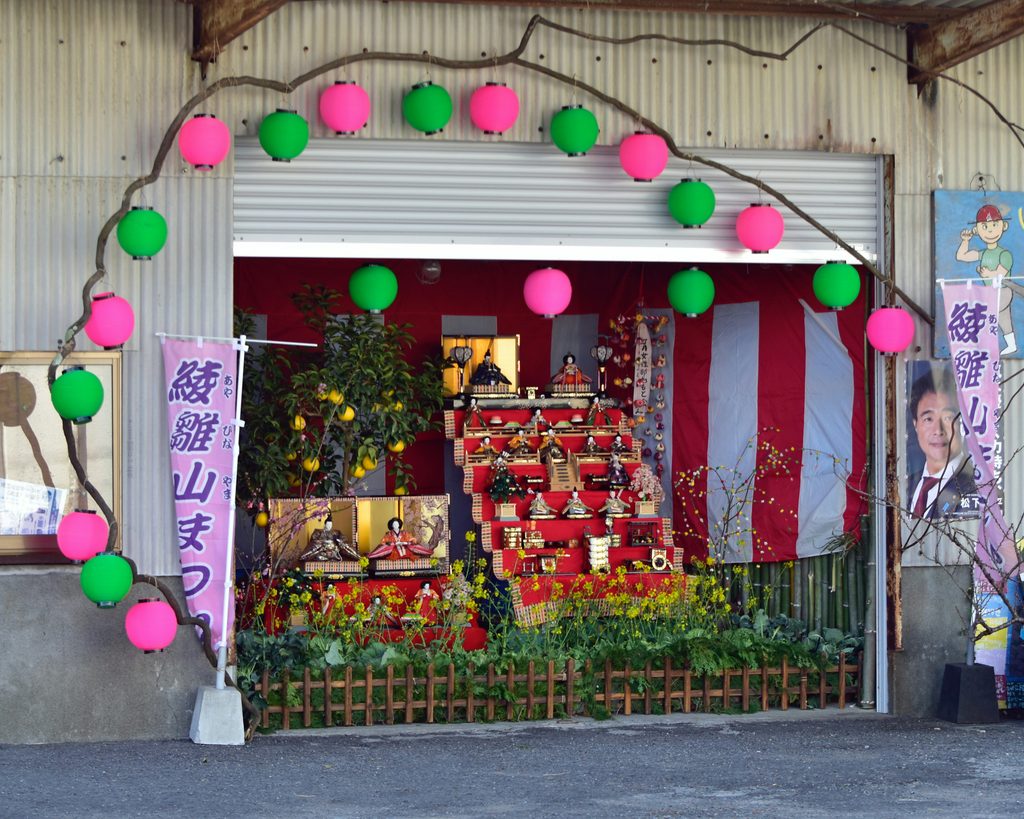
Katsuura, Chiba
The Katsuura Big Hina Matsuri displays roughly thirty thousand dolls across the town, most spectacularly covering all sixty stone steps of Tomisaki Shrine from end to end.
It is about ninety minutes from Tokyo and it is the single most photographed public display in the country. Lights illuminate the steps in the evening.
Dates run from late February into early March and shift annually. Check the town’s website before travelling, and note that organisers cancel the shrine steps display when it rains.
Hotel Gajoen, Tokyo
The Hyakudan Hinamatsuri at Hotel Gajoen in Meguro is the refined version. Organisers stage it inside the Hyakudan Kaidan — the Hundred Stairs — a 1935 wooden structure of connected banquet rooms with elaborately painted ceilings and designated cultural-property status.
The rooms display antique doll collections from different regions, with the theme changing each year. The event requires a ticket and takes place indoors, making it the best option for visitors in Tokyo who want to see both the dolls and a building worth visiting in its own right.
Yanagawa, Fukuoka
Yanagawa’s version is sagemon — clusters of small handmade fabric ornaments that female relatives stitch and hang on strings around the dolls, creating a regional tradition with no equivalent elsewhere.
Canals run through the town, and the festival includes a procession in which flat boats carry girls in kimono along the waterways.Displays run through February and into early April, later than most.
Konosu, Saitama
Konosu, a doll-making town, builds a pyramid of dolls more than thirty tiers high inside its civic centre — reportedly the tallest in Japan.
It is less atmospheric than Katsuura and considerably more impressive as an object. Roughly an hour from central Tokyo.
Expert Tip
The season is longer than the date. Displays go up in early February and many public exhibitions run for three or four weeks, so a visitor in mid-February will see more of them, more comfortably, than one arriving on 3 March itself. If you are in Kyoto during the period, walk the machiya streets around Shinmachi and Muromachi in the late afternoon — old merchant houses open their front rooms to the street specifically so passers-by can see the family set, and it is the most genuine version of this you can encounter without being invited into a home.
Putting Them Up, and Taking Them Down Fast
The timing rules are the part of this festival that most surprises visitors.
Setting Up
Displays go up in early to mid-February, conventionally after the Setsubun bean-throwing on 3 February.
The general rule is at least a week before the festival, and the day chosen is often a fine one with low humidity — the dolls are silk and hair and gesso, and damp does them lasting damage.
Assembly takes a couple of hours for a full set, working from a photograph of the previous year, because nobody remembers where the fifth-tier servants go.
Take Them Down Immediately
Families should pack the dolls away the day after the festival, and tradition holds that leaving them out too long will cause the daughter of the house to marry late.
The practical origin is likely the humidity — March rain damages the sets, and a superstition is a more effective instruction to children than a lecture about silk. Whatever its source, families widely observe the custom and clear the display on 4 March.
Weather counts as an exception. Packing dolls away on a damp day is worse than leaving them up, and most households wait for a dry one.
Storage and Inheritance
Families wrap the sets in tissue, cover the dolls’ faces with paper, and store them in fitted wooden or cardboard boxes with desiccant and camphor.
Traditional practice holds that a hina set belongs to one girl and absorbs her misfortune, so it is not passed from sister to sister or from mother to daughter. In practice many families do inherit them, and the older the set the more it is valued.
Doll retirement is a real institution. Temples hold ningyo kuyo services where dolls that can no longer be kept are received, prayed for, and ritually burned rather than thrown away — an object that has held a family’s wishes for forty years is not something you put in a bin.
Japanese Doll Festival: Frequently Asked Questions
Is Hinamatsuri a public holiday?
No. 3 March is an ordinary working day, and the festival is observed at home in the evening rather than publicly. This is a point of difference with Children’s Day on 5 May, which is a national holiday. Public exhibitions and shrine events do run around the date, but there is no closure of offices, banks, or transport, and no travel disruption to plan around.
Can visitors buy small hina dolls as souvenirs?
Yes, and the small versions are far better souvenirs than the large ones are practical. Doll shops sell single pairs of the emperor and empress on a small lacquer base, palm-sized versions in ceramic or wood, and folded paper ones from a few hundred yen. Kyoto and Nara have long-established doll makers, and the Asakusabashi district in Tokyo is the wholesale doll quarter with shops open to the public. Full sets can be shipped internationally by the major makers, though the cost and the customs paperwork make this a considered purchase rather than an impulse.
What is the difference between Hinamatsuri and Children’s Day?
Hinamatsuri on 3 March was traditionally for girls and is marked with the doll display. Tango no Sekku on 5 May was traditionally for boys, marked with carp streamers flown outside the house and displays of miniature samurai armour and helmets. In 1948 the May date was made a national holiday and renamed Children’s Day, applying to all children, while March was not. The older gendered associations remain in how each is actually observed, and the two sets of objects — dolls in March, armour and carp in May — are sold in the same shops at different times of year.
Related Tours
Conclusion
If your trip falls in February, you will walk past a dozen of these displays without being told what they are. Learning to read the tiers takes five minutes and changes a decorative object into a court arranged by rank, complete with a dowry and a wish attached to it.
For a visitor with one afternoon to give it, Hotel Gajoen in Tokyo is the best single stop — antique sets from across the country, inside a 1935 building that is worth the ticket on its own.
Plan Your Japan Trip with Local Experts
Our team has guided 40,000+ travelers across Japan. Tell us about your trip and we’ll get back to you within 24 hours.