In this article:
- Four Centuries of Trade on One Street
- Walking the Arcade From North to South
- What to Buy, and What to Leave
- Timing, Crowds, and What to Pair It With
- Shinsaibashi-suji Shopping Street: Frequently Asked Questions
Introduction
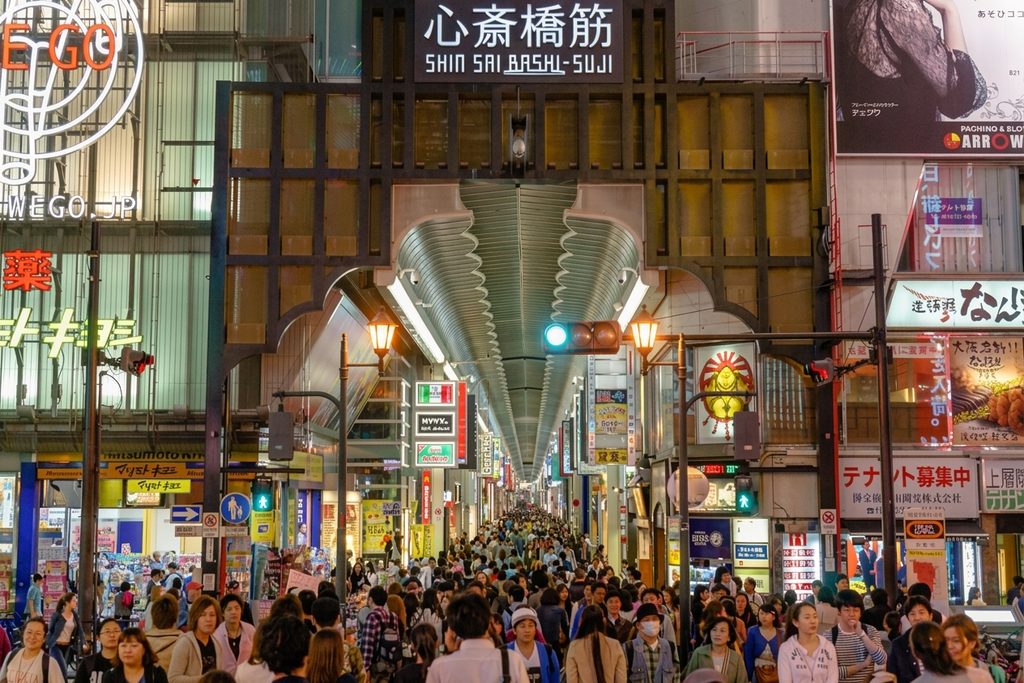
Stand at the north end of Shinsaibashi-suji Shopping Street on a Saturday afternoon and the arcade looks less like a street than a current. Shoppers move south in one slow, steady mass, carrying drugstore bags and paper cups of iced tea, toward the Ebisubashi bridge and the neon of Dotonbori.
That flow is the reason most visitors end up here, often without planning to. Shinsaibashi-suji runs for roughly 580 metres under a continuous roof, with around 180 shops along it, and it connects the two places almost every first-time visitor to Osaka wants to see: the department stores around Shinsaibashi Station and the canal-side food district to the south.
Walked badly, it is a crowded corridor of chain stores. Walked well, it is a compressed lesson in how Osaka has always done business, loud, direct, and practical. The difference is mostly about timing, direction, and knowing which doors are worth opening.
Four Centuries of Trade on One Street
The arcade is often described as around 380 years old, and the figure is not marketing. Merchants were trading along this route in the Edo period, when Osaka was the country’s commercial hub and was known for its merchants rather than its samurai.
A Bridge, a Canal, and a Merchant City
The name comes from a bridge. In 1622, when the Nagahori canal was dug across the northern edge of today’s shopping district, a merchant named Okada Shinsai built a wooden crossing over it, and “Shinsai’s bridge” became Shinsaibashi. Shops grew up along the road that ran across it, and the road took the bridge’s name.
The canal was filled in during the 1960s and the bridge dismantled. You will not see water at the north end now. Instead, the underground Crysta Nagahori mall sits roughly where the canal once ran, which is a very Osaka outcome: the old trade route simply went underground and kept trading.
Daimaru and the Department Store Era
The building that anchors the street is Daimaru Shinsaibashi. Its main building was designed by William Merrell Vories and completed in 1933, in a mix of Art Deco and Neo-Gothic that still reads as one of the finest pieces of department store architecture in Japan.
The store was rebuilt over about four years and reopened in 2019. Much of the original interior was restored or reused, and the Midosuji-side facade was reproduced from the old building. Even if you have no intention of buying anything, walk through the ground floor and look up at the ceilings. It gives the rest of the arcade a sense of scale and history that the chain stores further south do not.
Walking the Arcade From North to South
We always walk it north to south, and we suggest you do the same. That way the street builds toward something, and it ends at Dotonbori at the moment you are ready to eat rather than at a metro entrance.
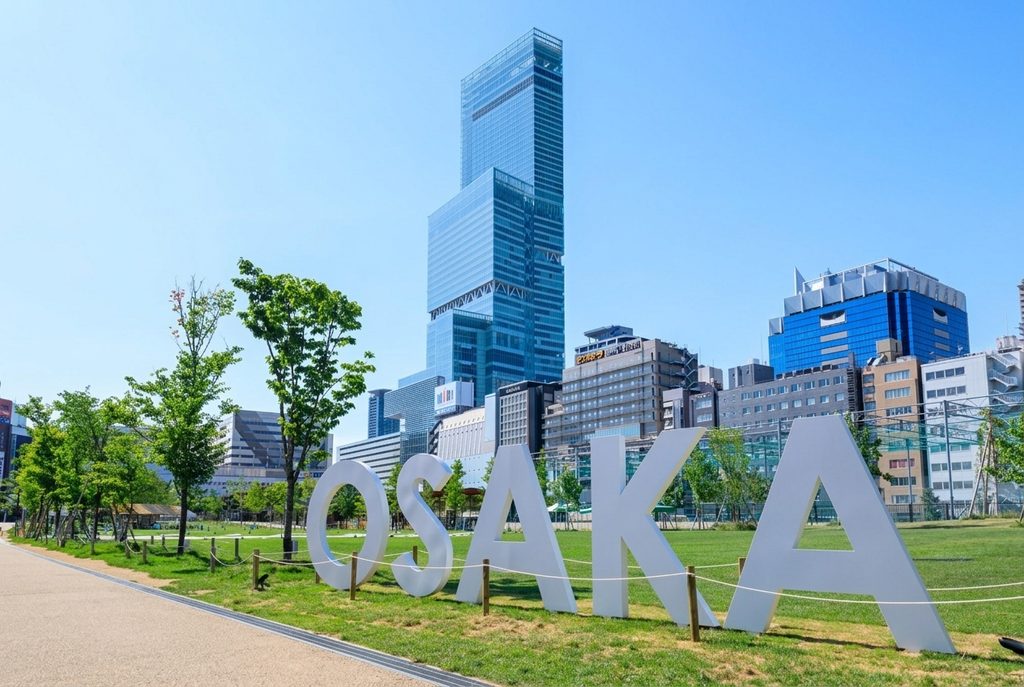
The North End: Daimaru, PARCO and the Metro
Shinsaibashi Station on the Osaka Metro Midosuji Line puts you about a minute’s walk from the arcade. Coming from Shin-Osaka or Umeda, it is a direct ride with no transfer.
Two large buildings face each other at this end. Daimaru is one. The other is Shinsaibashi PARCO, which opened in November 2020 in what used to be Daimaru’s north building and is connected to it by walkways on the upper floors. PARCO is where younger Japanese fashion labels and character goods shops cluster, and its basement food hall is a good place for a quick, cheap lunch before you start walking.
The Middle Stretch: Drugstores and Chains
South of the big stores, the arcade becomes a long run of drugstores, cosmetics shops, sneaker stores, and international fashion chains. This is the section most guides describe, and the one that feels most generic.
That said, look above the shopfronts. Several older family businesses sit between the chains, selling kimono fabric, tea, and traditional goods, and some have occupied the same address for generations. They are easy to miss at eye level, where every window looks like an advertisement.
The South End: Ebisubashi and Dotonbori
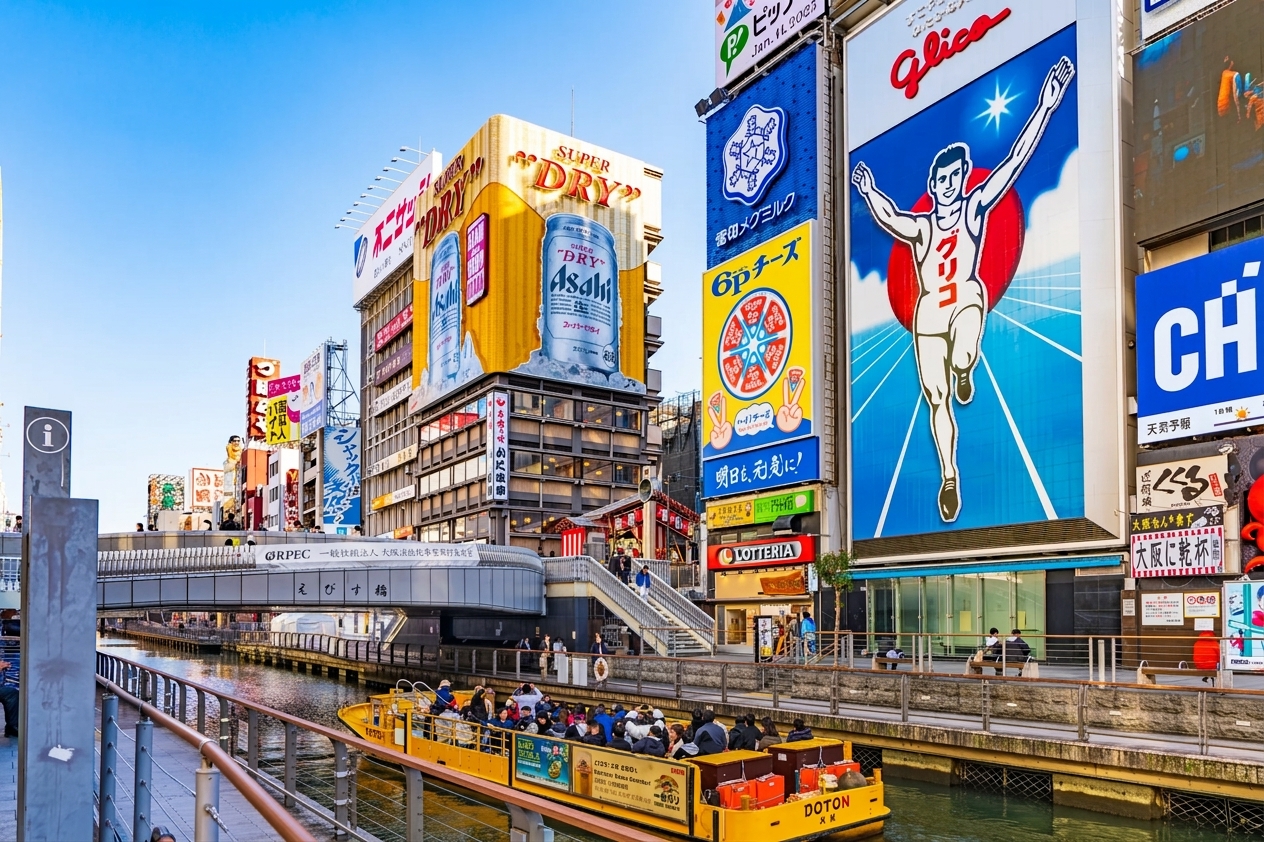
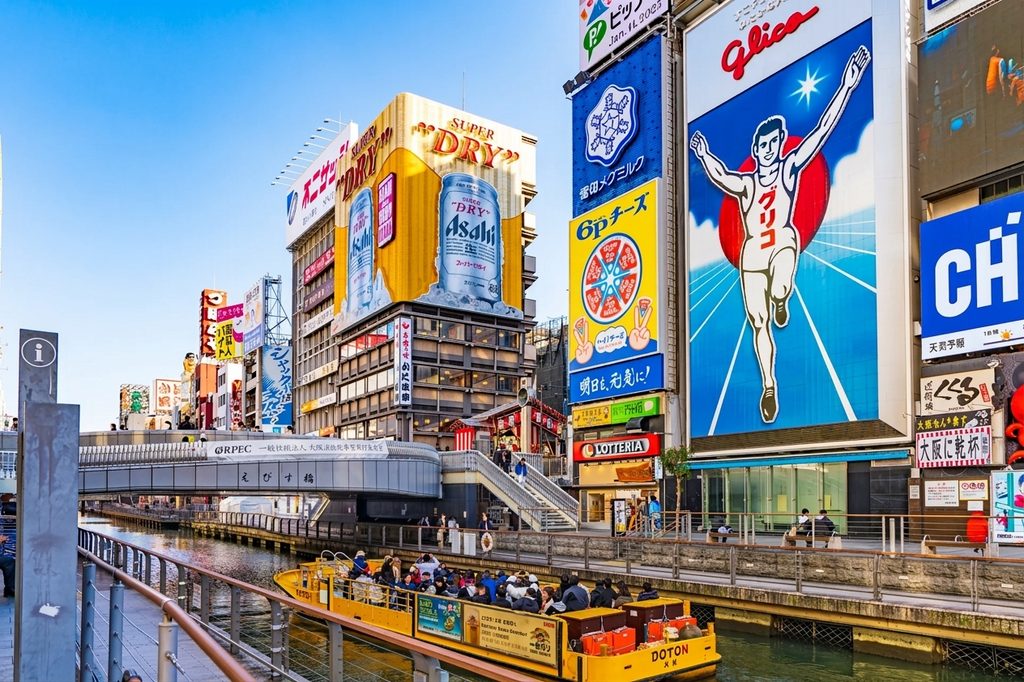
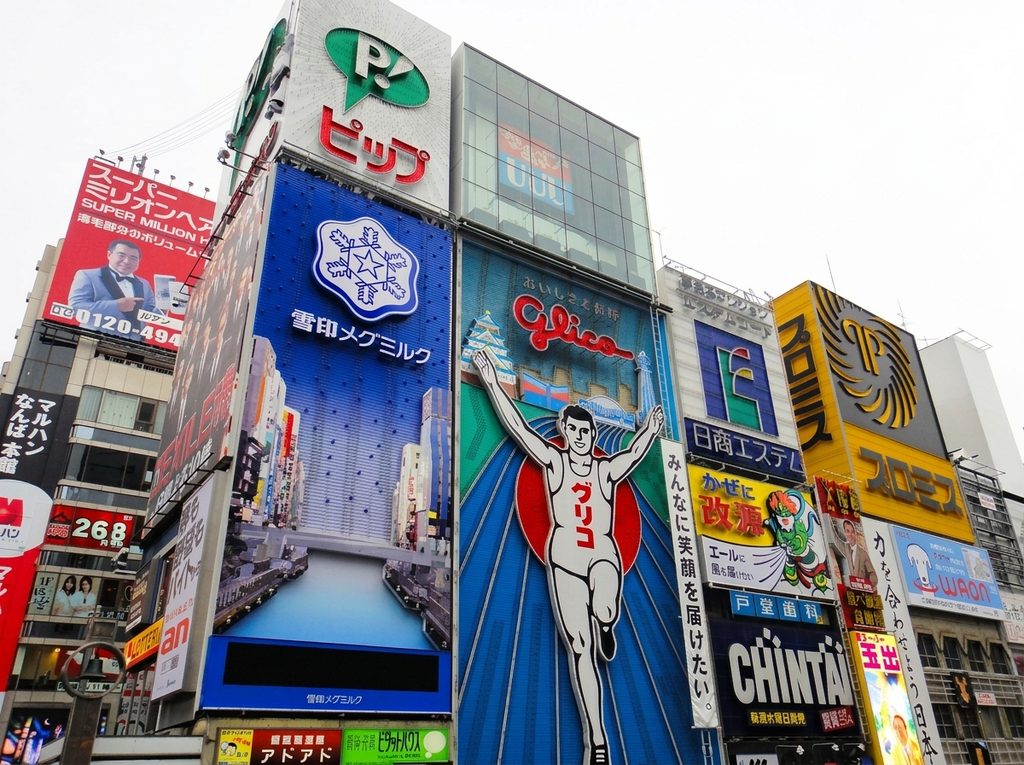
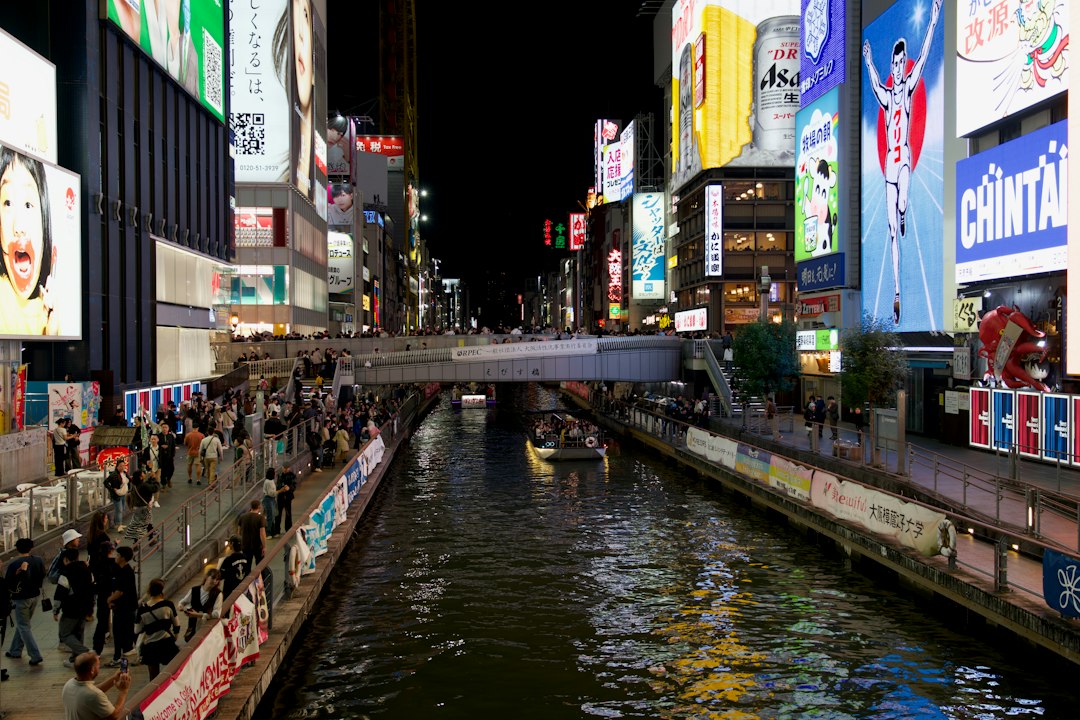
The roof ends where the street meets the Dotonbori canal at Ebisubashi. Step out into the open air and the Glico running man sign is directly across the water, which is why this bridge is permanently crowded with people taking photographs.
Our advice is to cross it rather than stop on it. The canal walkway below the bridge gives you the same view with a fraction of the crowd, and from there you are already in the food district.
Expert Tip
If you are carrying shopping bags, do not drag them into Dotonbori at dinner time. Before you leave the arcade, use a coin locker at Shinsaibashi or Namba station, or ask your hotel whether it forwards purchases. Dotonbori’s counters and standing bars have almost no room for bags, and the evening is much easier with empty hands.
What to Buy, and What to Leave
Most of what is sold on Shinsaibashi-suji can also be bought in Tokyo, and some of it at home. The useful question is not what is available here, but what is easier or better here than anywhere else on your trip.
Cosmetics and Pharmacy Goods
Japanese sunscreen, skincare, and over-the-counter remedies are the reason many visitors come, and the arcade has a dense cluster of drugstores, including a branch of Kokumin Drug. Prices between neighbouring stores differ less than people assume, so the practical move is to decide what you want before you arrive rather than comparing shop to shop.
If your list is long or you want everything in one place, a large discount store will often be quicker. Our guide to shopping at Don Quijote covers how that experience differs from the drugstores here.
Sneakers, Tea and Craft
Onitsuka Tiger has a store on the arcade, and Japanese-exclusive colourways and models are the one fashion purchase we consistently see travelers happy with afterwards. International chains, by contrast, are rarely worth the queue.
For something that feels specific to Japan, look for the tea sellers dealing in matcha and gyokuro, and the shops selling lacquerware and woodblock prints. These are fewer in number but more rewarding than the chains. If you want to go further in that direction, our guide to authentic Japanese souvenirs explains what to look for in tea, ceramics and knives.
Tax-Free Shopping After November 2026
Japan’s tax-free system for visitors changes on November 1, 2026. Under the new refund method, you pay the full price including consumption tax at the shop, and the tax is refunded after customs at your departure airport confirms you are taking the goods out of Japan.
In practice, this means carrying your passport when you shop, keeping your purchases accessible rather than packed deep in checked luggage, and allowing time at the airport for the customs step. The details are in our guide to how tax-free shopping in Japan works and what is changing.
Timing, Crowds, and What to Pair It With
The local shopping association counts around 60,000 visitors on weekdays and around 120,000 on weekends and holidays. Those numbers describe the experience better than any adjective. On a Saturday afternoon, walking speed is set by the crowd, not by you.
When to Go
Weekday mornings are the best time by a wide margin. Opening hours are set by each shop rather than by the street, so arrive once the stores you care about are open, walk the arcade before lunch, and you will move at your own pace.
Rain changes nothing here, which is the other reason to know about Shinsaibashi-suji. The roof covers the whole length, and on a wet day in Osaka it is one of the few long walks that stays dry. Keep it in reserve for the day the forecast turns.
Evenings are a different proposition. The arcade stays busy after dark, but many shops close in the early evening, and the energy moves south to Dotonbori. We treat the arcade as a daytime walk and the canal as an evening one.
Amerikamura, Midosuji and Ura-Namba
Shinsaibashi-suji does not work well as a destination on its own. It works best as the spine of a half day in Minami, Osaka’s southern downtown.
Two blocks west, Amerikamura is a tangle of vintage clothing shops, record stores, and street-food stands, and has much more personality than the arcade itself. Midosuji, the broad avenue running parallel to the east, carries the luxury flagship stores in quieter, air-conditioned surroundings. Directly south, past Dotonbori, the lanes of Ura-Namba are where Osaka eats when it is not performing for visitors.
This is the route our Dotonbori food tour takes after the neon. It starts near Namba, spends a short time under the Glico sign, and then leaves for a takoyaki stall, an izakaya, and a standing bar in the backstreets, thirteen dishes in all. After an afternoon under the arcade roof, that contrast is the point.
Shinsaibashi-suji Shopping Street: Frequently Asked Questions
How long is Shinsaibashi-suji, and how long does it take to walk?
The covered section runs for roughly 580 metres between Nagahori-dori at the north end and the Ebisubashi bridge at the south. Walking straight through takes around ten minutes on a quiet morning. With stops for shops, most people spend between one and two hours.
What are the opening hours of Shinsaibashi-suji?
The arcade itself is a public street and open at all hours. Opening and closing times are set by each individual shop, and they vary. Check the hours for any specific store you plan to visit, and assume the arcade will be busiest from early afternoon onward.
Is Shinsaibashi-suji worth visiting if I do not plan to shop?
Yes, as a route rather than a destination. It is the most direct covered walk from Shinsaibashi Station to Dotonbori, it passes Daimaru’s 1933 building, and it gives a clear picture of how Osaka’s commercial life works. Just do not plan a whole afternoon around it unless shopping is the goal.
Related Tours

Conclusion
Shinsaibashi-suji rewards a little planning more than most places in Osaka. The same 580 metres can be an exhausting press of chain stores or an easy, dry walk through four centuries of the city’s commerce, and the difference comes down to when you arrive and which direction you walk.
Go on a weekday morning, enter from Shinsaibashi Station, spend ten minutes inside Daimaru before you start, and let the arcade carry you south. By the time the roof ends at Ebisubashi it will be close to lunch, and the better part of Osaka’s food is a few minutes’ walk away.
Plan Your Japan Trip with Local Experts
Our team has guided 40,000+ travelers across Japan. Tell us about your trip and we’ll get back to you within 24 hours.